Campbell I L, Hobbs M V, Dockter J, Oldstone M B, Allison J
Department of Neuropharmacology, Scripps Research Institute, La Jolla, California 92037.
Am J Pathol. 1994 Jul;145(1):157-66.
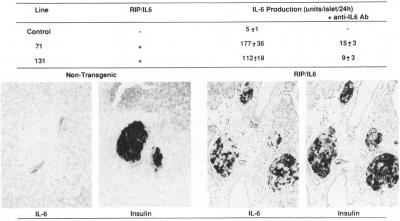
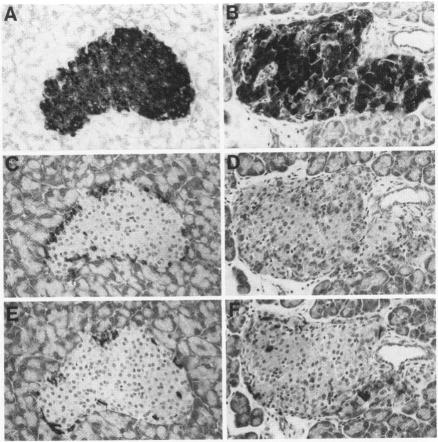
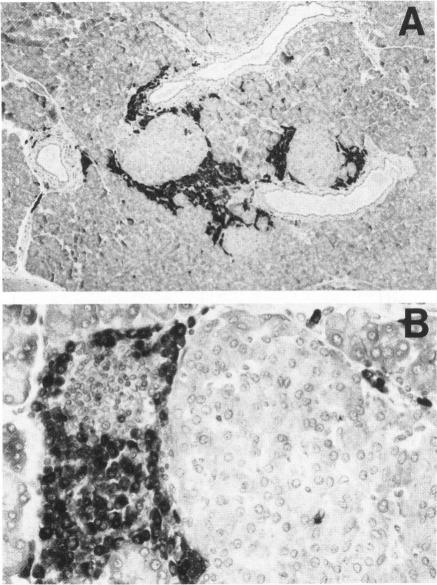
Interleukin-6 (IL-6) is thought to be involved in the pathogenesis of autoimmune insulin-dependent diabetes mellitus. To examine this possibility, we developed two lines of transgenic mice (termed RIP-IL6) which overexpressed IL-6 in the pancreatic islet beta cells. RIP-IL6 mice, while showing a modest reduction in body weight, remained normoglycemic throughout their lives. Furthermore, insulin gene expression and glucose tolerance were similar to non-transgenic littermates. Histopathological examination revealed significant changes in the pancreas but not other organs of RIP-IL6 animals, with marked alterations in the architecture of the islets, in the islet cells, and in surrounding tissues. In younger animals these changes included islet hyperplasia with increased mitotic figures, neo-ductular formation, fibrosis, and a scant mononuclear cell infiltration (insulitis). In addition, immunostaining for islet hormones revealed changes in both the topography and density of beta and alpha cells. In older RIP-IL6 mice, a more florid insulitis was observed which was composed predominantly of B220+ B lymphocytes and, to a lesser extent, Mac-1+ macrophages and CD4+ and CD8+ T lymphocytes. Immunostaining for mouse IgG revealed significant numbers of plasma cells in the peri-islet infiltrates, which suggested that IL-6 induced differentiation of the recruited B lymphocytes. Therefore, islet overexpression of IL-6 produces a complex, localized host response implicating this cytokine in not only inflammatory processes that occur in autoimmune diabetes but also cellular neogenesis, which may indicate a role in tissue repair.
白细胞介素-6(IL-6)被认为参与自身免疫性胰岛素依赖型糖尿病的发病机制。为了检验这种可能性,我们培育了两系转基因小鼠(称为RIP-IL6),它们在胰岛β细胞中过度表达IL-6。RIP-IL6小鼠虽然体重略有减轻,但一生都保持血糖正常。此外,胰岛素基因表达和葡萄糖耐量与非转基因同窝小鼠相似。组织病理学检查显示,RIP-IL6动物的胰腺有显著变化,但其他器官没有,胰岛、胰岛细胞和周围组织的结构有明显改变。在较年轻的动物中,这些变化包括胰岛增生,有丝分裂象增加,新导管形成,纤维化,以及少量单核细胞浸润(胰岛炎)。此外,胰岛激素免疫染色显示β细胞和α细胞的分布和密度都有变化。在老年RIP-IL6小鼠中,观察到更严重的胰岛炎,主要由B220 + B淋巴细胞组成,其次是Mac-1 +巨噬细胞以及CD4 +和CD8 + T淋巴细胞。小鼠IgG免疫染色显示胰岛周围浸润中有大量浆细胞,这表明IL-6诱导募集的B淋巴细胞分化。因此,胰岛中IL-6的过度表达产生了一种复杂的局部宿主反应,这表明这种细胞因子不仅参与自身免疫性糖尿病中的炎症过程,还参与细胞新生,这可能表明其在组织修复中发挥作用。