Grimaldi K A, McAdam S R, Souhami R L, Hartley J A
Department of Oncology, University College London Medical School, UK.
Nucleic Acids Res. 1994 Jun 25;22(12):2311-7. doi: 10.1093/nar/22.12.2311.
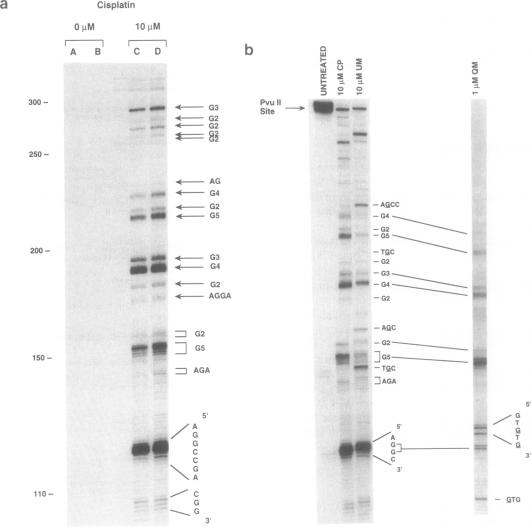
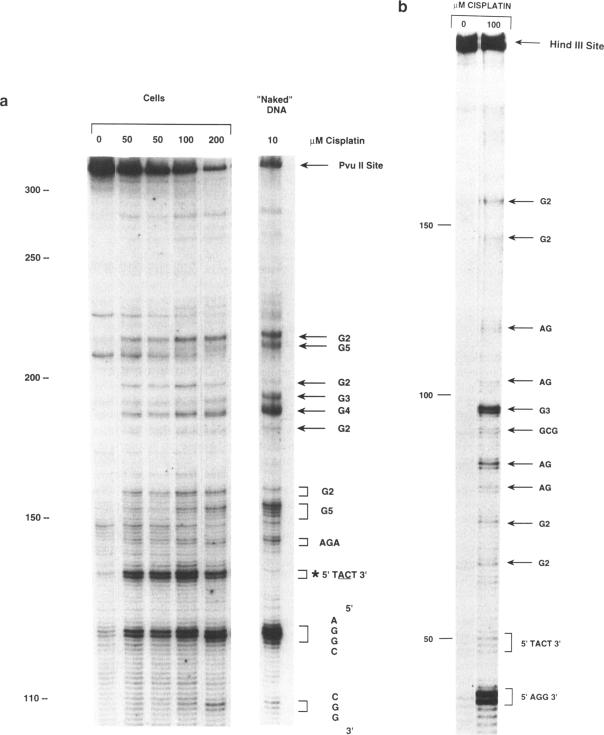
A new PCR based technique has been developed to investigate the sequence selectivity of adduct formation by DNA damaging agents in a single copy gene in isolated genomic DNA or in drug treated cells. Single-strand ligation PCR (sslig-PCR) demonstrated that cisplatin and nitrogen mustards reacted with guanine in an N-ras fragment with varying sequence specificity similar to that observed previously in plasmid DNA. In cisplatin-treated cells sslig-PCR demonstrated all the adducts found in isolated DNA and with the same sequence selectivity showing a preference for GG and AG sites. However, in cells an additional site of DNA binding of cisplatin was observed at the two occurrences of the sequence 5'-TACT-3' on the transcribed and non-transcribed strands. This sequence is not a recognised target for cisplatin and represents a novel adduct formed in cells.
一种基于聚合酶链反应(PCR)的新技术已被开发出来,用于研究DNA损伤剂在分离的基因组DNA中的单拷贝基因或药物处理细胞中形成加合物的序列选择性。单链连接PCR(sslig-PCR)表明,顺铂和氮芥与N-ras片段中的鸟嘌呤反应,其序列特异性各不相同,与先前在质粒DNA中观察到的情况相似。在顺铂处理的细胞中,sslig-PCR显示出在分离的DNA中发现的所有加合物,并且具有相同的序列选择性,对GG和AG位点表现出偏好。然而,在细胞中,在转录链和非转录链上两次出现的5'-TACT-3'序列处观察到顺铂的另一个DNA结合位点。该序列不是顺铂公认的靶点,代表了在细胞中形成的一种新型加合物。