Sanan D A, Weisgraber K H, Russell S J, Mahley R W, Huang D, Saunders A, Schmechel D, Wisniewski T, Frangione B, Roses A D
Gladstone Institute of Cardiovascular Disease, Cardiovascular Research Institute, San Francisco, California 94141-9100.
J Clin Invest. 1994 Aug;94(2):860-9. doi: 10.1172/JCI117407.
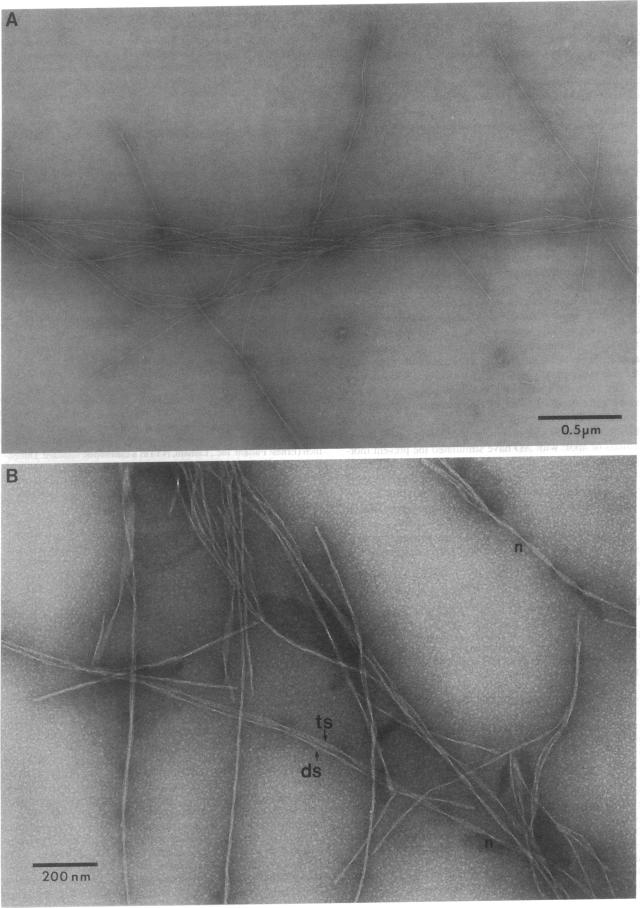
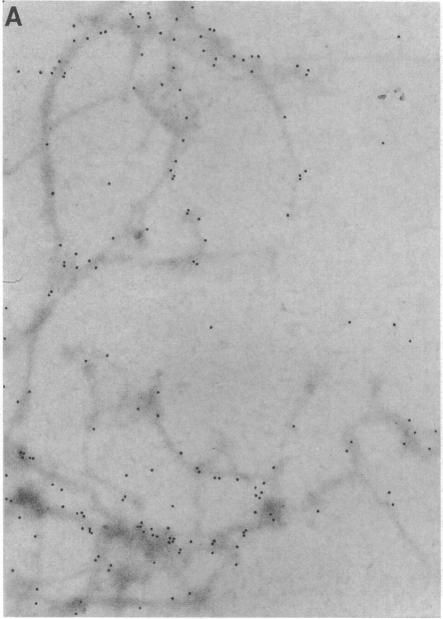
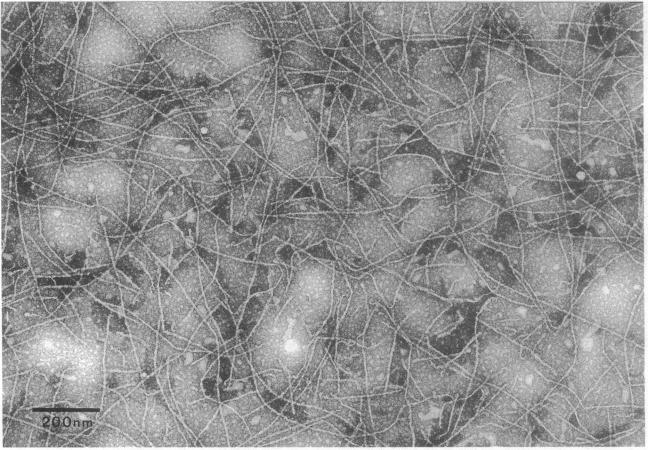
Late-onset and sporadic Alzheimer's disease are associated with the apolipoprotein E (apoE) type 4 allele expressing the protein isoform apoE4. Apolipoprotein E binds avidly to beta amyloid (A beta) peptide, a major component of senile plaque of Alzheimer's disease, in an isoform-specific manner. The apoE4 isoform binds to A beta peptide more rapidly than apoE3. We observed that soluble SDS-stable complexes of apoE3 or apoE4, formed by coincubation with A beta peptide, precipitated after several days of incubation at 37 degrees C with apoE4 complexes precipitating more rapidly than apoE3 complexes. A beta(1-28) and A beta(1-40) peptides were incubated in the presence or absence of apoE3, apoE4, or bovine serum albumin for 4 d at 37 degrees C (pH 7.3). Negative stain electron microscopy revealed that the A beta peptide alone self-assembled into twisted ribbons containing two or three strands but occasionally into multistranded sheets. The apoE/A beta coincubates yielded monofibrils 7 nm in diameter. ApoE4/A beta coincubates yielded a denser matrix of monofibrils than apoE3/A beta coincubates. Unlike purely monofibrillar apoE4/A beta coincubates, apoE3/A beta coincubates also contained double- and triple-stranded structures. Both apoE isoforms were shown by immunogold labeling to be uniformly distributed along the A beta peptide monofibrils. Monofibrils appeared earlier in apoE4/A beta than in apoE3/A beta in time-course experiments. Thus apoE3 and apoE4 each interact with beta amyloid peptide to form novel monofibrillar structures, apoE4 more avidly, a finding consistent with the biochemical and genetic association between apoE4 and Alzheimer's disease.
迟发性和散发性阿尔茨海默病与表达载脂蛋白E(apoE)4型异构体的apoE4等位基因相关。载脂蛋白E以异构体特异性方式与β淀粉样蛋白(Aβ)肽(阿尔茨海默病老年斑的主要成分)紧密结合。apoE4异构体比apoE3更快地与Aβ肽结合。我们观察到,通过与Aβ肽共同孵育形成的apoE3或apoE4的可溶性SDS稳定复合物,在37℃孵育几天后会沉淀,其中apoE4复合物比apoE3复合物沉淀得更快。Aβ(1 - 28)和Aβ(1 - 40)肽在有或没有apoE3、apoE4或牛血清白蛋白存在的情况下于37℃(pH 7.3)孵育4天。负染电子显微镜显示,单独的Aβ肽自组装成含有两到三条链的扭曲带,但偶尔也会形成多链片层。apoE/Aβ共同孵育产生直径为7nm的单纤维。apoE4/Aβ共同孵育产生的单纤维基质比apoE3/Aβ共同孵育产生的更致密。与纯单纤维的apoE4/Aβ共同孵育不同,apoE3/Aβ共同孵育还包含双链和三链结构。免疫金标记显示两种apoE异构体均沿Aβ肽单纤维均匀分布。在时间进程实验中,apoE4/Aβ中的单纤维比apoE3/Aβ中出现得更早。因此,apoE3和apoE4各自与β淀粉样蛋白肽相互作用形成新的单纤维结构,apoE4的作用更强烈,这一发现与apoE4和阿尔茨海默病之间的生化和遗传关联一致。