Cipres-Palacin G, Kane C M
Division of Biochemistry and Molecular Biology, University of California, Berkeley 94720.
Proc Natl Acad Sci U S A. 1994 Aug 16;91(17):8087-91. doi: 10.1073/pnas.91.17.8087.
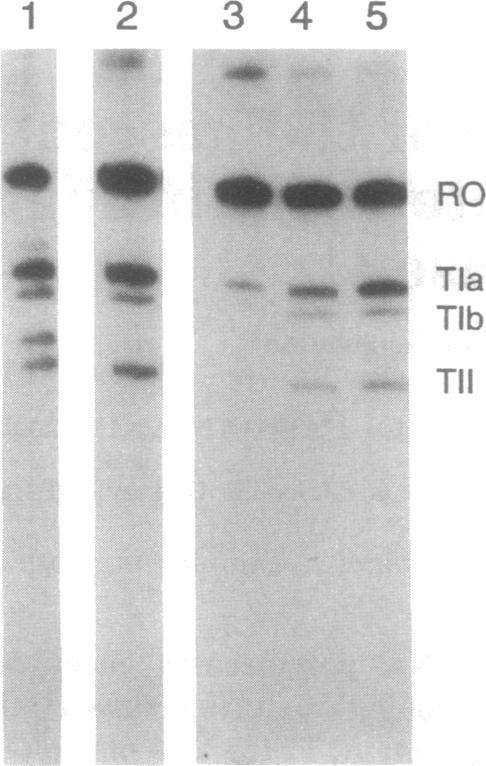
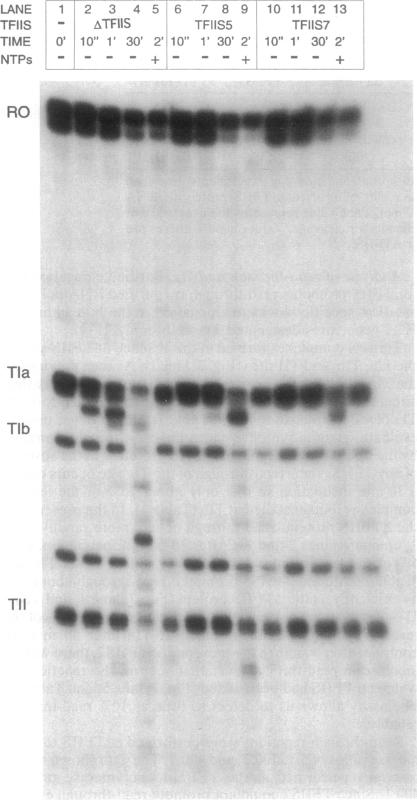
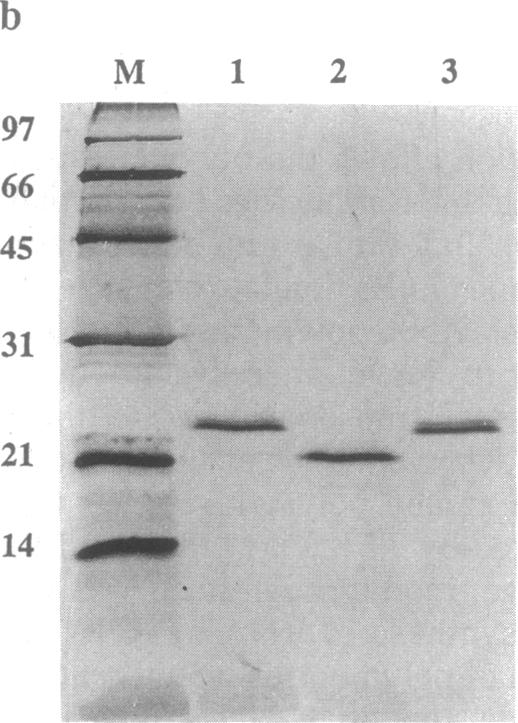
RNA polymerases encounter a variety of types of blocks to elongation during transcription in eukaryotic cells. At least one protein, TFIIS, can promote read-through of many types of blocks to elongation by RNA polymerase II, and this protein stimulates cleavage of the nascent transcript in stalled elongation complexes as a prelude to read-through. The C-terminal half of the TFIIS protein is sufficient for stimulating the cleavage and read-through reactions in vitro. To study how TFIIS changes the response of RNA polymerase II elongation complexes to such blocks, targeted amino acids in the C terminus of HeLa TFIIS were mutated to alanines. Two mutant TFIIS proteins as well as the unmutated C-terminal half of the TFIIS protein were purified following overexpression in Escherichia coli. Each protein was examined for read-through activity and ability to stimulate transcript cleavage in ternary elongation complexes. Mutant TFIIS5 (E174A, E175A) was reduced in read-through and cleavage activities relative to the unmutated, truncated TFIIS (delta TFIIS). Mutant TFIIS7 (K187A, K189A) was able to stimulate cleavage nearly at the rate and to the extent of the TFIIS5 mutant. In contrast to what was observed with TFIIS5, no detectable read-through was observed in the presence of the TFIIS7 mutant during the course of the reaction. Thus, there is no simple, direct correlation between the ability of TFIIS to promote cleavage and its ability to promote read-through by RNA polymerase II. These results suggest that although TFIIS is necessary to mediate the cleavage reaction that precedes the read-through event, the cleavage event itself is not sufficient to allow read-through by RNA polymerase II.
在真核细胞转录过程中,RNA聚合酶会遇到多种类型的延伸阻碍。至少有一种蛋白质,即转录因子Ⅱ S(TFIIS),能够促进RNA聚合酶Ⅱ跨越多种延伸阻碍进行通读,并且该蛋白质会刺激停滞延伸复合物中新生转录本的切割,以此作为通读的前奏。TFIIS蛋白的C端一半在体外足以刺激切割和通读反应。为了研究TFIIS如何改变RNA聚合酶Ⅱ延伸复合物对这类阻碍的反应,将HeLa细胞TFIIS C端的靶向氨基酸突变为丙氨酸。在大肠杆菌中过表达后,纯化了两种突变型TFIIS蛋白以及TFIIS蛋白未突变的C端一半。检测了每种蛋白质的通读活性以及在三元延伸复合物中刺激转录本切割的能力。与未突变的截短型TFIIS(δTFIIS)相比,突变型TFIIS5(E174A,E175A)的通读和切割活性降低。突变型TFIIS7(K187A,K189A)刺激切割的速率和程度几乎与TFIIS5突变体相同。与TFIIS5的情况相反,在反应过程中,在TFIIS7突变体存在的情况下未观察到可检测到的通读。因此,TFIIS促进切割的能力与其促进RNA聚合酶Ⅱ通读的能力之间不存在简单的直接相关性。这些结果表明,尽管TFIIS对于介导通读事件之前的切割反应是必需的,但切割事件本身不足以使RNA聚合酶Ⅱ进行通读。