Frey L, Schmidt J, Derksen D J, Skipper B
Medical Students Program, University of New Mexico School of Medicine, Albuquerque 87131.
West J Med. 1994 Jan;160(1):38-42.
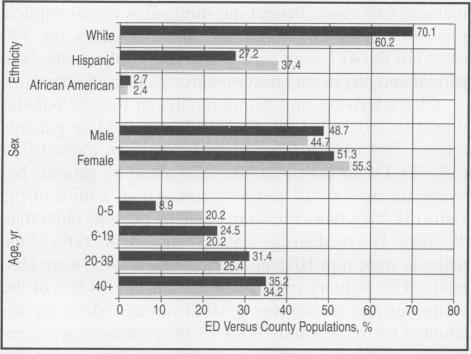
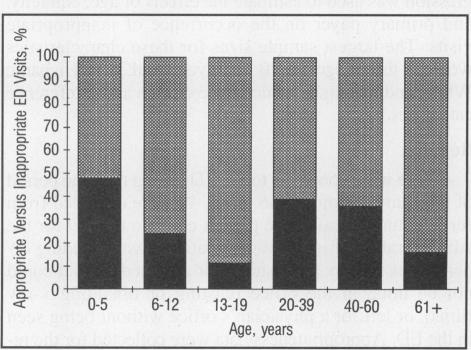
The appropriate use of emergency departments is of growing concern. By knowing which patients are more likely to make inappropriate visits to these departments, efforts can be directed to encourage more suitable care. Our study was done in a rural county hospital in eastern New Mexico. Data were collected from all emergency department visits over a 4-week period. Patient and physician questionnaires were administered to assess aspects of emergency department use, including appropriateness based on published criteria, physicians' opinion of appropriateness, groups who made inappropriate visits, and the perception of the need for and the urgency of a visit. We found that 32% of visits were inappropriate based on published criteria and 24% were considered inappropriate by physician opinion. Two groups with a high rate of inappropriate visits were Hispanics and Medicaid recipients. Patients and physicians have differing opinions of the urgency of a visit and of how soon medical treatment is required. To decrease the frequency of inappropriate use of emergency departments, educational efforts should be focused on the subgroups with high rates of such use.
急诊科的合理使用日益受到关注。通过了解哪些患者更有可能不适当地前往这些科室就诊,可以有针对性地努力鼓励采用更合适的治疗方式。我们的研究在新墨西哥州东部的一家乡村县医院进行。数据收集自为期4周的所有急诊科就诊病例。对患者和医生进行问卷调查,以评估急诊科使用的各个方面,包括根据已公布标准判断的合理性、医生对合理性的看法、进行不适当就诊的群体,以及对就诊必要性和紧迫性的认知。我们发现,根据已公布标准,32%的就诊是不适当的,而医生认为24%的就诊是不适当的。不适当就诊率较高的两个群体是西班牙裔和医疗补助领取者。患者和医生对就诊紧迫性以及需要多快进行治疗的看法存在差异。为了减少急诊科不适当使用的频率,教育工作应聚焦于此类使用率高的亚组人群。