Orrell R W, Marsden C D
University Department of Clinical Neurology, National Hospital, London, UK.
J Neurol Neurosurg Psychiatry. 1994 Mar;57(3):348-52. doi: 10.1136/jnnp.57.3.348.
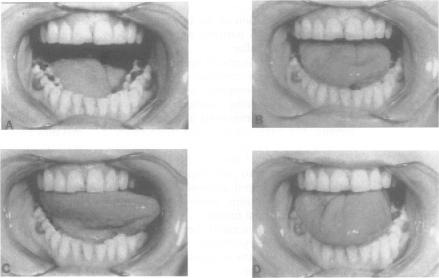
The neck-tongue syndrome, consisting of pain in the neck and altered sensation in the ipsilateral half of the tongue aggravated by neck movement, has been attributed to damage to lingual afferent fibres travelling in the hypoglossal nerve to the C2 spinal roots. The lingual afferents in the hypoglossal nerve are thought to be proprioceptive. Two further cases of the neck-tongue syndrome are described, the spectrum of its clinical manifestations is explored, and the phenomenon of lingual pseudoathetosis is illustrated as a result of the presumed lingual deafferentation.
颈舌综合征表现为颈部疼痛,且颈部活动会加重同侧舌半侧感觉改变,这被认为是由于舌下神经中向C2脊髓神经根走行的舌传入纤维受损所致。舌下神经中的舌传入纤维被认为是本体感觉纤维。本文描述了另外两例颈舌综合征病例,探讨了其临床表现范围,并举例说明了由于推测的舌传入神经缺失导致的舌假手足徐动症现象。