Thorpe J W, Mumford C J, Compston D A, Kendall B E, MacManus D G, McDonald W I, Miller D H
Multiple Sclerosis NMR Research Group, Institute of Neurology, Queen Square, London, UK.
J Neurol Neurosurg Psychiatry. 1994 Apr;57(4):491-6. doi: 10.1136/jnnp.57.4.491.
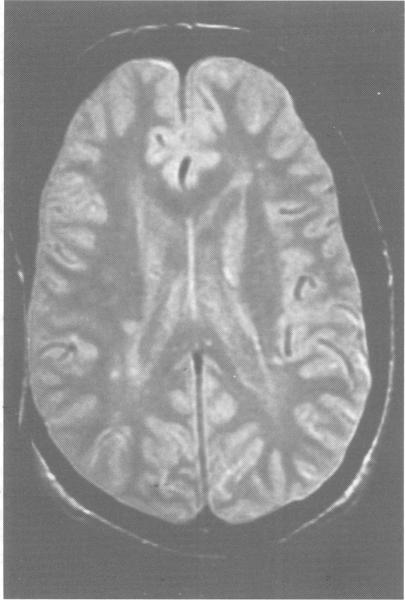
64/105 subjects who have a twin with multiple sclerosis included in a study of clinical concordance also underwent MRI of the brain. 8/23 monozygotic and 1/41 dizygotic co-twins from this subgroup were clinically concordant of whom 8/9 had MRI appearances typical of multiple sclerosis. Of the 48 clinically discordant twins aged less than 60, abnormalities on MRI were detected in 6/15 (40%) monozygotic and 13/33 (39%) dizygotic twins compared with 7/37 (19%) healthy age-matched controls. Abnormalities on MRI typical of multiple sclerosis (defined by the Fazekas criteria) were, however, present in only 2/15 (13%) monozygotic and 3/33 (9%) dizygotic twins and 0/37 controls. These results suggest that about 10% of monozygotic and dizygotic twins have "subclinical multiple sclerosis". It is likely that most of the MRI abnormalities seen in clinically discordant twins, however, represent incidental pathology.
在一项临床一致性研究中,纳入了有患多发性硬化症双胞胎的64/105名受试者,他们也接受了脑部MRI检查。该亚组中的8/23对同卵双胞胎和1/41对异卵双胞胎临床症状一致,其中8/9的MRI表现具有典型的多发性硬化特征。在48对年龄小于60岁的临床症状不一致的双胞胎中,15对同卵双胞胎中有6对(40%)、33对异卵双胞胎中有13对(39%)检测到MRI异常,相比之下,37名年龄匹配的健康对照中有7名(19%)出现异常。然而,符合多发性硬化典型特征(根据法泽卡斯标准定义)的MRI异常仅在15对同卵双胞胎中的2对(13%)、33对异卵双胞胎中的3对(9%)以及37名对照中0例出现。这些结果表明,约10%的同卵和异卵双胞胎患有“亚临床多发性硬化症”。然而,临床症状不一致的双胞胎中出现的大多数MRI异常可能代表偶然的病变。