Coleman T A, Kunsch C, Maher M, Ruben S M, Rosen C A
Department of Gene Regulation, Roche Institute of Molecular Biology, Nutley, New Jersey 07110.
Mol Cell Biol. 1993 Jul;13(7):3850-9. doi: 10.1128/mcb.13.7.3850-3859.1993.
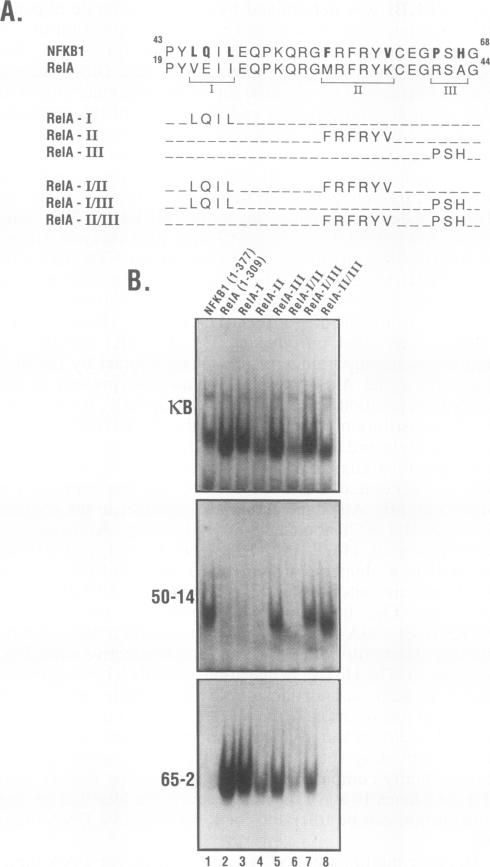
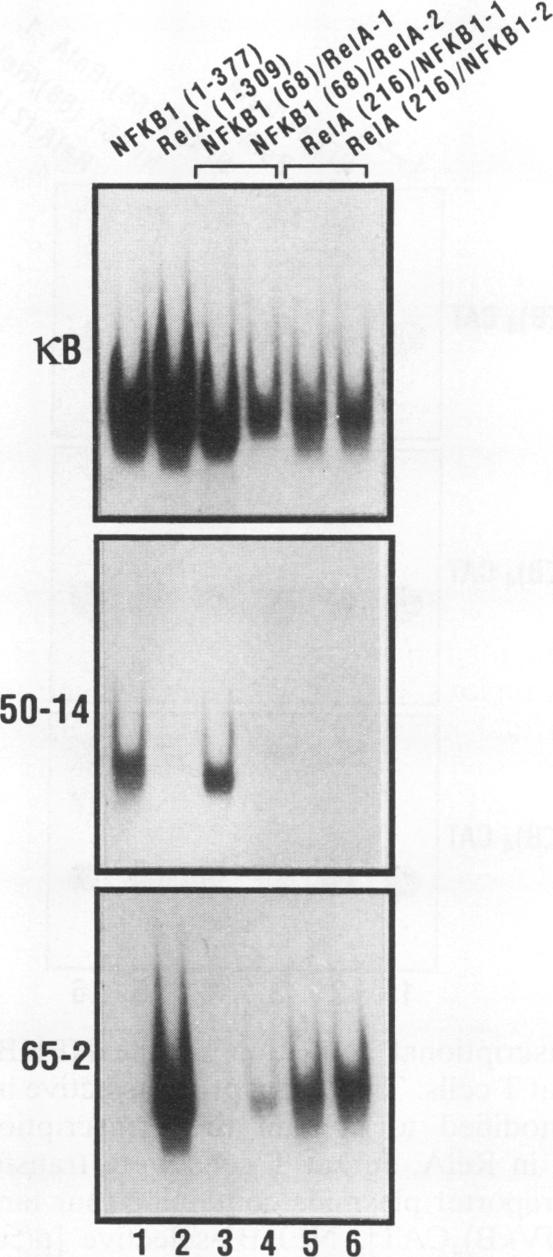
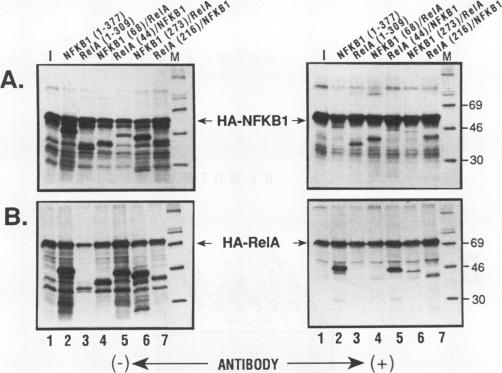
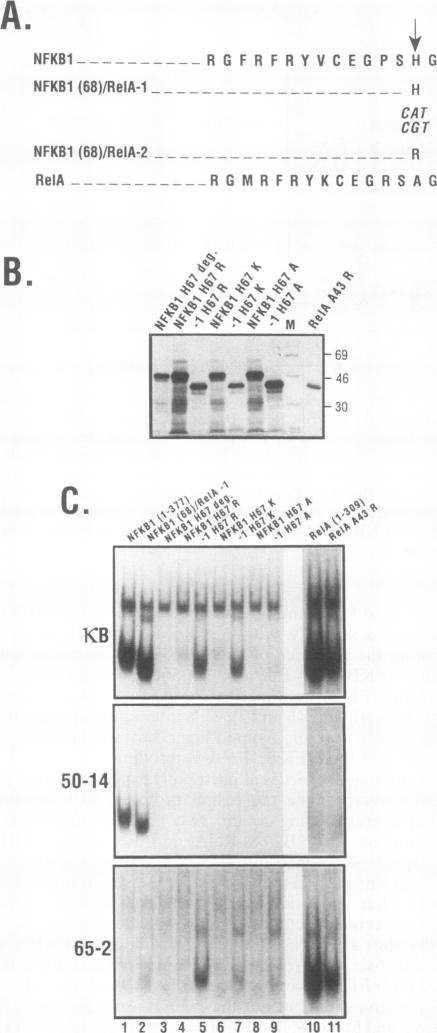
The subunits of NF-kappa B, NFKB1 (formerly p50) and RelA (formerly p65), belong to a growing family of transcription factors that share extensive similarity to the c-rel proto-oncogene product. The homology extends over a highly conserved stretch of approximately 300 amino acids termed the Rel homology domain (RHD). This region has been shown to be involved in both multimerization (homo- and heterodimerization) and DNA binding. It is now generally accepted that homodimers of either subunit are capable of binding DNA that contains a kappa B site originally identified in the immunoglobulin enhancer. Recent studies have demonstrated that the individual subunits of the NF-kappa B transcription factor complex can be distinguished by their ability to bind distinct DNA sequence motifs. By using NFKB1 and RelA subunit fusion proteins, different regions within the RHD were found to confer DNA-binding and multimerization functions. A fusion protein that contains 34 N-terminal amino acids of NFKB1 and 264 amino acids of RelA displayed preferential binding to an NFKB1-selective DNA motif while dimerizing with the characteristics of RelA. Within the NFKB1 portion of this fusion protein, a single amino acid change of His to Arg altered the DNA-binding specificity to favor interaction with the RelA-selective DNA motif. Furthermore, substitution of four amino acids from NFKB1 into RelA was able to alter the DNA-binding specificity of the RelA protein to favor interaction with the NFKB1-selective site. Taken together, these findings demonstrate the presence of a distinct subdomain within the RHD involved in conferring the DNA-binding specificity of the Rel family of proteins.
核因子-κB(NF-κB)的亚基NFKB1(以前称为p50)和RelA(以前称为p65)属于一个不断壮大的转录因子家族,它们与c-rel原癌基因产物具有广泛的相似性。这种同源性延伸到一段高度保守的约300个氨基酸的区域,称为Rel同源结构域(RHD)。该区域已被证明参与多聚化(同源和异源二聚化)以及DNA结合。现在普遍认为,任一亚基的同二聚体都能够结合含有最初在免疫球蛋白增强子中鉴定出的κB位点的DNA。最近的研究表明,NF-κB转录因子复合物的各个亚基可以通过它们结合不同DNA序列基序的能力来区分。通过使用NFKB1和RelA亚基融合蛋白,发现RHD内的不同区域赋予DNA结合和多聚化功能。一种包含NFKB1的34个N端氨基酸和RelA的264个氨基酸的融合蛋白在与RelA的特征二聚化时,对NFKB1选择性DNA基序表现出优先结合。在该融合蛋白的NFKB1部分内,单个氨基酸从组氨酸变为精氨酸改变了DNA结合特异性,有利于与RelA选择性DNA基序相互作用。此外,将NFKB1的四个氨基酸替换到RelA中能够改变RelA蛋白的DNA结合特异性,有利于与NFKB1选择性位点相互作用。综上所述,这些发现表明RHD内存在一个独特的亚结构域,参与赋予Rel家族蛋白的DNA结合特异性。