Higuchi R, Krummel B, Saiki R K
Department of Human Genetics, Cetus Corporation, Emeryville, CA 94608.
Nucleic Acids Res. 1988 Aug 11;16(15):7351-67. doi: 10.1093/nar/16.15.7351.
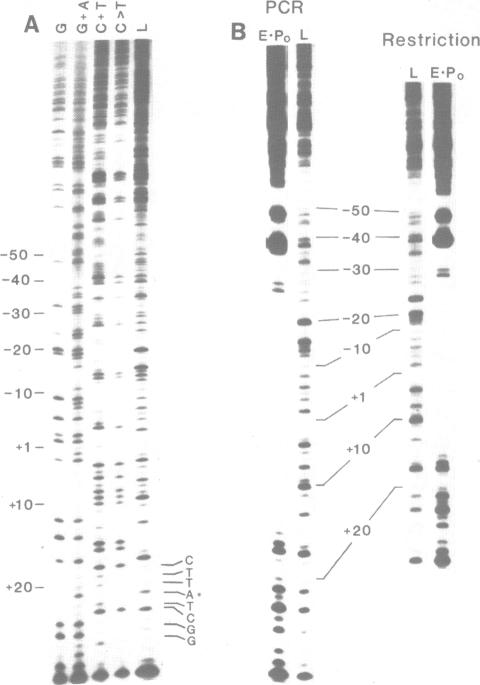
Specific, end-labeled DNA fragments can be simply and rapidly prepared using the polymerase chain reaction (PCR). Such fragments are suitable for use in DNase I protection footprint assays, chemical sequencing reactions, and for the production and analysis of paused RNA polymerase transcription complexes. Moreover, a general means of introducing a specific mutation at any position along the length of such PCR-generated fragments is described. These procedures, which can circumvent the need for large-scale phage or plasmid growths, preparative gel-electrophoresis and the screening of molecular clones, can facilitate the rapid study of sequence-specific interactions of proteins and DNA. A rapid means of removing excess oligonucleotide primers from completed PCRs is also described.
使用聚合酶链反应(PCR)可以简单快速地制备特定的、末端标记的DNA片段。此类片段适用于DNase I保护足迹分析、化学测序反应以及用于产生和分析暂停的RNA聚合酶转录复合物。此外,还描述了一种在这类PCR产生的片段全长的任何位置引入特定突变的通用方法。这些方法可以避免大规模噬菌体或质粒培养、制备性凝胶电泳以及分子克隆筛选的需求,有助于快速研究蛋白质与DNA的序列特异性相互作用。本文还描述了一种从完成的PCR中快速去除过量寡核苷酸引物的方法。