Kornacki J A, Chang C H, Figurski D H
Department of Microbiology, College of Physicians and Surgeons, Columbia University, New York, New York 10032.
J Bacteriol. 1993 Aug;175(16):5078-90. doi: 10.1128/jb.175.16.5078-5090.1993.
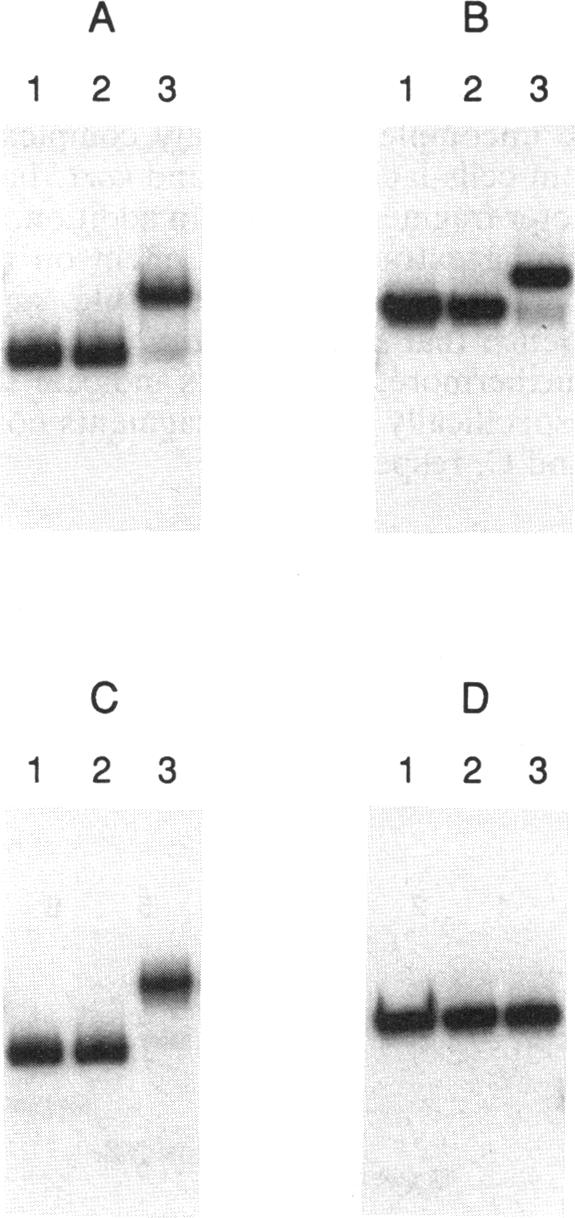
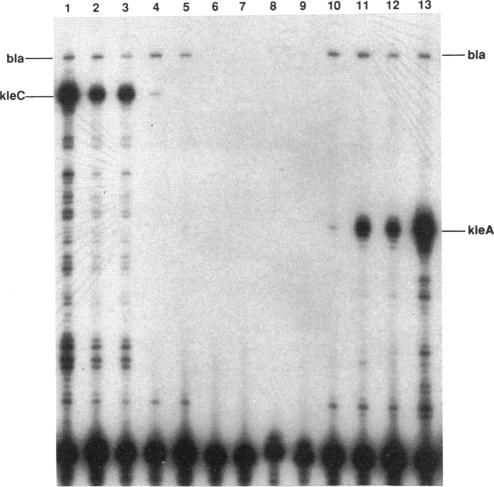
The kil-kor regulon of IncP plasmid RK2 is a complex regulatory network that includes genes for replication and conjugal transfer, as well as for several potentially host-lethal proteins encoded by the kilA, kilB, and kilC loci. While kilB is known to be involved in conjugal transfer, the functions of kilA and kilC are unknown. The coregulation of kilA and kilC with replication and transfer genes indicates a possible role in the maintenance or broad host range of RK2. In this work, we found that a fourth kil locus, designated kilE, is located in the kb 2.4 to 4.5 region of RK2 and is regulated as part of the kil-kor regulon. The cloned kilE locus cannot be maintained in Escherichia coli host cells, unless korA or korC is also present in trans to control its expression. The nucleotide sequence of the kilE region revealed two potential multicistronic operons. The kleA operon consists of two genes, kleA and kleB, predicted to encode polypeptide products with molecular masses of 8.7 and 7.6 kDa, respectively. The kleC operon contains four genes, kleC, kleD, kleE, and kleF, with predicted products of 9.2, 8.0, 12.2, and 11.3 kDa, respectively. To identify the polypeptide products, each gene was cloned downstream of the phage T7 phi 10 promoter and expressed in vivo in the presence of T7 RNA polymerase. A polypeptide product of the expected size was observed for all six kle genes. In addition, kleF expressed a second polypeptide of 6 kDa that most likely results from the use of a predicted internal translational start site. The kleA and kleC genes are each preceded by sequences resembling strong sigma 70 promoters. Primer extension analysis revealed that the putative kleA and kleC promoters are functional in E. coli and that transcription is initiated at the expected nucleotides. The abundance of transcripts initiated in vivo from both the kleA and kleC promoters was reduced in cells containing korA or korC. When korA and korC were present together, they appeared to act synergistically in reducing the level of transcripts from both promoters. The kleA and kleC promoter regions are highly homologous and contain two palindromic sequences (A and C) that are the predicted targets for KorA and KorC proteins. DNA binding studies showed that protein extracts from korA-containing E. coli cells specifically retarded the electrophoretic mobility of DNA fragments containing palindrome A. Extracts from korC-containing cells altered the mobility of DNA fragments containing palindrome C. These results show that KorA and KorC both act as repressors of the kleAand kleC promoters. In the absence of korA and korC, expression of the cloned kleA operon was lethal to E.coli cells, whereas the cloned kleC operon gave rise to slowly growing, unhealthy colonies. Both phenotypes depended on at least one structural gene in each operon, suggesting that the operons encode genes whose products interact with critical host functions required for normal growth and viability. Thus, the kilA, kilC, and kilE loci of RK2 constitute a cluster of at least 10 genes that are coregulated with the plasmid replication initiator and the conjugal transfer system. Their potential toxicity to the host cell indicates that RK2 is able to establish a variety of intimate plasmid-host interactions that may be important to its survival in nature.

IncP 质粒 RK2 的 kil-kor 调控子是一个复杂的调控网络,它包括复制和接合转移相关基因,以及由 kilA、kilB 和 kilC 位点编码的几种可能对宿主具有致死性的蛋白质。虽然已知 kilB 参与接合转移,但 kilA 和 kilC 的功能尚不清楚。kilA 和 kilC 与复制及转移基因的共调控表明它们在 RK2 的维持或广泛宿主范围中可能发挥作用。在本研究中,我们发现第四个 kil 位点,命名为 kilE,位于 RK2 的 2.4 至 4.5 kb 区域,并且作为 kil-kor 调控子的一部分受到调控。克隆的 kilE 位点无法在大肠杆菌宿主细胞中维持,除非 korA 或 korC 也以反式存在以控制其表达。kilE 区域的核苷酸序列揭示了两个潜在的多顺反子操纵子。kleA 操纵子由两个基因 kleA 和 kleB 组成,预计分别编码分子量为 8.7 kDa 和 7.6 kDa 的多肽产物。kleC 操纵子包含四个基因 kleC、kleD、kleE 和 kleF,预计产物分别为 9.2 kDa、8.0 kDa、12.2 kDa 和 11.3 kDa。为了鉴定多肽产物,每个基因都克隆到噬菌体 T7 phi 10 启动子下游,并在 T7 RNA 聚合酶存在的情况下在体内表达。所有六个 kle 基因均观察到预期大小的多肽产物。此外,kleF 表达了一个 6 kDa 的第二条多肽,这很可能是由于使用了预测的内部翻译起始位点。kleA 和 kleC 基因之前的序列都类似于强 sigma 70 启动子。引物延伸分析表明,假定的 kleA 和 kleC 启动子在大肠杆菌中具有功能,转录起始于预期的核苷酸。在含有 korA 或 korC 的细胞中,从 kleA 和 kleC 启动子在体内起始的转录本丰度降低。当 korA 和 korC 同时存在时,它们似乎协同作用以降低两个启动子的转录本水平。kleA 和 kleC 启动子区域高度同源,包含两个回文序列(A 和 C),这是 KorA 和 KorC 蛋白的预测靶标。DNA 结合研究表明,来自含有 korA 的大肠杆菌细胞的蛋白质提取物特异性地延迟了含有回文 A 的 DNA 片段的电泳迁移率。来自含有 korC 的细胞的提取物改变了含有回文 C 的 DNA 片段的迁移率。这些结果表明 KorA 和 KorC 均作为 kleA 和 kleC 启动子的阻遏物。在没有 korA 和 korC 的情况下,克隆的 kleA 操纵子的表达对大肠杆菌细胞具有致死性,而克隆的 kleC 操纵子产生生长缓慢、不健康的菌落。两种表型均取决于每个操纵子中的至少一个结构基因,这表明操纵子编码的基因产物与正常生长和生存所需的关键宿主功能相互作用。因此,RK2 的 kilA、kilC 和 kilE 位点构成了一个至少 10 个基因的簇,它们与质粒复制起始子和接合转移系统共同调控。它们对宿主细胞的潜在毒性表明 RK2 能够建立多种紧密的质粒 - 宿主相互作用,这可能对其在自然环境中的生存很重要。