Santarén J F, Ramírez J C, Almendral J M
Centro de Biología Molecular Severo Ochoa (UAM-CSIC), Universidad Autónoma, Cantoblanco, Madrid, Spain.
J Virol. 1993 Sep;67(9):5126-38. doi: 10.1128/JVI.67.9.5126-5138.1993.
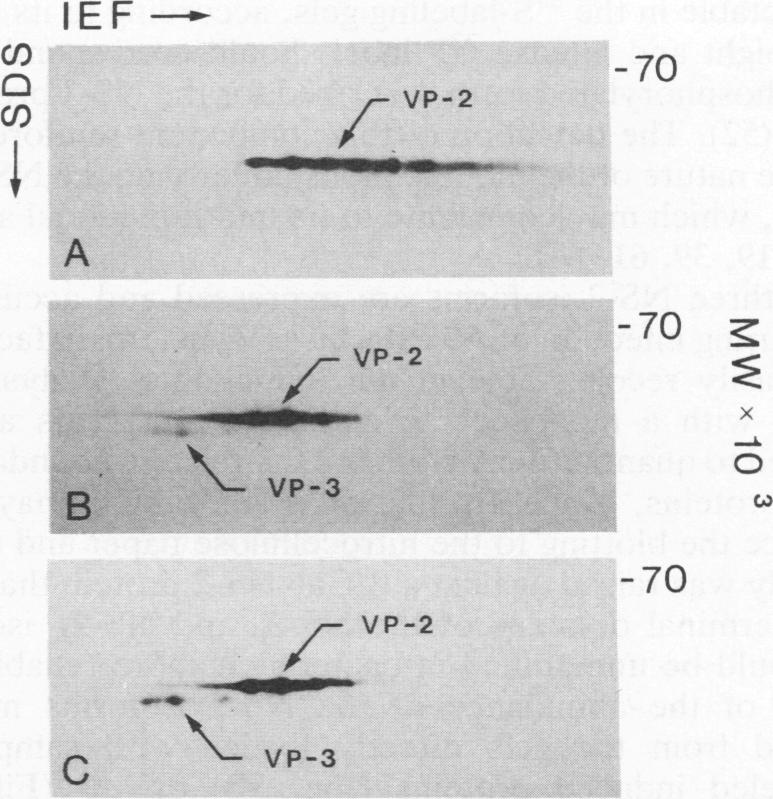
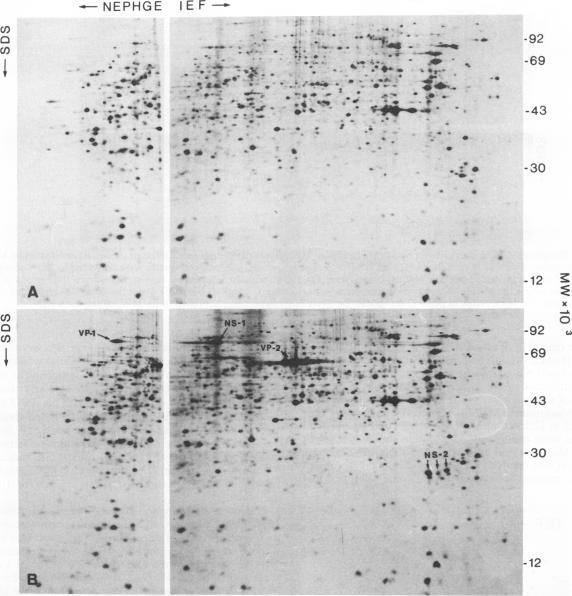
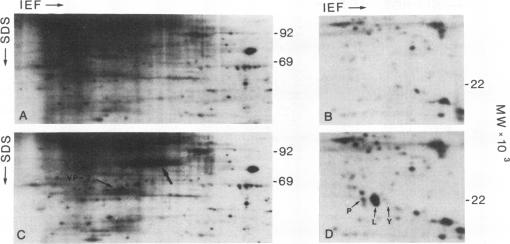
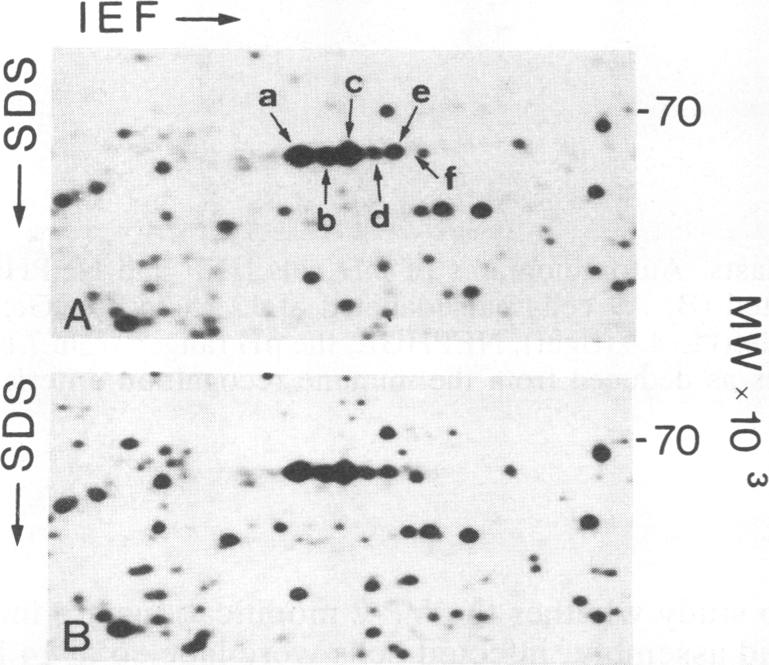
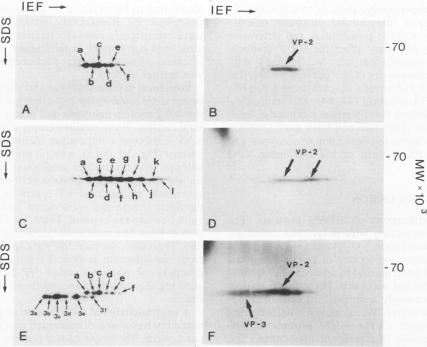
The pattern of induced protein species of the prototype strain of the parvovirus minute virus of mice was determined in permissive A9 mouse fibroblast cells by high-resolution two-dimensional gel electrophoresis. Identities of the viral proteins in the gels were assigned by probing two-dimensional blots with antisera raised against either purified capsids (recognizing VP-1 and VP-2) or specific coding regions of the nonstructural proteins (NS-1 and NS-2) expressed as beta-galactosidase fusion products in bacteria. All viral proteins showed posttranslational modifications, phosphate being a common substituent. The NS-1 protein migrated as a basic polypeptide in the pI range of 7.4 to 7.8 with multiple stages of modification and as a likely minor but hyperphosphorylated component in the neutral region of the gel. The NS-2 isoforms were resolved at a pI value close to 5.5 as three groups of unevenly phosphorylated polypeptides, each composed of at least two protein species. Both VP-1 and VP-2 structural polypeptides were induced as heterogeneous phosphoproteins. The major VP-2 protein could be resolved in the form of a consistent pattern of three abundant (a to c), two intermediate (d and e), and one meager (f) neutral isoelectric focusing species or subtypes. This posttranslational modification precedes and is uncoupled from viral assembly, and all of the VP-2 subtypes are packaged into empty capsids at the induced stoichiometry. However, intracellular full virions harbored additional phosphorylated subtypes (g to l) and a subtle rearrangement in the whole VP-2 composition, while mature virions purified from lysed cultures lacked these subtypes, coordinately with the emergence of six neutral VP-3 subtypes. Thus, the virion coat undergoes a chemical transition entailed by genome encapsidation, in which phosphates seem to play a major role, triggering the preferential proteolytic cleavage of the more acidic VP-2 subtypes to VP-3. Parvoviruses, with small coding capacity, may regulate some morphogenetic steps, such as assembly, genome encapsidation, and maturation, by posttranslational modifications of their structural proteins.
通过高分辨率二维凝胶电泳,在允许性A9小鼠成纤维细胞中确定了小鼠细小病毒原型株诱导的蛋白质种类模式。通过用针对纯化衣壳(识别VP - 1和VP - 2)或在细菌中作为β - 半乳糖苷酶融合产物表达的非结构蛋白(NS - 1和NS - 2)的特定编码区域产生的抗血清探测二维印迹,确定了凝胶中病毒蛋白的身份。所有病毒蛋白均显示出翻译后修饰,磷酸是常见的取代基。NS - 1蛋白在pH值7.4至7.8范围内以碱性多肽形式迁移,具有多个修饰阶段,并且在凝胶的中性区域作为可能的次要但高度磷酸化的组分迁移。NS - 2同工型在接近5.5的pH值下解析为三组磷酸化程度不均一的多肽,每组至少由两种蛋白质种类组成。VP - 1和VP - 2结构多肽均作为异质磷蛋白被诱导产生。主要的VP - 2蛋白可以以三种丰富的(a至c)、两种中等的(d和e)和一种稀少的(f)中性等电聚焦种类或亚型的一致模式解析出来。这种翻译后修饰先于病毒组装且与病毒组装无关,并且所有VP - 2亚型都以诱导的化学计量比包装到空衣壳中。然而,细胞内的完整病毒粒子含有额外的磷酸化亚型(g至l)以及整个VP - 2组成的细微重排,而从裂解培养物中纯化的成熟病毒粒子缺乏这些亚型,同时出现了六种中性VP - 3亚型。因此,病毒粒子外壳经历了由基因组包装引起的化学转变,其中磷酸盐似乎起主要作用,触发了酸性更强的VP - 2亚型向VP - 3的优先蛋白水解切割。细小病毒编码能力小,可能通过其结构蛋白的翻译后修饰来调节一些形态发生步骤,如组装、基因组包装和成熟。