Murakami S, Saho T, Shimabukuro Y, Isoda R, Miki Y, Okada H
Department of Periodontology and Endodontology, Osaka University Faculty of Dentistry, Japan.
Immunology. 1993 Jul;79(3):425-33.
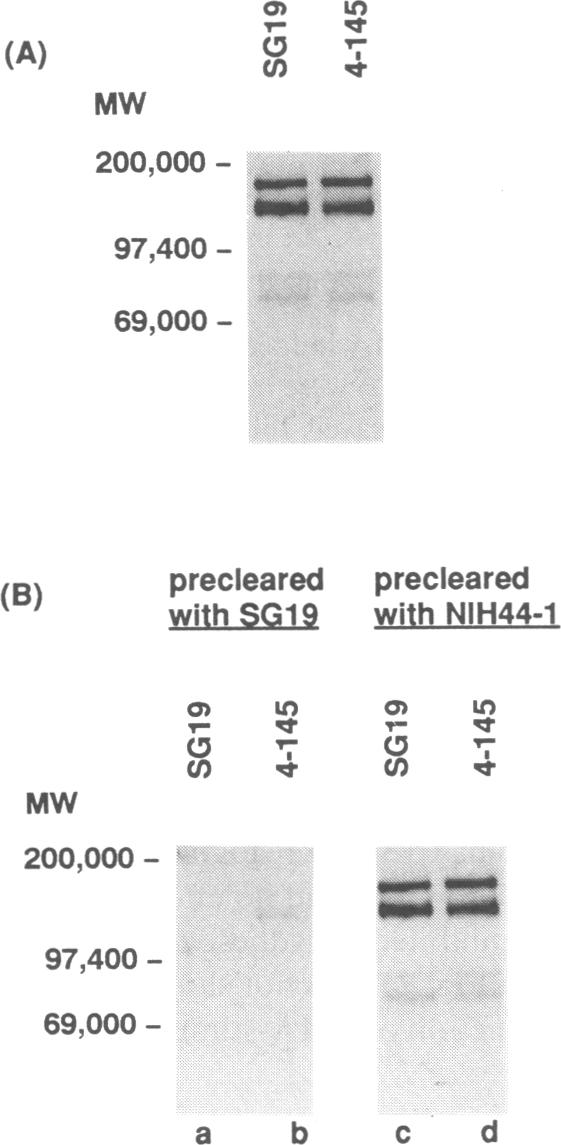
To date, it is still unclear how the trafficking and retention of activated lymphocytes in periodontal lesions are regulated. In this study, we investigated the molecular basis for the adhesive interactions between lymphocytes and human gingival fibroblasts (HGF). Peripheral blood T lymphocytes (PBT) exhibited binding ability, but only when the calls were activated with phorbol 12-myristate 13-acetate (PMA). Among several human cell lines tested, PMA-stimulated Molt-4, a human T-cell leukaemia line, also displayed significant binding ability to HGF. In order to clarify the molecule(s) involved in this cell-cell interaction, a panel of monoclonal antibodies (mAb) was prepared to PMA-activated Molt-4 and one clone, 4-145, was selected on the basis of its ability to block the binding of PMA-activated Molt-4 to HGF. Moreover, 4-145 inhibited the binding of not only activated Molt-4 but also activated PBT and other cell types to HGF. Biochemical and flow cytometric analyses revealed that 4-145 probably recognizes the beta 1 chain of very late antigen (VLA) integrins. Blocking experiments using mAb specific for the alpha-chain of VLA integrins demonstrated the involvement of alpha 4 (VLA-4) and, to a lesser extent, alpha 5 (VLA-5) chains in the adhesive interactions between T cells and HGF. Despite the significant involvement of VLA integrins in the adhesive interaction between PBT and HGF, the binding of PBT to human dermal fibroblasts (HDF) was not abrogated by 4-145, suggesting that HGF and HDF differ in their requirement of VLA integrins for adhesion to activated PBT. Furthermore, the fact that vascular cell adhesion molecule-1 (VCAM-1), one of the ligands of VLA-4, was not detected on HGF by flow cytometry and anti-fibronectin (FN) Ab did not block the adhesive interaction to HGF suggests that not-yet-identified ligand(s) for VLA-4 might be present on HGF.
迄今为止,尚不清楚牙周病变中活化淋巴细胞的运输和滞留是如何被调控的。在本研究中,我们调查了淋巴细胞与人牙龈成纤维细胞(HGF)之间黏附相互作用的分子基础。外周血T淋巴细胞(PBT)表现出结合能力,但仅在细胞用佛波酯12-肉豆蔻酸酯13-乙酸酯(PMA)激活时才具有。在所测试的几种人类细胞系中,PMA刺激的人T细胞白血病系Molt-4也显示出对HGF有显著的结合能力。为了阐明参与这种细胞间相互作用的分子,制备了一组针对PMA激活的Molt-4的单克隆抗体(mAb),并基于其阻断PMA激活的Molt-4与HGF结合的能力选择了一个克隆4-145。此外,4-145不仅抑制活化的Molt-4与HGF的结合,还抑制活化的PBT和其他细胞类型与HGF的结合。生化和流式细胞术分析表明,4-145可能识别极迟抗原(VLA)整合素的β1链。使用针对VLA整合素α链的特异性mAb进行的阻断实验表明,α4(VLA-4)以及在较小程度上α5(VLA-5)链参与了T细胞与HGF之间的黏附相互作用。尽管VLA整合素在PBT与HGF之间的黏附相互作用中起重要作用,但4-145并未消除PBT与人皮肤成纤维细胞(HDF)的结合,这表明HGF和HDF在黏附活化PBT时对VLA整合素的需求不同。此外,通过流式细胞术在HGF上未检测到VLA-4的配体之一血管细胞黏附分子-1(VCAM-1),并且抗纤连蛋白(FN)抗体未阻断与HGF的黏附相互作用,这表明HGF上可能存在尚未鉴定的VLA-4配体。