Aoyama A, Fröhli E, Schäfer R, Klemenz R
Department of Pathology, University of Zürich Medical School, Switzerland.
Mol Cell Biol. 1993 Mar;13(3):1824-35. doi: 10.1128/mcb.13.3.1824-1835.1993.
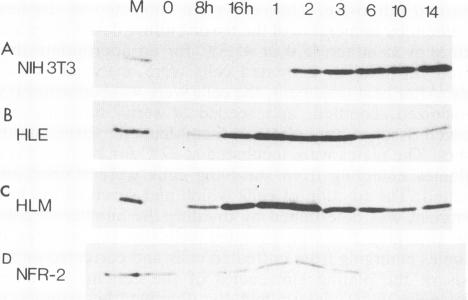
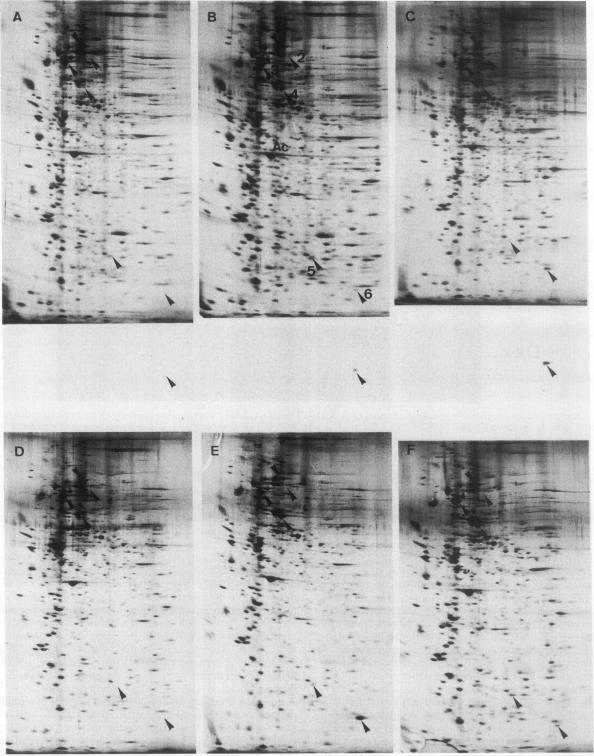
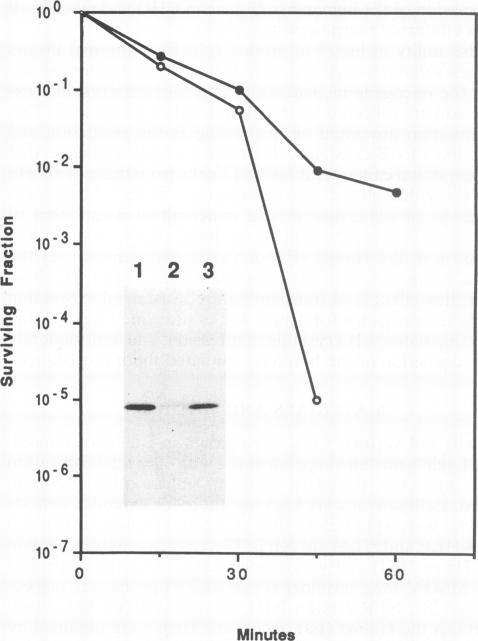
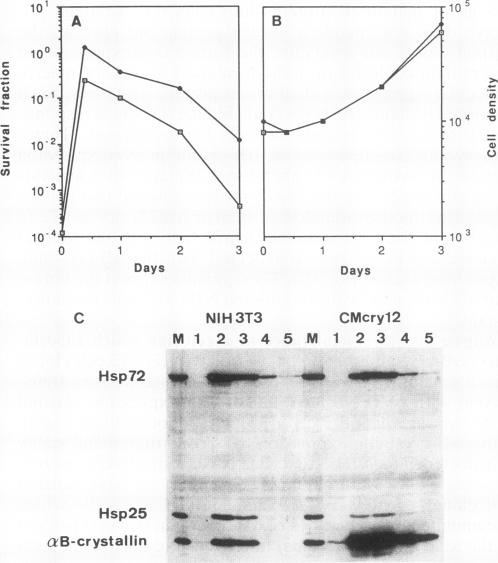
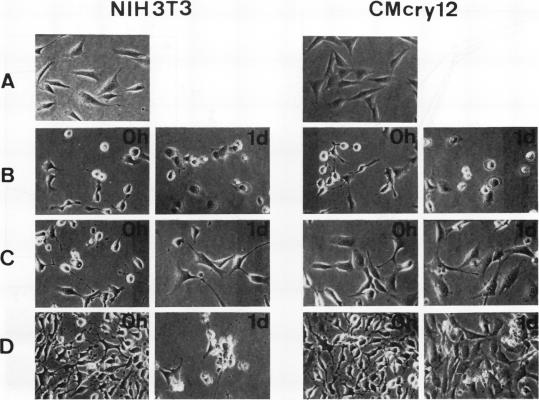
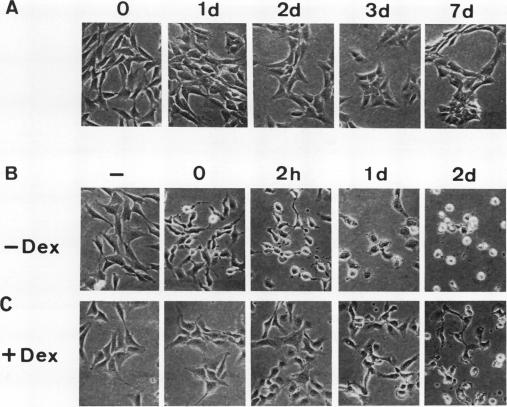
alpha B-crystallin, a major soluble protein of vertebrate eye lenses, is a small heat shock protein which transiently accumulates in response to heat shock and other kinds of stress in mouse NIH 3T3 fibroblasts. Ectopic expression of an alpha B-crystallin cDNA clone renders NIH 3T3 cells thermoresistant. alpha B-crystallin accumulates in response to the synthetic glucocorticoid hormone dexamethasone. Dexamethasone-treated NIH 3T3 cells become thermoresistant to the same extent as they accumulate alpha B-crystallin. A cell clone in which alpha B-crystallin is superinduced upon heat shock acquires augmented thermotolerance. Expression of the ras oncogene causes a rapid but transient accumulation of alpha B-crystallin within 1 day. Later, sustained ras oncogene expression suppresses the dexamethasone-mediated alpha B-crystallin accumulation. Thus, oncogenic transformation triggered by the ras oncogene interferes with hormone-mediated accumulation of alpha B-crystallin and concomitant acquisition of thermoresistance. Other known heat shock proteins do not accumulate in response to ectopic alpha B-crystallin expression or to dexamethasone treatment. These results indicate that alpha B-crystallin can protect NIH 3T3 fibroblasts from thermal shock.
αB晶状体蛋白是脊椎动物眼晶状体的一种主要可溶性蛋白,是一种小分子热休克蛋白,在小鼠NIH 3T3成纤维细胞中,它会因热休克和其他类型的应激而短暂积累。αB晶状体蛋白cDNA克隆的异位表达使NIH 3T3细胞具有耐热性。αB晶状体蛋白会因合成糖皮质激素地塞米松而积累。经地塞米松处理的NIH 3T3细胞在积累αB晶状体蛋白的同时,也获得了相同程度的耐热性。一个在热休克时αB晶状体蛋白被超诱导的细胞克隆获得了增强的耐热性。ras癌基因的表达会在1天内导致αB晶状体蛋白快速但短暂的积累。随后,ras癌基因的持续表达会抑制地塞米松介导的αB晶状体蛋白积累。因此,由ras癌基因引发的致癌转化会干扰激素介导的αB晶状体蛋白积累以及随之而来的耐热性获得。其他已知的热休克蛋白不会因αB晶状体蛋白的异位表达或地塞米松处理而积累。这些结果表明,αB晶状体蛋白可以保护NIH 3T3成纤维细胞免受热休克。