Hartung J S, Daniel J F, Pruvost O P
Plant Sciences Institute, U.S. Department of Agriculture, Beltsville, Maryland 20705.
Appl Environ Microbiol. 1993 Apr;59(4):1143-8. doi: 10.1128/aem.59.4.1143-1148.1993.
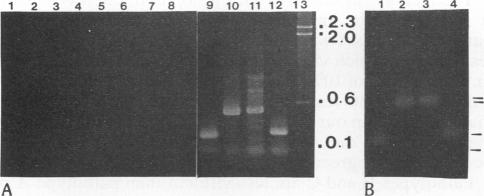
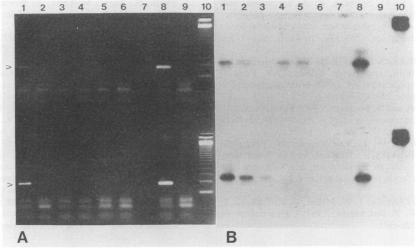
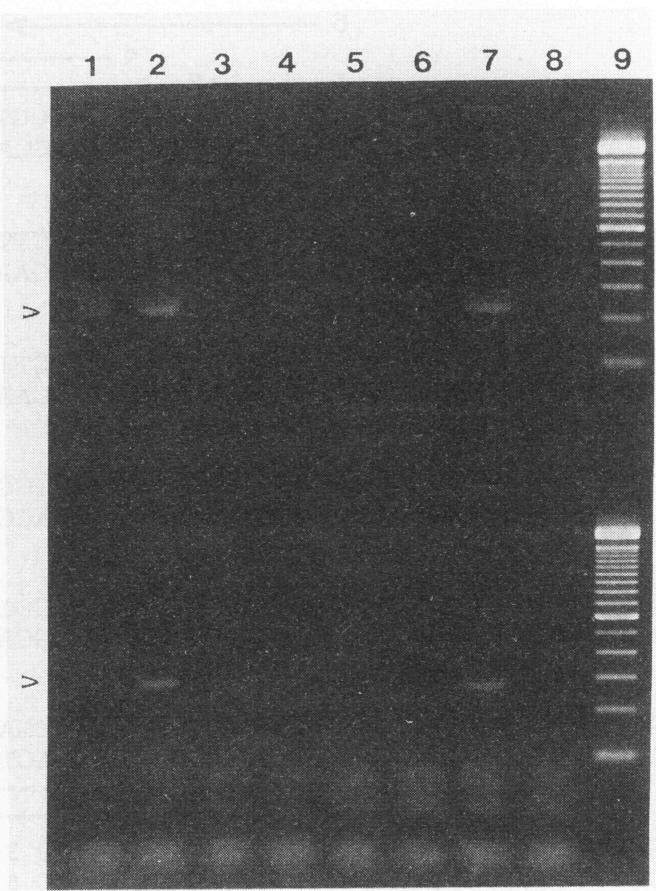
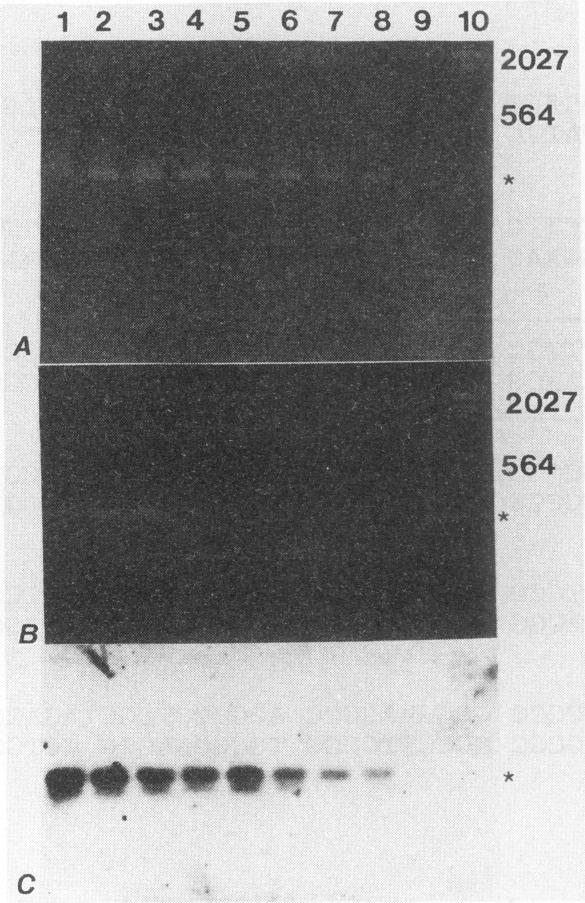
pFL1 is a pUC9 derivative that contains a 572-bp EcoRI insert cloned from plasmid DNA of Xanthomonas campestris pv. citri XC62. The nucleotide sequence of pFL1 was determined, and the sequence information was used to design primers for application of the polymerase chain reaction (PCR) to the detection of X. campestris pv. citri, the causal agent of citrus bacterial canker disease. Seven 18-bp oligonucleotide primers were designed and tested with DNA from X. campestris pv. citri strains and other strains of X. campestris associated with Citrus spp. as templates in the PCR. Four primer pairs directed the amplification of target DNA from X. campestris pv. citri strains but not from strains of X. campestris associated with a different disease, citrus bacterial spot. Primer pair 2-3 directed the specific amplification of target DNA from pathotype A but not other pathotypes of X. campestris pv. citri. A pH 9.0 buffer that contained 1% Triton X-100 and 0.1% gelatin was absolutely required for the successful amplification of the target DNA, which was 61% G+C. Limits of detection after amplification and gel electrophoresis were 25 pg of purified target DNA and about 10 cells when Southern blots were made after gel electrophoresis and probed with biotinylated pFL1. This level of detection represents an increase in sensitivity of about 100-fold over that of dot blotting with the same hybridization probe. PCR products of the expected sizes were amplified from DNA extracted from 7-month-old lesions from which viable bacteria could not be isolated. These products were confirmed to be specific for X. campestris pv. citri by Southern blotting. This PCR-based detection protocol will be a useful addition to current methods of detection of this pathogen, which is currently the target of international quarantine measures.
pFL1是一种pUC9衍生物,它包含一个从野油菜黄单胞菌柑橘致病变种XC62的质粒DNA中克隆的572碱基对的EcoRI插入片段。测定了pFL1的核苷酸序列,并利用该序列信息设计引物,用于聚合酶链反应(PCR)检测柑橘溃疡病的病原菌——野油菜黄单胞菌柑橘致病变种。设计了7条18碱基对的寡核苷酸引物,并用野油菜黄单胞菌柑橘致病变种菌株以及与柑橘属植物相关的其他野油菜黄单胞菌菌株的DNA作为模板进行PCR检测。四对引物能从野油菜黄单胞菌柑橘致病变种菌株中扩增出目标DNA,但不能从与另一种病害——柑橘细菌性斑点病相关的野油菜黄单胞菌菌株中扩增出目标DNA。引物对2 - 3能从致病型A的野油菜黄单胞菌柑橘致病变种中特异性扩增出目标DNA,但不能从其他致病型中扩增出目标DNA。成功扩增目标DNA绝对需要一种pH 9.0的缓冲液,该缓冲液含有1% Triton X - 100和0.1%明胶,目标DNA的G + C含量为61%。扩增和凝胶电泳后的检测限为25 pg纯化的目标DNA,凝胶电泳后进行Southern杂交并用生物素化的pFL1探针检测时,检测限约为10个细胞。这种检测水平比用相同杂交探针进行斑点杂交的灵敏度提高了约100倍。从7个月大的病斑中提取的DNA扩增出了预期大小的PCR产物,从这些病斑中无法分离出活细菌。通过Southern杂交证实这些产物对野油菜黄单胞菌柑橘致病变种具有特异性。这种基于PCR的检测方案将是目前检测这种病原菌方法的有益补充,该病原菌目前是国际检疫措施的目标。