Engers R, van Roy F, Heymer T, Ramp U, Moll R, Dienst M, Friebe U, Pohl A, Gabbert H E, Gerharz C D
Institute of Pathology, Heinrich-Heine University, Dusseldorf, Germany.
Br J Cancer. 1996 Feb;73(4):491-8. doi: 10.1038/bjc.1996.86.
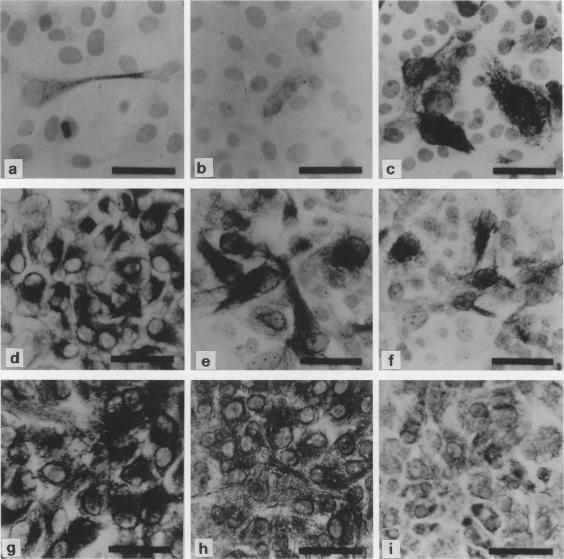
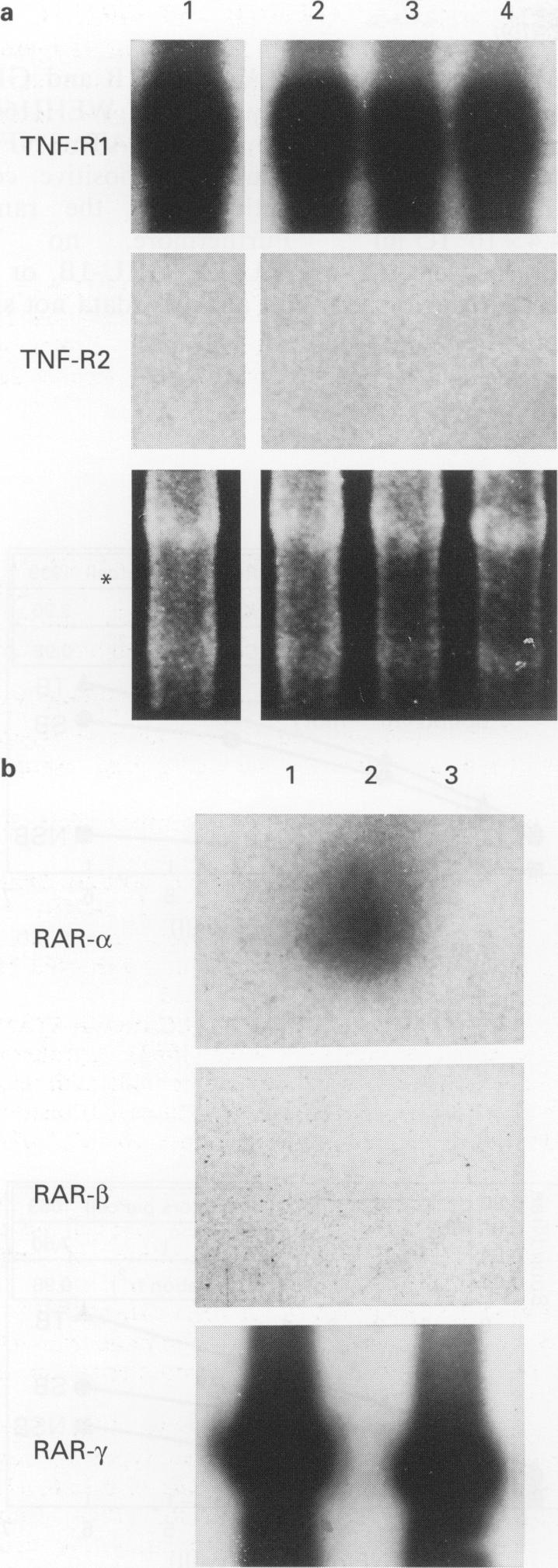
Epithelioid sarcoma is a highly malignant soft tissue tumour that is refractory to conventional chemotherapy and irradiation. Since permanent cell lines of this tumour are extremely rare, in vitro data on compounds with significant antiproliferative effects are still lacking. Therefore, we investigated the effects of retinoic acid (RA) and tumour necrosis factor alpha (TNF-alpha) on tumour cell proliferation of three different clonal subpopulations (GRU-1A, GRU-1B, GRU-1C) derived from the same human epithelioid sarcoma cell line, GRU-1. In GRU-1A both RA (P=0.01) and TNF-alpha (P=0.002) exhibited highly significant and dose-dependent growth inhibitory effects, which could further be increased by a combined application of both compounds (P<0.006). GRU-1B proved to be sensitive to RA (P=0.006), whereas no response to TNF-alpha was observed. GRU-1C was resistant to both RA and TNF-alpha. The antiproliferative effect of TNF-alpha was mediated by TNF receptor 1(TNF-R1) and correlated positively with both the number of TNF-R1 per cell and receptor affinity. No correlation was detected between RA-induced growth inhibition and the expression pattern of the RA receptors (RARs) RAR-alpha, RAR-beta, and RAR-gamma. Plating efficiency, however, could exclusively be reduced by RA in GRU-1B, the only cell line expressing RAR-alpha. Taken together, these data are the first showing significant antiproliferative effects in human epithelioid sarcoma by RA and TNF-alpha. Whereas the TNF-alpha response seems to depend on the expression of TNF-R1, no simple correlation could be found between RA sensitivity and the expression pattern of RARs.
上皮样肉瘤是一种高度恶性的软组织肿瘤,对传统化疗和放疗均具有抗性。由于该肿瘤的永久细胞系极为罕见,因此仍缺乏关于具有显著抗增殖作用化合物的体外数据。所以,我们研究了视黄酸(RA)和肿瘤坏死因子α(TNF-α)对源自同一人上皮样肉瘤细胞系GRU-1的三种不同克隆亚群(GRU-1A、GRU-1B、GRU-1C)肿瘤细胞增殖的影响。在GRU-1A中,RA(P = 0.01)和TNF-α(P = 0.002)均表现出高度显著的剂量依赖性生长抑制作用,两种化合物联合应用可进一步增强这种作用(P < 0.006)。GRU-1B被证明对RA敏感(P = 0.006),而未观察到对TNF-α有反应。GRU-1C对RA和TNF-α均耐药。TNF-α的抗增殖作用由肿瘤坏死因子受体1(TNF-R1)介导,且与每个细胞的TNF-R1数量和受体亲和力均呈正相关。未检测到RA诱导的生长抑制与视黄酸受体(RARs)RAR-α、RAR-β和RAR-γ的表达模式之间存在相关性。然而,在唯一表达RAR-α的GRU-1B细胞系中,接种效率仅可被RA降低。综上所述,这些数据首次表明RA和TNF-α对人上皮样肉瘤具有显著的抗增殖作用。虽然TNF-α的反应似乎取决于TNF-R1的表达,但未发现RA敏感性与RARs表达模式之间存在简单的相关性。