Jamora C, Dennert G, Lee A S
Department of Biochemistry and Molecular Biology, University of Southern California School of Medicine, Los Angeles 90033, USA.
Proc Natl Acad Sci U S A. 1996 Jul 23;93(15):7690-4. doi: 10.1073/pnas.93.15.7690.
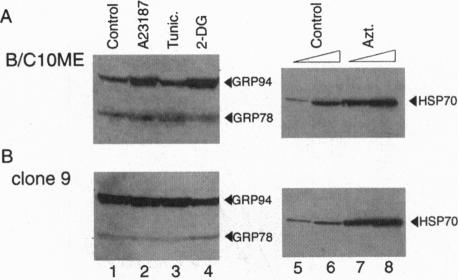
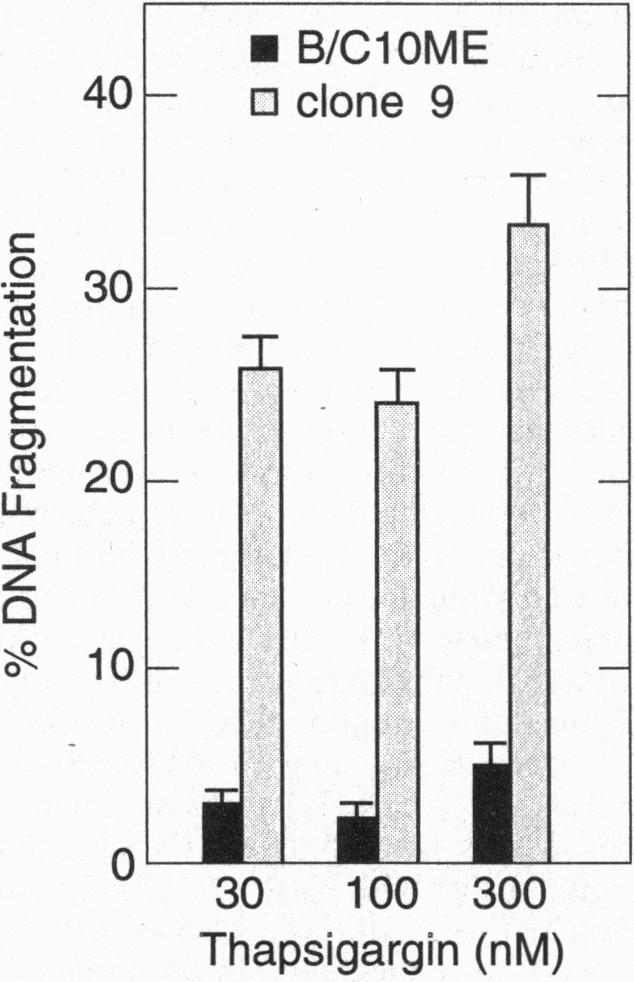
Stress protein GRP78/BiP is highly induced in progressively growing tumors and has recently been shown to exert a protective role against lysis by cytotoxic T cells and tumor necrosis factor in vitro. This raises the question whether the in vitro observed protective function of GRP78/BiP translates into the in vivo situation in which tumors grow progressively, killing the host. Herein we report that molecular inhibition of GRP78/BiP induction in the fibrosarcoma B/C10ME, while not affecting in vitro cell proliferation, causes a dramatic increase in apoptotic cell death upon Ca2+ depletion of the endoplasmic reticulum. When B/C10ME cells incapable of inducing GRP78/BiP are injected into mice, tumors are initially formed that, however, regress presumably due to a cytotoxic T-cell response demonstrable by a strong in vitro response to the tumor with spleen cells of regressor mice. Since sensitivity to apoptosis is key to tumor rejection, these results may point to new approaches to the therapy of cancer via regulation of stress protein GRP78/BiP.
应激蛋白GRP78/BiP在进行性生长的肿瘤中高度诱导表达,最近研究表明,它在体外对细胞毒性T细胞和肿瘤坏死因子的裂解具有保护作用。这就提出了一个问题,即体外观察到的GRP78/BiP的保护功能是否适用于肿瘤进行性生长并导致宿主死亡的体内情况。在此,我们报告,在纤维肉瘤B/C10ME中,对GRP78/BiP诱导的分子抑制,虽然不影响体外细胞增殖,但在内质网Ca2+耗竭时,会导致凋亡细胞死亡显著增加。当将不能诱导GRP78/BiP的B/C10ME细胞注射到小鼠体内时,最初会形成肿瘤,但随后肿瘤会消退,推测这是由于细胞毒性T细胞反应所致,通过对消退小鼠的脾细胞进行体外肿瘤反应可证明这一点。由于对凋亡的敏感性是肿瘤排斥的关键,这些结果可能为通过调节应激蛋白GRP78/BiP治疗癌症指明新的方向。