Babcook J S, Leslie K B, Olsen O A, Salmon R A, Schrader J W
The Biomedical Research Centre, The University of British Columbia, Vancouver, Canada.
Proc Natl Acad Sci U S A. 1996 Jul 23;93(15):7843-8. doi: 10.1073/pnas.93.15.7843.
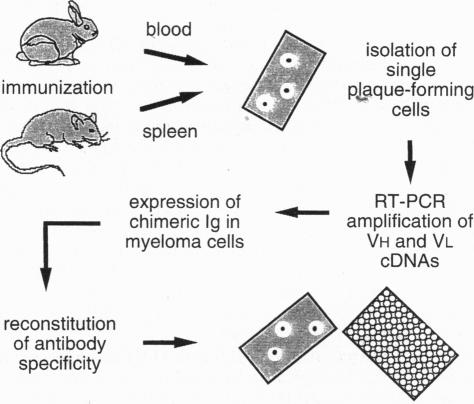
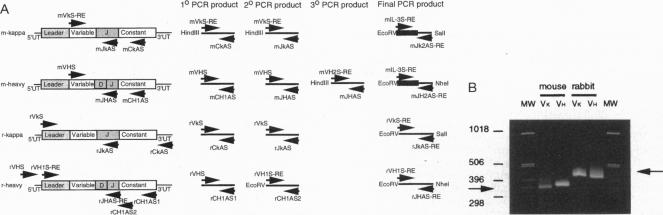
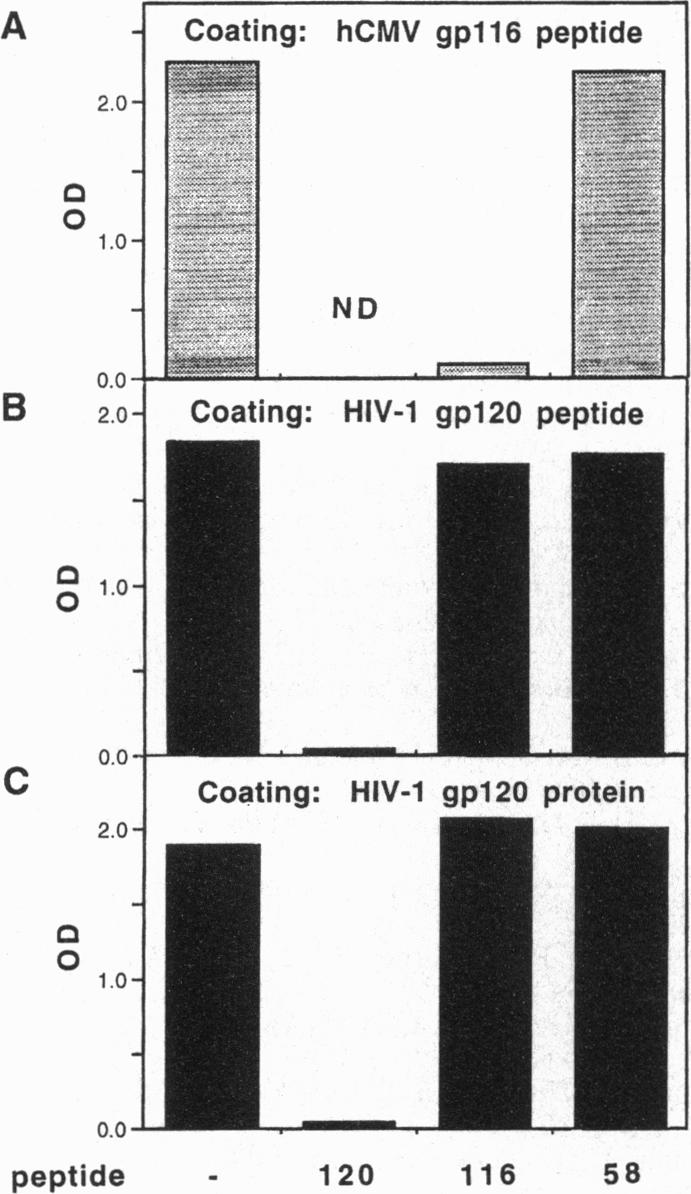
We report a novel approach to the generation of monoclonal antibodies based on the molecular cloning and expression of immunoglobulin variable region cDNAs generated from single rabbit or murine lymphocytes that were selected for the production of specific antibodies. Single cells secreting antibodies for a specific peptide either from gp116 of the human cytomegalovirus or from gp120 of HIV-1 or for sheep red blood cells were selected using antigen-specific hemolytic plaque assays. Sheep red blood cells were coated with specific peptides in a procedure applicable to any antigen that can be biotinylated. Heavy- and light-chain variable region cDNAs were rescued from single cells by reverse transcription-PCR and expressed in the context of human immunoglobulin constant regions. These chimeric murine and rabbit monoclonal antibodies replicated the target specificities of the original antibody-forming cells. The selected lymphocyte antibody method exploits the in vivo mechanisms that generate high-affinity antibodies. This method can use lymphocytes from peripheral blood, can exploit a variety of procedures that identify individual lymphocytes producing a particular antibody, and is applicable to the generation of monoclonal antibodies from many species, including humans.
我们报道了一种基于分子克隆和表达免疫球蛋白可变区cDNA来产生单克隆抗体的新方法,这些cDNA来自为产生特异性抗体而挑选出的单个兔或鼠淋巴细胞。使用抗原特异性溶血空斑试验,从分泌针对人巨细胞病毒gp116的特定肽、HIV-1的gp120的特定肽或针对绵羊红细胞的抗体的单个细胞中进行挑选。绵羊红细胞用特定肽包被,此方法适用于任何可生物素化的抗原。通过逆转录聚合酶链反应从单个细胞中拯救重链和轻链可变区cDNA,并在人免疫球蛋白恒定区的背景下表达。这些嵌合鼠源和兔源单克隆抗体复制了原始抗体形成细胞的靶标特异性。所选择的淋巴细胞抗体方法利用了体内产生高亲和力抗体的机制。该方法可使用外周血中的淋巴细胞,可利用多种程序来鉴定产生特定抗体的单个淋巴细胞,并且适用于从包括人类在内的许多物种中产生单克隆抗体。