Huang L, Solursh M, Sandra A
Department of Anatomy, University of Iowa, Iowa City 52242, USA.
J Anat. 1996 Aug;189 ( Pt 1)(Pt 1):73-86.
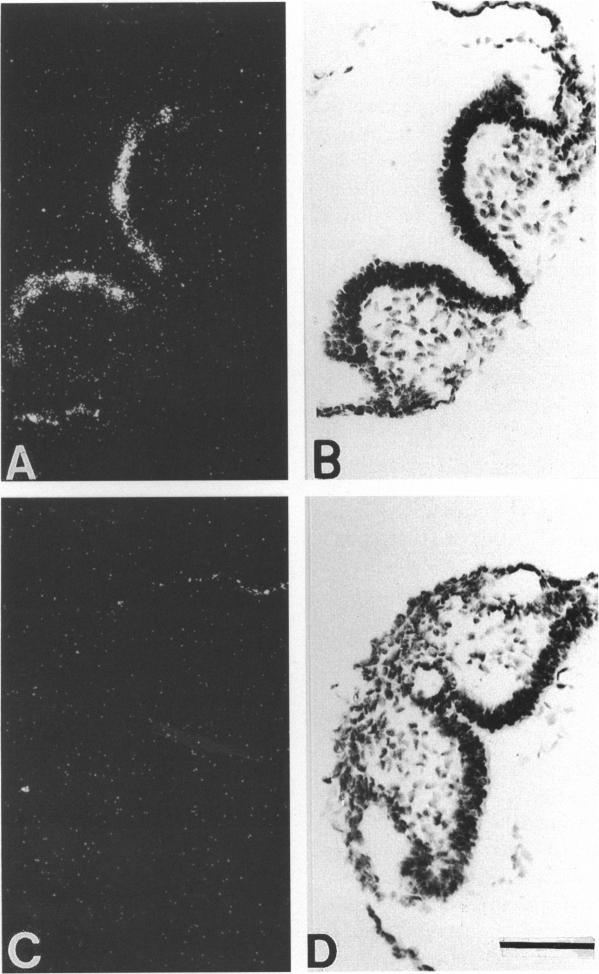
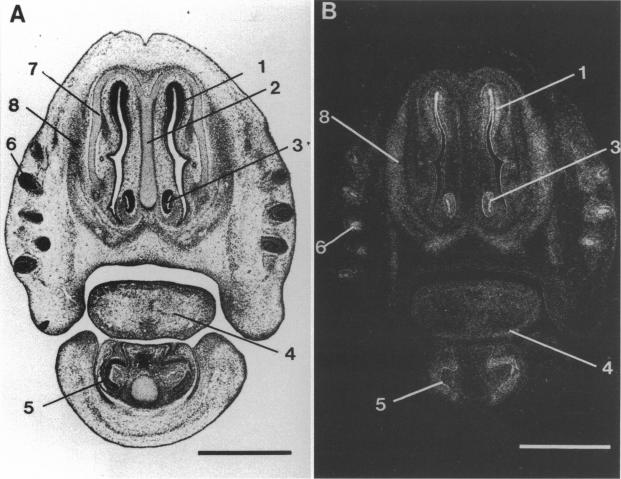
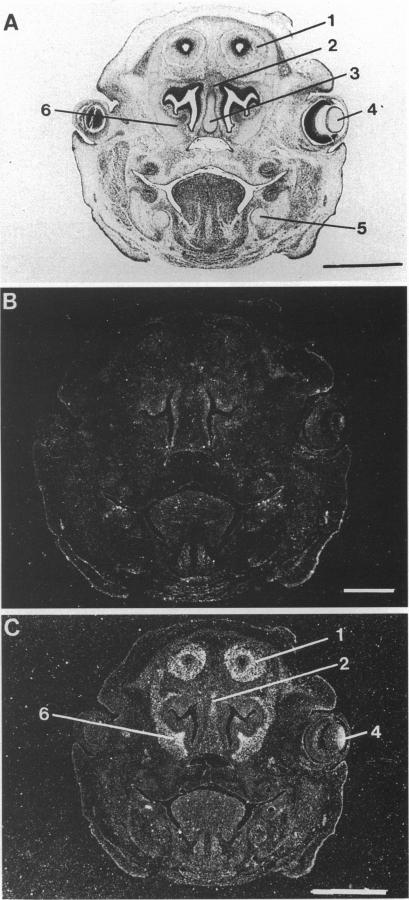
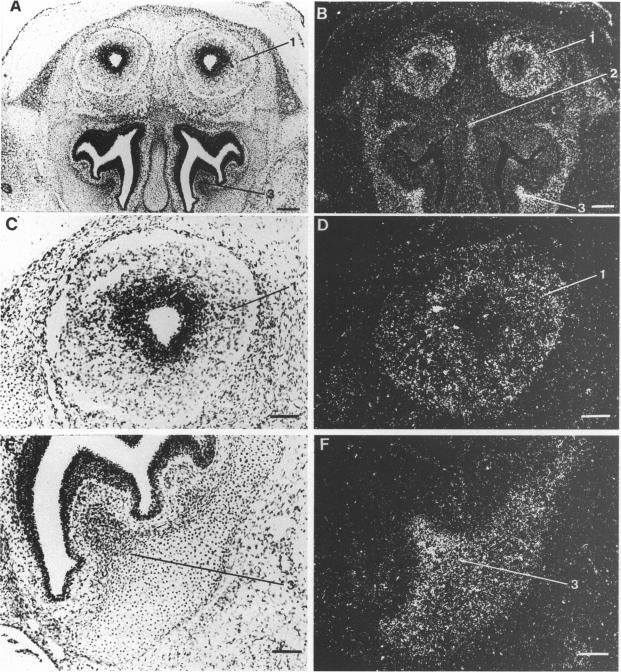
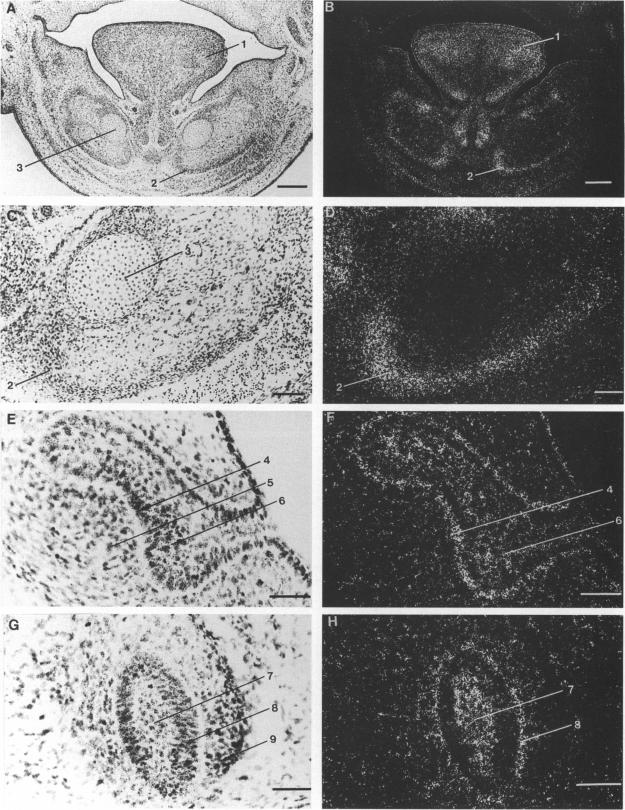
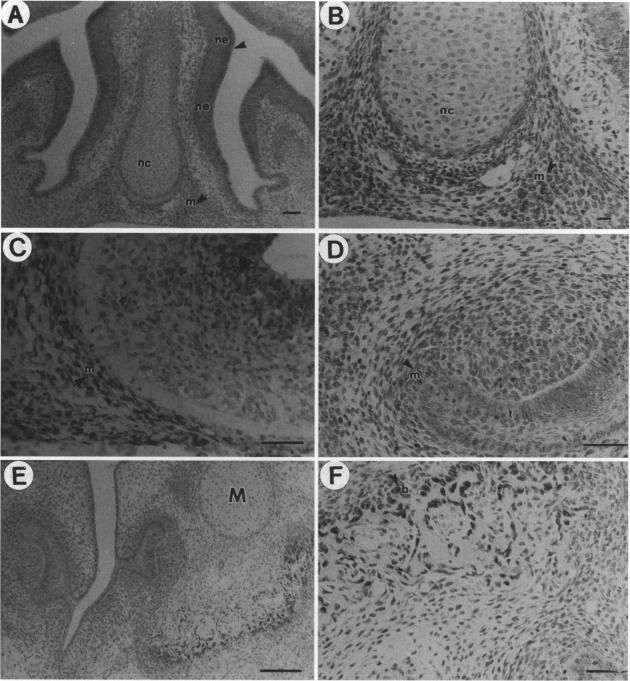
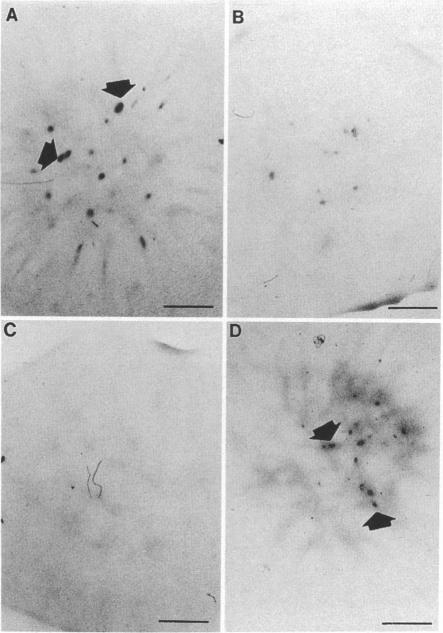
To explore the possible role of transforming growth factor alpha (TGF-alpha) in craniofacial development, its expression in the craniofacial region of rat embryos from embryonic day (d) 9 to d 20 was examined by in situ hybridisation and immunostaining. The TGF-alpha transcripts were first detected in the neural fold of embryonic d 9 and 10 embryos. In the craniofacial region, the TGF-alpha transcripts were not detected until embryonic d 16 in mesenchyme surrounding the olfactory bulb, within the olfactory bulb, the nasal capsule, vomeronasal organ, and vibrissal follicle. In addition, TGF-alpha message was detected in mesenchyme in the vicinity of Meckel's cartilage, and in the dental epithelium and lamina. This expression pattern of TGF-alpha transcripts persisted until embryonic d 17 but disappeared by d 18. The presence of TGF-alpha protein largely coincided with TGF-alpha message although, unlike the message, it persisted throughout later embryogenesis in the craniofacial region. The possible function of TGF-alpha in chondrogenesis was explored by employing the micromass culture technique. Cartilage nodule formation in mesenchymal cells cultured from rat mandibles in the presence of TGF-alpha was significantly inhibited. This inhibitory effect of TGF-alpha on chondrogenesis was reversed by addition of antibody against the EGF receptor, which crossreacts with the TGF-alpha receptor. The inhibitory effect of TGF-alpha on chondrogenesis in vitro was further confirmed by micromass culture using mesenchymal cells from rat embryonic limb bud. Taken together, these results demonstrate the involvement of TGF-alpha in chondrogenesis during embryonic development, possibly by way of a specific inhibition of cartilage formation from mesenchymal precursor cells.
为了探究转化生长因子α(TGF-α)在颅面发育中的可能作用,通过原位杂交和免疫染色检测了其在胚胎第9天(d)至第20天大鼠胚胎颅面区域的表达。TGF-α转录本最早在胚胎第9天和第10天胚胎的神经褶中被检测到。在颅面区域,直到胚胎第16天,在嗅球周围的间充质、嗅球内、鼻囊、犁鼻器和触须毛囊中才检测到TGF-α转录本。此外,在Meckel软骨附近的间充质、牙上皮和牙板中也检测到了TGF-α信息。TGF-α转录本的这种表达模式一直持续到胚胎第17天,但在第18天消失。TGF-α蛋白的存在与TGF-α信息在很大程度上一致,尽管与信息不同的是,它在颅面区域的后期胚胎发育过程中一直持续存在。通过采用微团培养技术探究了TGF-α在软骨形成中的可能功能。在TGF-α存在的情况下,从大鼠下颌骨培养的间充质细胞中软骨结节的形成受到显著抑制。加入与TGF-α受体交叉反应的抗表皮生长因子(EGF)受体抗体后,TGF-α对软骨形成的这种抑制作用被逆转。使用大鼠胚胎肢芽的间充质细胞进行微团培养进一步证实了TGF-α在体外对软骨形成的抑制作用。综上所述,这些结果表明TGF-α在胚胎发育过程中参与软骨形成,可能是通过特异性抑制间充质前体细胞形成软骨的方式。