Liberles D A, Dervan P B
Division of Chemistry and Chemical Engineering, California Institute of Technology, Pasadena 91125, USA.
Proc Natl Acad Sci U S A. 1996 Sep 3;93(18):9510-4. doi: 10.1073/pnas.93.18.9510.
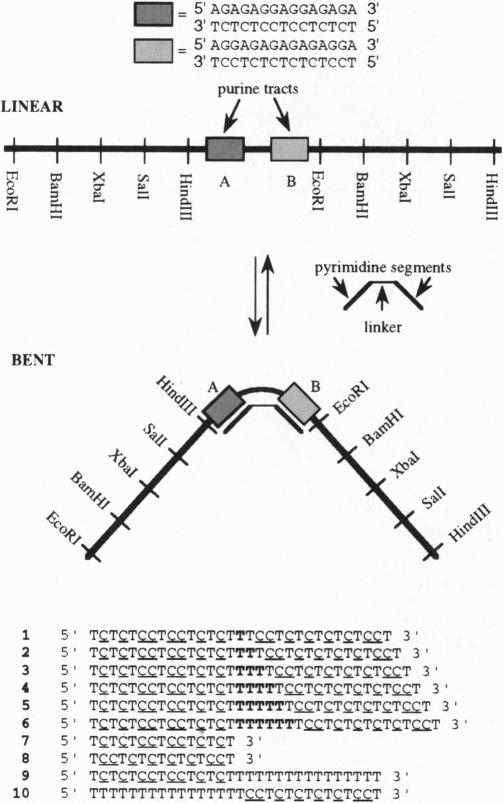
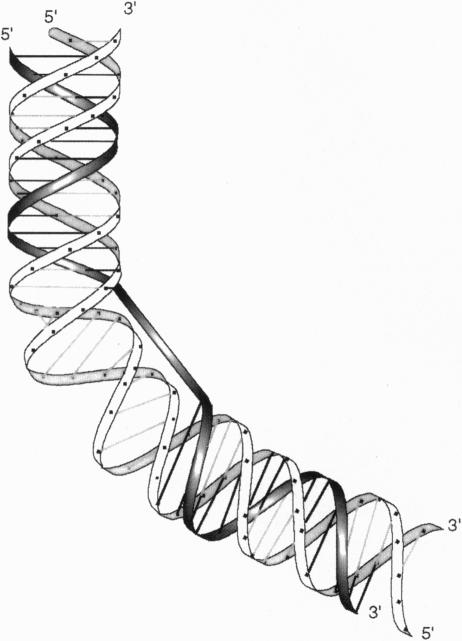
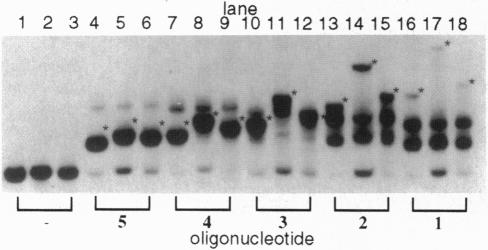
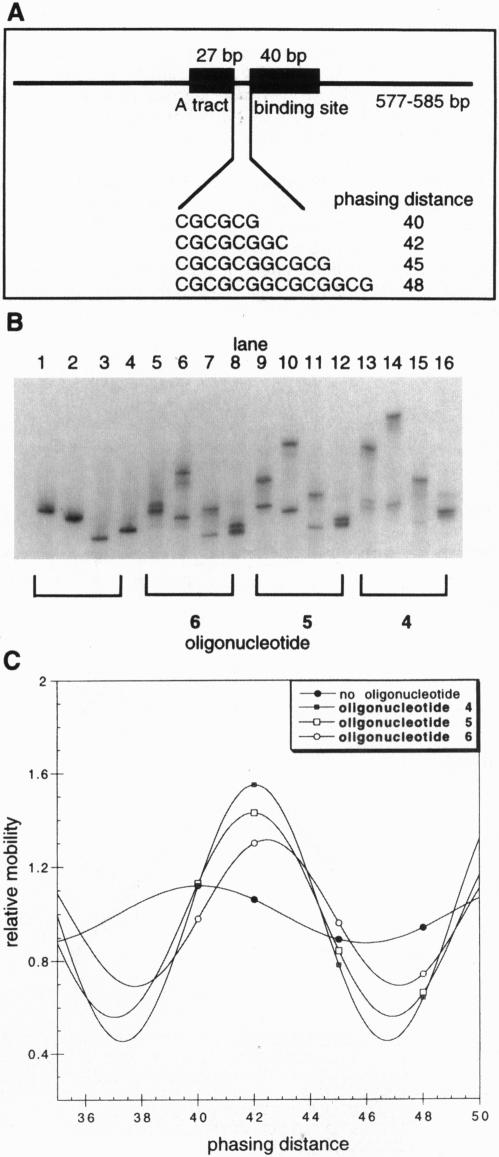
Proteins that bend DNA are important regulators of biological processes. Sequence-specific DNA bending ligands have been designed that bind two noncontiguous sites in the major groove and induce a bend in the DNA. An oligonucleotide containing pyrimidine segments separated by a central variable linker domain simultaneously binds by triple helix formation two 15-bp purine tracts separated by 10 bp. Bend angles of 61 degrees, 50 degrees, and 38 degrees directed towards the minor groove were quantitated by phasing analysis for linkers of four, five, and six T residues, respectively. The design and synthesis of nonnatural architectural factors may provide a new class of reagents for use in biology and human medicine.
能够使DNA弯曲的蛋白质是生物过程的重要调节因子。已经设计出序列特异性DNA弯曲配体,它们结合在大沟中的两个不连续位点并诱导DNA弯曲。一种含有由中央可变连接域隔开的嘧啶片段的寡核苷酸,通过三链螺旋形成同时结合两个由10个碱基对隔开的15碱基对嘌呤片段。对于分别含有四个、五个和六个T残基的连接子,通过相位分析定量了朝向小沟的61度、50度和38度的弯曲角度。非天然结构因子的设计和合成可能会为生物学和人类医学提供一类新的试剂。