Strack P R, Frey M W, Rizzo C J, Cordova B, George H J, Meade R, Ho S P, Corman J, Tritch R, Korant B D
Molecular Biology Department, DuPont Merck Pharmaceutical Company, Wilmington, De 19880-0336, USA.
Proc Natl Acad Sci U S A. 1996 Sep 3;93(18):9571-6. doi: 10.1073/pnas.93.18.9571.
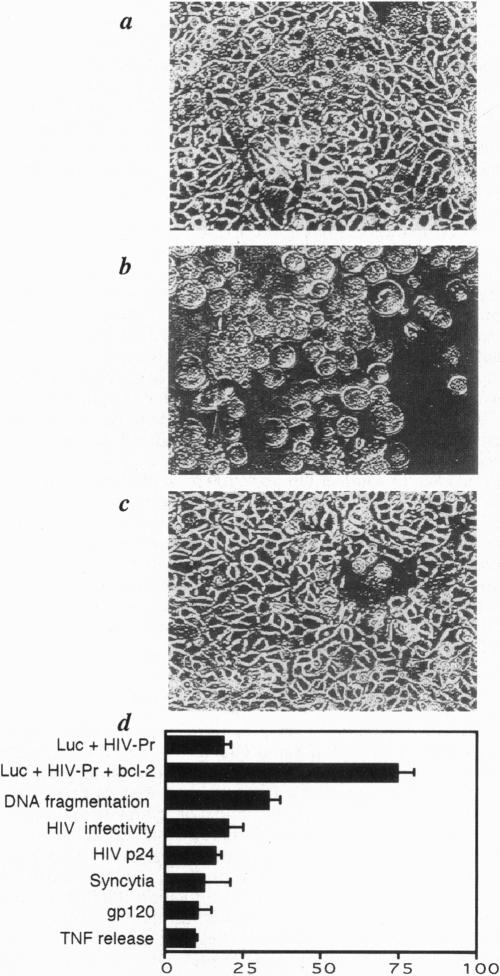
Expression of the human immunodeficiency virus type 1 (HIV) protease in cultured cells leads to apoptosis, preceded by cleavage of bcl-2, a key negative regulator of cell death. In contrast, a high level of bcl-2 protects cells in vitro and in vivo from the viral protease and prevents cell death following HIV infection of human lymphocytes, while reducing the yields of viral structural proteins, infectivity, and tumor necrosis factor alpha. We present a model for HIV replication in which the viral protease depletes the infected cells of bcl-2, leading to oxidative stress-dependent activation of NF kappa B, a cellular factor required for HIV transcription, and ultimately to cell death. Purified bcl-2 is cleaved by HIV protease between phenylalanine 112 and alanine 113. The results suggest a new option for HIV gene therapy; bcl-2 muteins that have noncleavable alterations surrounding the HIV protease cleavage site.
在培养细胞中表达人类免疫缺陷病毒1型(HIV)蛋白酶会导致细胞凋亡,且在此之前bcl-2(细胞死亡的关键负调节因子)会被切割。相比之下,高水平的bcl-2在体外和体内可保护细胞免受病毒蛋白酶的影响,并在人类淋巴细胞感染HIV后防止细胞死亡,同时降低病毒结构蛋白的产量、感染性和肿瘤坏死因子α。我们提出了一个HIV复制模型,其中病毒蛋白酶耗尽被感染细胞中的bcl-2,导致NF-κB(HIV转录所需的细胞因子)的氧化应激依赖性激活,最终导致细胞死亡。纯化的bcl-2在苯丙氨酸112和丙氨酸113之间被HIV蛋白酶切割。这些结果为HIV基因治疗提出了一个新的选择;即具有围绕HIV蛋白酶切割位点不可切割改变的bcl-2突变体。