Nishimura M, Machida K, Imaizumi M, Abe T, Umeda T, Takeshima E, Watanabe T, Ohnishi Y, Takagi K, Hamaguchi M
Department of Thoracic Surgery, Nagoya University School of Medicine, Japan.
Br J Cancer. 1996 Sep;74(5):780-7. doi: 10.1038/bjc.1996.436.
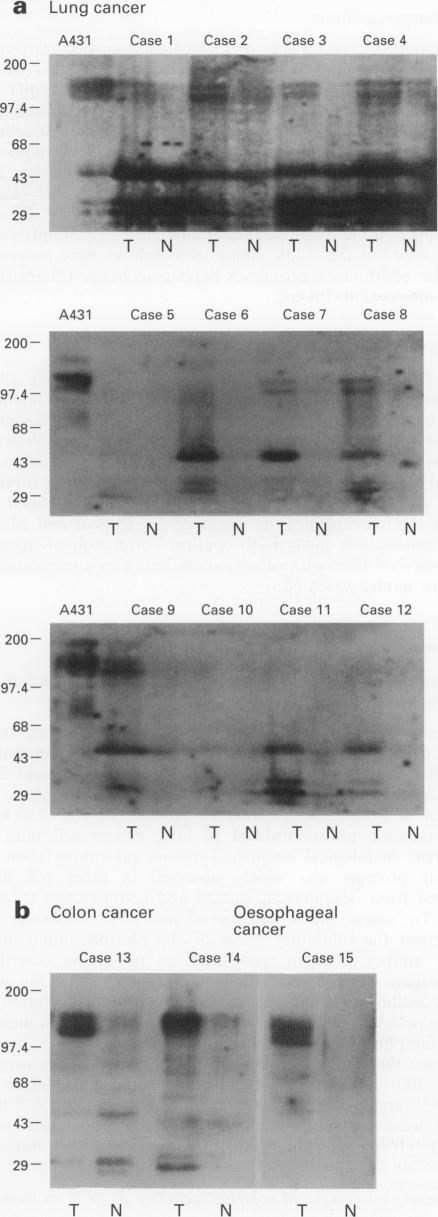
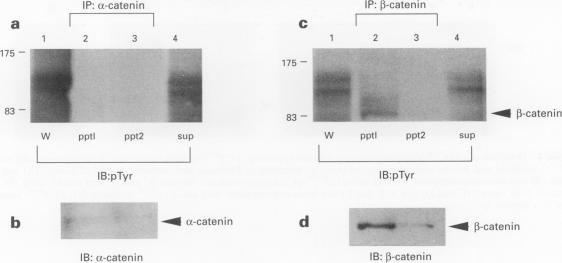
To search for the signalling pathways in lung cancer relevant to its aggressive behaviour, we studied tyrosine phosphorylated proteins in lung cancer cell lines and surgical specimens. We found that the profiles of protein phosphorylation were closely matched among these cell lines and cancer tissues of different histological origins, and 100-130 kDa proteins were the major components of phosphorylated proteins. In surgical specimens, approximately half of the cases showed tyrosine phosphorylation of these proteins in a tumour-specific manner, and phosphorylation of these proteins showed good correlation with the survival length of patients after operation. By immunoprecipitation with specific antibodies, we found that p125FAK, p120 and beta-catenin were the major components of tyrosine-phosphorylated proteins in the surgical specimens. These results suggest that tyrosine phosphorylation of these proteins may play a role in tumour relapse and is available as a clinical marker.
为了寻找与肺癌侵袭性行为相关的信号通路,我们研究了肺癌细胞系和手术标本中的酪氨酸磷酸化蛋白。我们发现,这些细胞系和不同组织学来源的癌组织中蛋白磷酸化谱密切匹配,100 - 130 kDa的蛋白是磷酸化蛋白的主要成分。在手术标本中,约一半的病例这些蛋白呈现肿瘤特异性酪氨酸磷酸化,且这些蛋白的磷酸化与患者术后生存时长呈现良好相关性。通过用特异性抗体进行免疫沉淀,我们发现p125FAK、p120和β-连环蛋白是手术标本中酪氨酸磷酸化蛋白的主要成分。这些结果表明,这些蛋白的酪氨酸磷酸化可能在肿瘤复发中起作用,并且可作为一种临床标志物。