St Geme J W, Pinkner J S, Krasan G P, Heuser J, Bullitt E, Smith A L, Hultgren S J
Edward Mallinckrodt Department of Pediatrics, Washington University School of Medicine, St. Louis, MO 63110, USA.
Proc Natl Acad Sci U S A. 1996 Oct 15;93(21):11913-8. doi: 10.1073/pnas.93.21.11913.
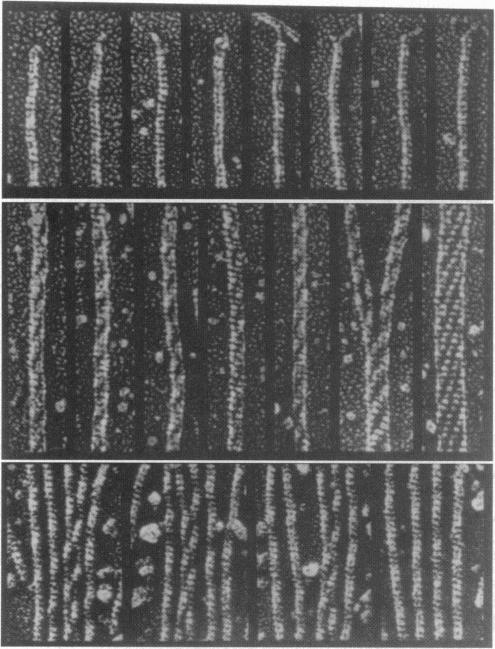
Haemophilus influenzae is a Gram-negative bacterium that represents a common cause of human disease. Disease due to this organism begins with colonization of the upper respiratory mucosa, a process facilitated by adhesive fibers called pili. In the present study, we investigated the structure and assembly of H. influenzae pili. Examination of pili by electron microscopy using quick-freeze, deep-etch and immunogold techniques revealed the presence of two distinct subassemblies, including a flexible two-stranded helical rod comprised of HifA and a short, thin, distal tip structure containing HifD. Genetic and biochemical studies demonstrated that the biogenesis of H. influenzae pili is dependent on a periplasmic chaperone called HifB, which belongs to the PapD family of immunoglobulin-like chaperones. HifB bound directly to HifA and HifD, forming HifB-HifA and HifB-HifD complexes, which were purified from periplasmic extracts by ion-exchange chromatography. Continued investigation of the biogenesis of H. influenzae pili should provide general insights into organelle development and may suggest novel strategies for disease prevention.
流感嗜血杆菌是一种革兰氏阴性细菌,是人类疾病的常见病因。由这种微生物引起的疾病始于上呼吸道黏膜的定植,这一过程由称为菌毛的粘附纤维促进。在本研究中,我们研究了流感嗜血杆菌菌毛的结构和组装。使用快速冷冻、深度蚀刻和免疫金技术通过电子显微镜检查菌毛,发现存在两种不同的亚组件,包括由HifA组成的柔性双链螺旋杆和包含HifD的短而细的远端尖端结构。遗传和生化研究表明,流感嗜血杆菌菌毛的生物合成依赖于一种称为HifB的周质伴侣蛋白,它属于免疫球蛋白样伴侣蛋白的PapD家族。HifB直接与HifA和HifD结合,形成HifB-HifA和HifB-HifD复合物,通过离子交换色谱从周质提取物中纯化得到。对流感嗜血杆菌菌毛生物合成的持续研究应能为细胞器发育提供一般性见解,并可能提出疾病预防的新策略。