Gestblom C, Hoehner J C, Hedborg F, Sandstedt B, Påhlman S
Department of Medicine, Lund University, Malmö University Hospital, Sweden.
Am J Pathol. 1997 Jan;150(1):107-17.
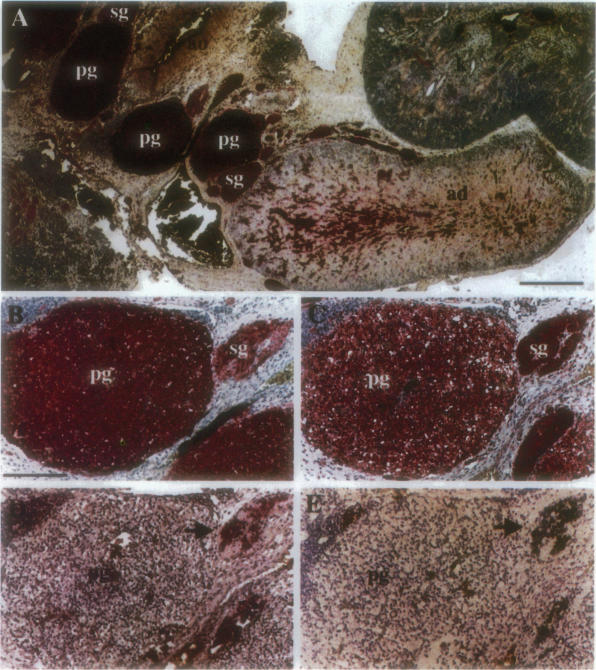
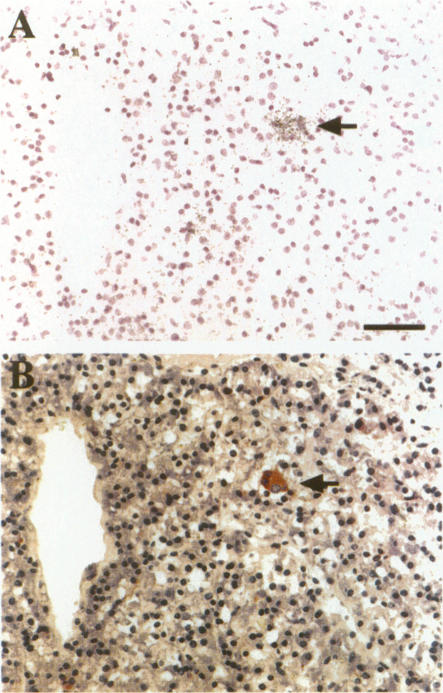
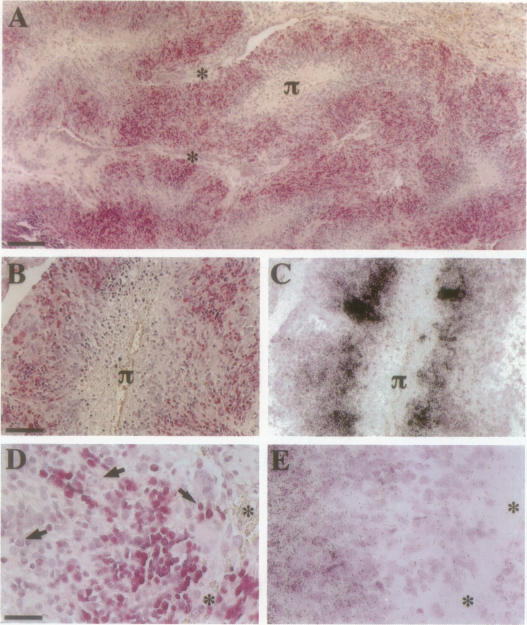
Neuroblastoma is an embryonal tumor derived from the sympathetic nervous system. Although all neuroblastomas have a neuronal character, a subset of tumors also show evidence of extra-adrenal neuroendocrine differentiation in discrete cell layers. A characterization of the cells of the developing human sympathetic nervous system was performed, identifying growth-associated protein-43, neuropeptide tyrosine, and Bcl-2 as marker genes for sympathetic neurons. Whereas all neuroblastomas express growth-associated protein-43, neuropeptide tyrosine, and Bcl-2, tumors with differentiating cells with neuroendocrine features expressed these genes only in the morphologically immature, proliferating cells. Thus, with neuroendocrine tumor cell differentiation, neuronal marker gene expression vanished and proliferation ceased and was succeeded by expression of chromogranin A/B and insulin-like growth factor-2, markers of neuroendocrine chromaffin differentiation. These tumors appear to provide examples of spontaneous lineage conversion from a neuronal to a neuroendocrine phenotype.
神经母细胞瘤是一种起源于交感神经系统的胚胎性肿瘤。尽管所有神经母细胞瘤都具有神经元特征,但一部分肿瘤在离散的细胞层中也显示出肾上腺外神经内分泌分化的证据。对发育中的人类交感神经系统细胞进行了表征,确定生长相关蛋白43、神经肽酪氨酸和Bcl-2为交感神经元的标记基因。虽然所有神经母细胞瘤都表达生长相关蛋白43、神经肽酪氨酸和Bcl-2,但具有神经内分泌特征的分化细胞的肿瘤仅在形态学上未成熟、增殖的细胞中表达这些基因。因此,随着神经内分泌肿瘤细胞的分化,神经元标记基因的表达消失,增殖停止,取而代之的是嗜铬粒蛋白A/B和胰岛素样生长因子2的表达,这是神经内分泌嗜铬分化的标记。这些肿瘤似乎提供了从神经元表型向神经内分泌表型自发谱系转换的例子。