Tumas-Brundage K, Manser T
Department of Microbiology and Immunology, Kimmel Cancer Institute, Thomas Jefferson Medical College, Philadelphia, Pennsylvania 19107, USA.
J Exp Med. 1997 Jan 20;185(2):239-50. doi: 10.1084/jem.185.2.239.
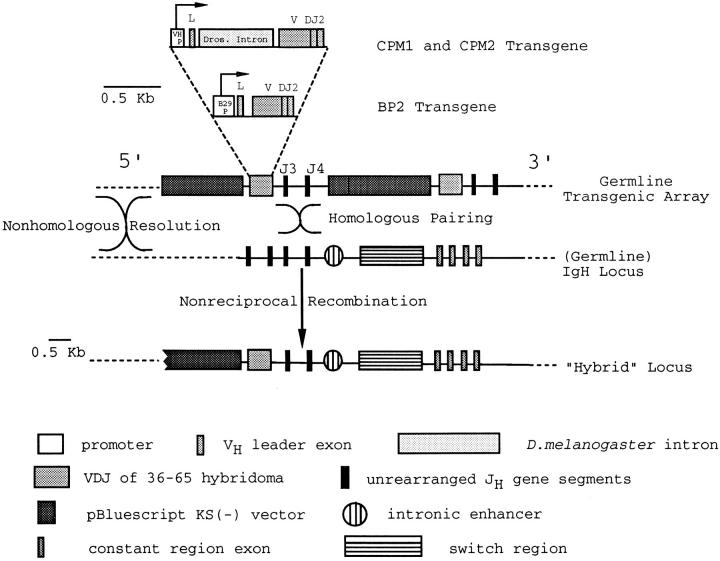
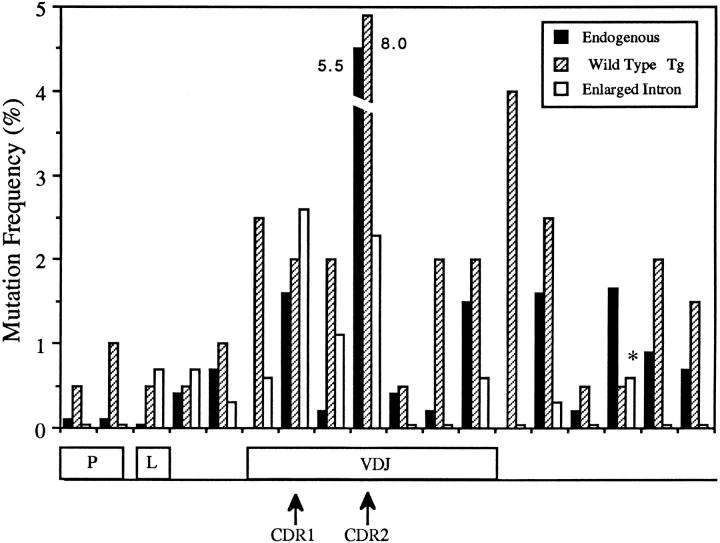
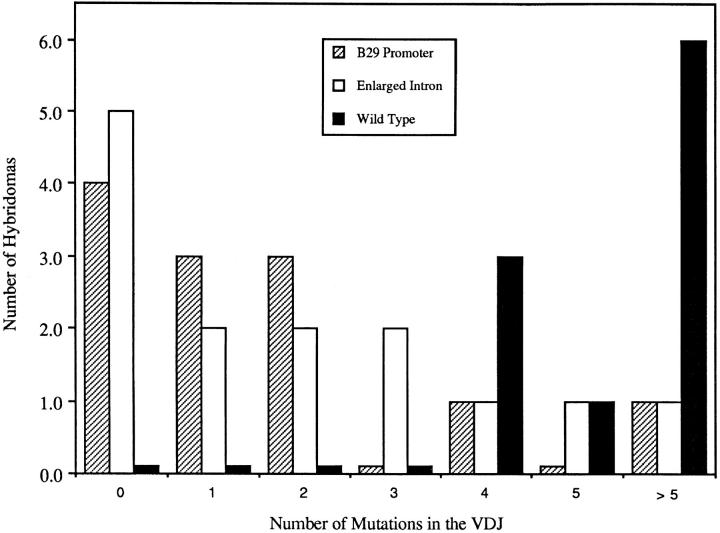
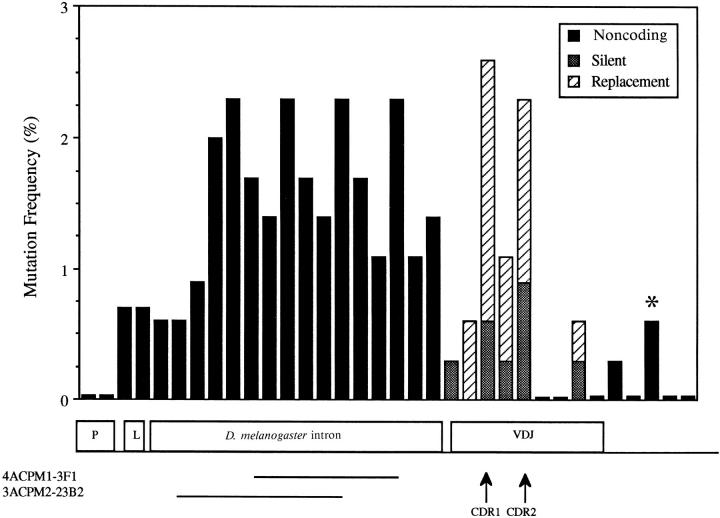
A somatic process introduces mutations into antibody variable (V) region genes at a high rate in many vertebrates, and is a major source of antibody diversity. The mechanism of this hypermutation process remains enigmatic, although retrospective studies and transgenic experiments have recently suggested a role for transcriptional regulatory elements. Here, we demonstrate that mouse heavy (H) chain loci in which the natural VH promoter has been replaced by a heterologous promoter undergo hypermutation. However, while the distribution of mutation in such loci appears normal, the frequency of mutation does not. Conversely, moving the VH promoter 750 bp upstream of its normal location results in a commensurate change in the site specificity of hypermutation in H chain loci, and the foreign DNA inserted into the VH leader intron to produce this promoter displacement is hypermutated in a manner indistinguishable from natural Ig DNA. These data establish a direct mechanistic link between the IgH transcription and hypermutation processes.
在许多脊椎动物中,一种体细胞过程会以很高的频率将突变引入抗体可变(V)区基因,这是抗体多样性的主要来源。尽管回顾性研究和转基因实验最近表明转录调控元件发挥了作用,但这种高突变过程的机制仍然不明。在这里,我们证明,天然VH启动子已被异源启动子取代的小鼠重(H)链基因座会发生高突变。然而,虽然此类基因座中的突变分布看起来正常,但其突变频率并非如此。相反,将VH启动子移至其正常位置上游750 bp会导致H链基因座高突变的位点特异性发生相应变化,并且为产生这种启动子移位而插入VH前导内含子的外源DNA会以与天然Ig DNA无法区分的方式发生高突变。这些数据在IgH转录和高突变过程之间建立了直接的机制联系。