Lawrence M B, Kansas G S, Kunkel E J, Ley K
Department of Biomedical Engineering, University of Virginia, Charlottesville 22908, USA.
J Cell Biol. 1997 Feb 10;136(3):717-27. doi: 10.1083/jcb.136.3.717.
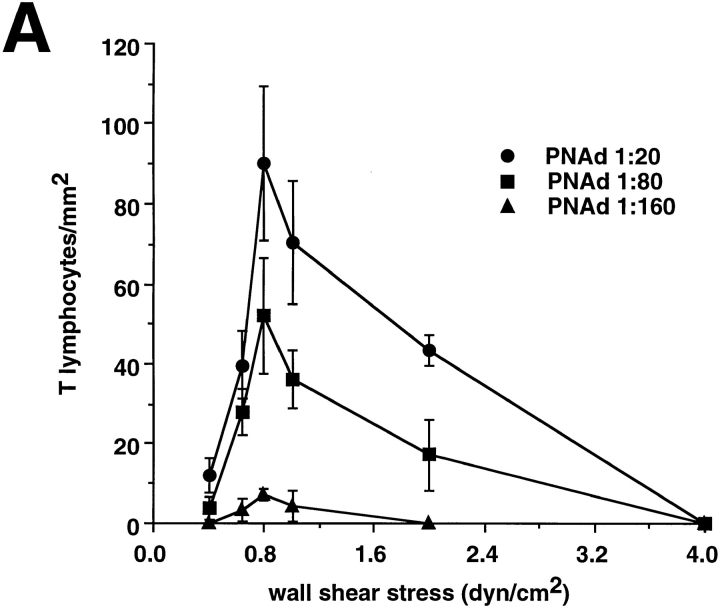
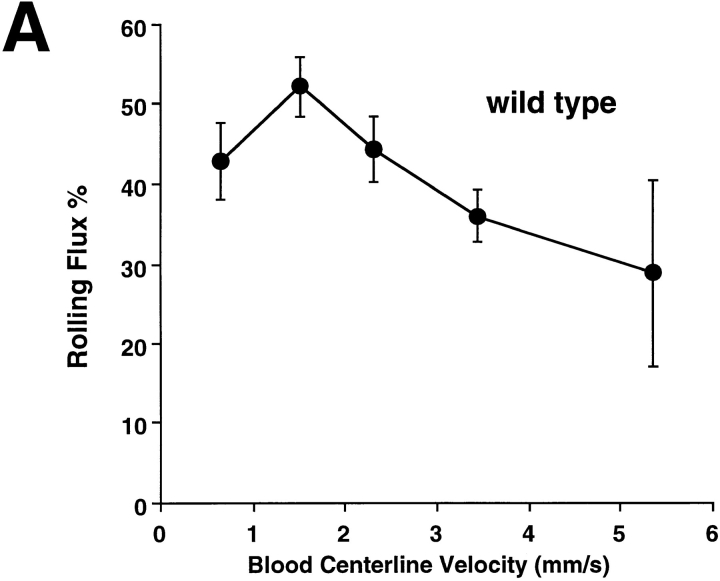
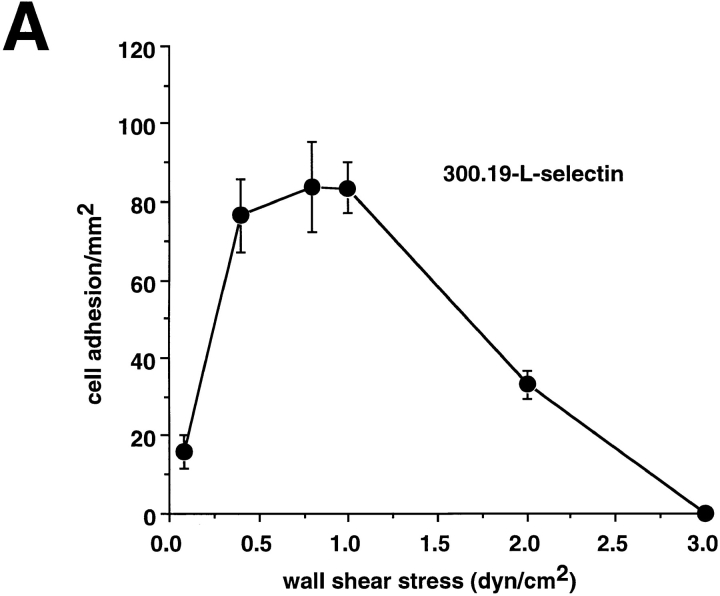
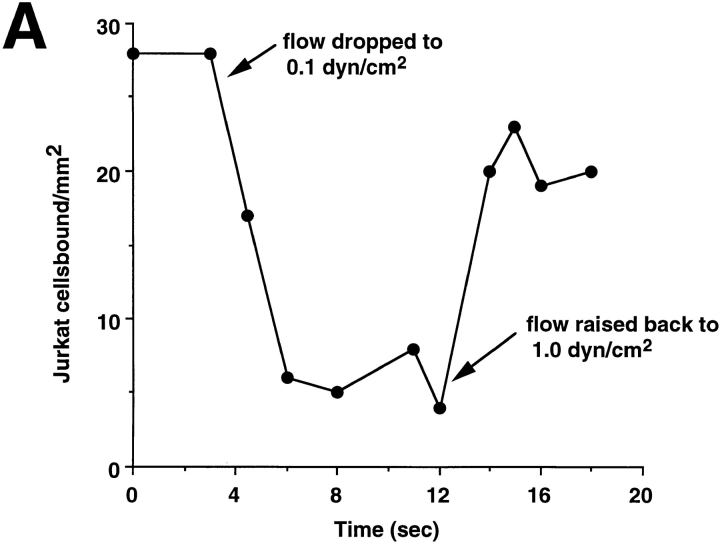
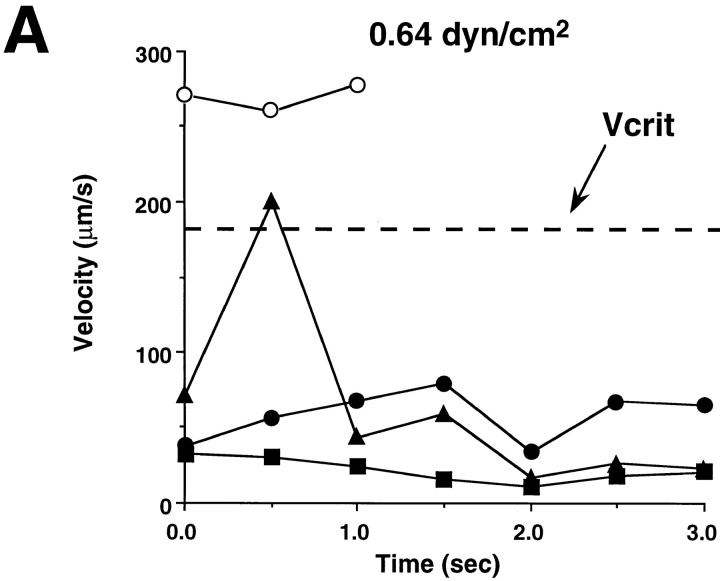
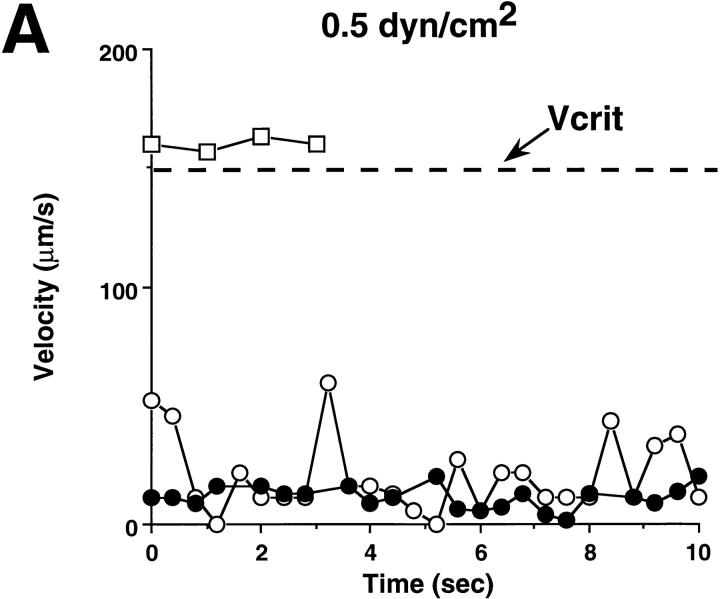
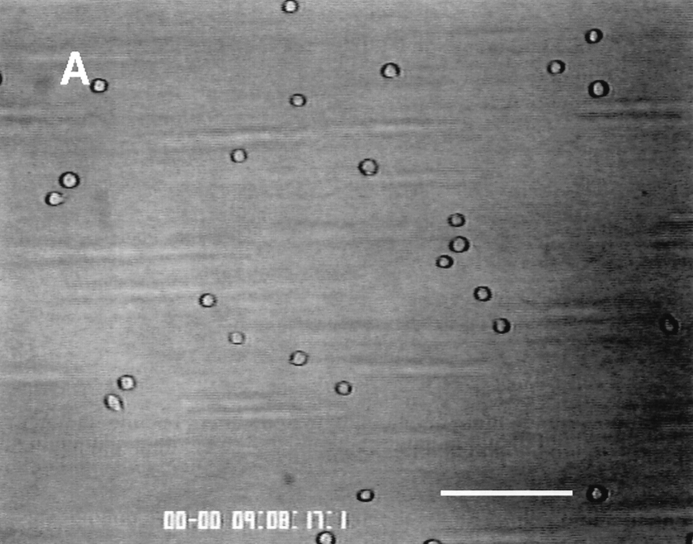
Leukocyte adhesion through L-selectin to peripheral node addressin (PNAd, also known as MECA-79 antigen), an L-selectin ligand expressed on high endothelial venules, has been shown to require a minimum level of fluid shear stress to sustain rolling interactions (Finger, E.B., K.D. Puri, R. Alon, M.B. Lawrence, V.H. von Andrian, and T.A. Springer. 1996. Nature (Lond.). 379:266-269). Here, we show that fluid shear above a threshold of 0.5 dyn/cm2 wall shear stress significantly enhances HL-60 myelocyte rolling on P- and E-selectin at site densities of 200/microm2 and below. In addition, gravitational force is sufficient to detach HL-60 cells from P- and E-selectin substrates in the absence, but not in the presence, of flow. It appears that fluid shear-induced torque is critical for the maintenance of leukocyte rolling. K562 cells transfected with P-selectin glycoprotein ligand-1, a ligand for P-selectin, showed a similar reduction in rolling on P-selectin as the wall shear stress was lowered below 0.5 dyn/cm2. Similarly, 300.19 cells transfected with L-selectin failed to roll on PNAd below this level of wall shear stress, indicating that the requirement for minimum levels of shear force is not cell type specific. Rolling of leukocytes mediated by the selectins could be reinitiated within seconds by increasing the level of wall shear stress, suggesting that fluid shear did not modulate receptor avidity. Intravital microscopy of cremaster muscle venules indicated that the leukocyte rolling flux fraction was reduced at blood centerline velocities less than 1 mm/s in a model in which rolling is mediated by L- and P-selectin. Similar observations were made in L-selectin-deficient mice in which leukocyte rolling is entirely P-selectin dependent. Leukocyte adhesion through all three selectins appears to be significantly enhanced by a threshold level of fluid shear stress.
白细胞通过L-选择素与外周淋巴结地址素(PNAd,也称为MECA-79抗原)结合,PNAd是一种在内皮小静脉上表达的L-选择素配体,研究表明,维持滚动相互作用需要最低水平的流体剪切应力(Finger, E.B., K.D. Puri, R. Alon, M.B. Lawrence, V.H. von Andrian, and T.A. Springer. 1996. Nature (Lond.). 379:266 - 269)。在此,我们表明,壁面剪切应力高于0.5达因/平方厘米阈值的流体剪切力,能显著增强HL-60髓细胞在位点密度为200/平方微米及以下的P-选择素和E-选择素上的滚动。此外,在无流动但有重力的情况下,重力足以使HL-60细胞从P-选择素和E-选择素底物上脱离,但在有流动的情况下则不然。流体剪切诱导的扭矩似乎对维持白细胞滚动至关重要。转染了P-选择素糖蛋白配体-1(一种P-选择素配体)的K562细胞,当壁面剪切应力降低到0.5达因/平方厘米以下时,在P-选择素上的滚动也出现类似减少。同样,转染了L-选择素的300.19细胞在壁面剪切应力低于此水平时无法在PNAd上滚动,这表明对最低剪切力水平的需求并非细胞类型特异性的。通过增加壁面剪切应力水平,由选择素介导的白细胞滚动可在数秒内重新启动,这表明流体剪切并未调节受体亲和力。对提睾肌小静脉的活体显微镜观察表明,在由L-选择素和P-选择素介导滚动的模型中,当血液中心线速度小于1毫米/秒时,白细胞滚动通量分数会降低。在白细胞滚动完全依赖P-选择素的L-选择素缺陷小鼠中也有类似观察结果。通过所有三种选择素的白细胞黏附似乎会因流体剪切应力的阈值水平而显著增强。