Bucci M, Wente S R
Department of Cell Biology and Physiology, Washington University School of Medicine, St. Louis, Missouri 63110, USA.
J Cell Biol. 1997 Mar 24;136(6):1185-99. doi: 10.1083/jcb.136.6.1185.
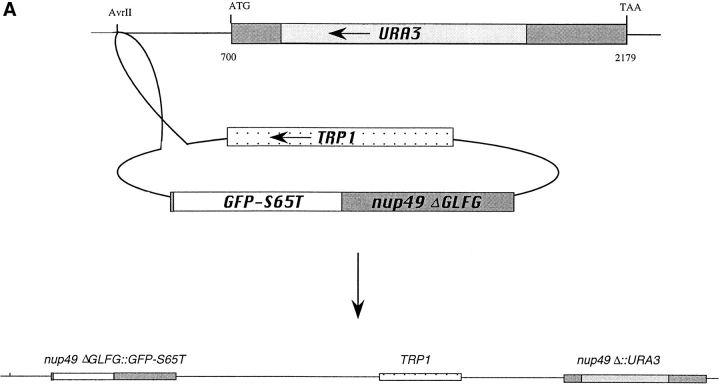
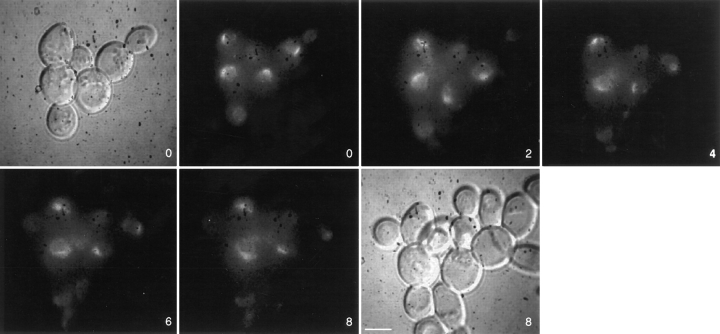
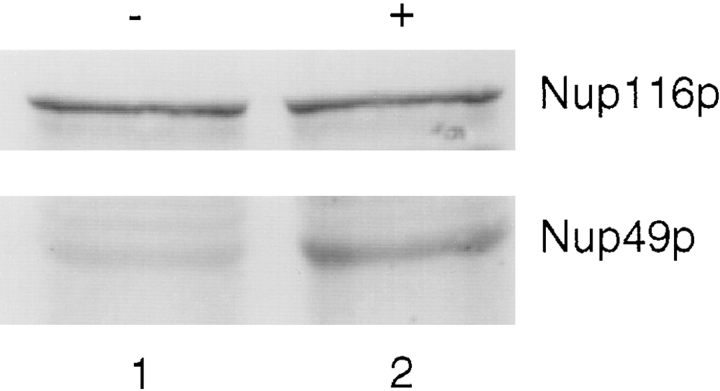
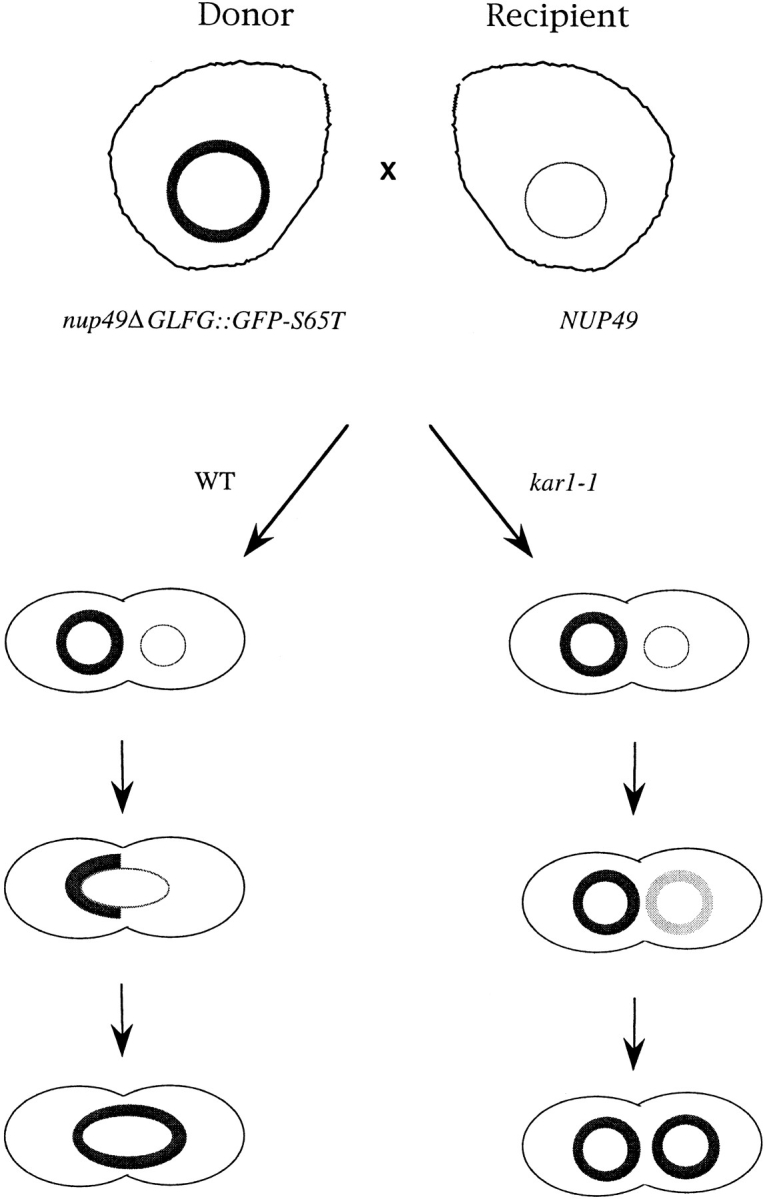
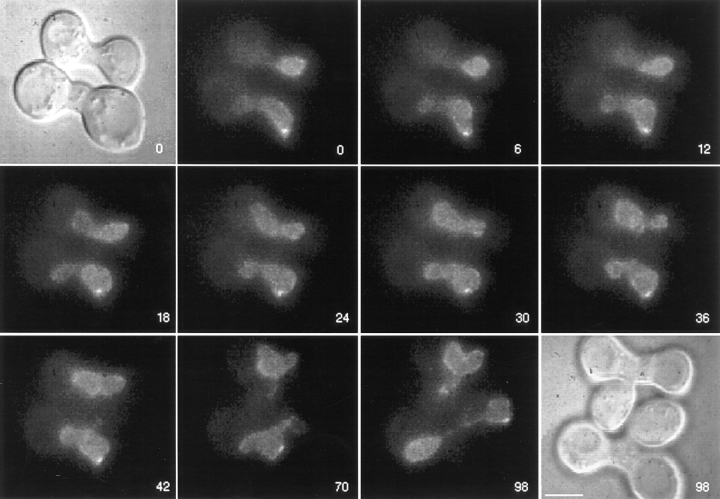
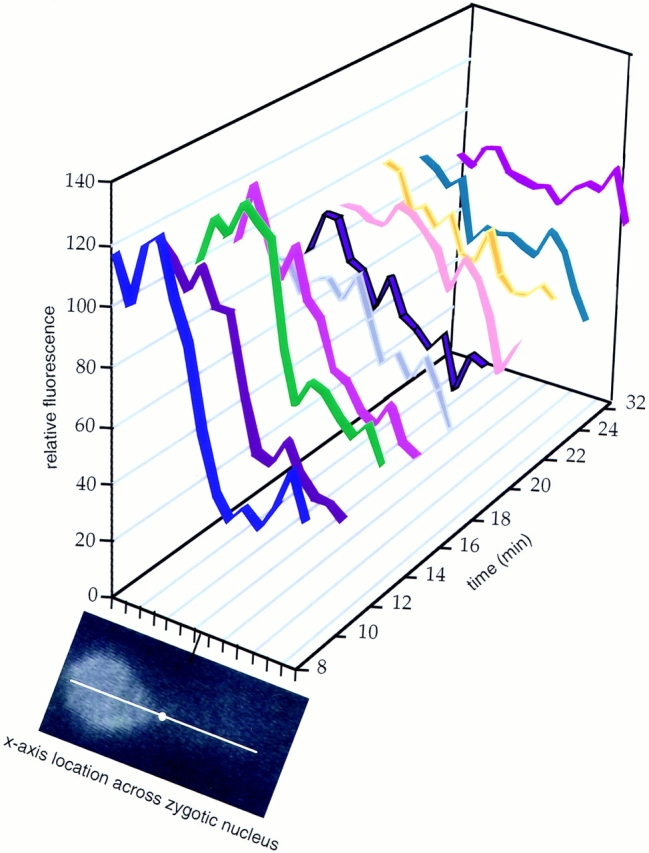
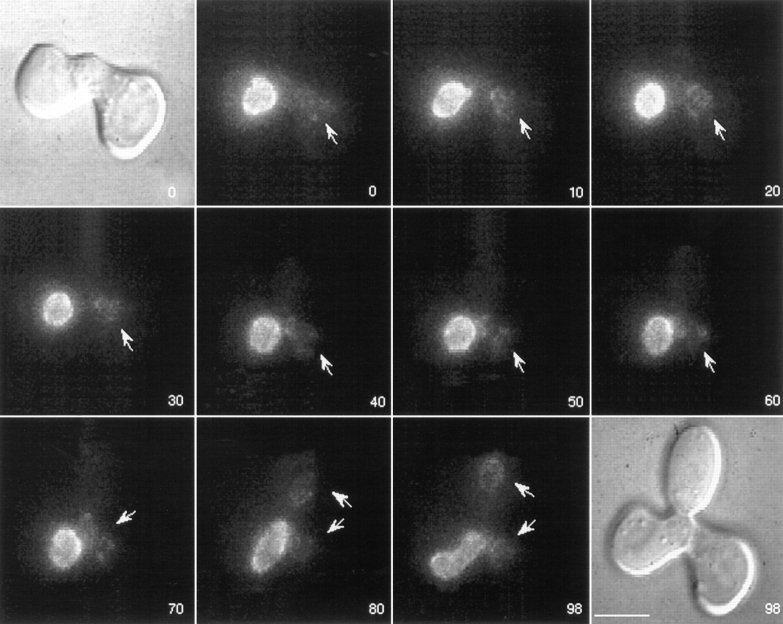
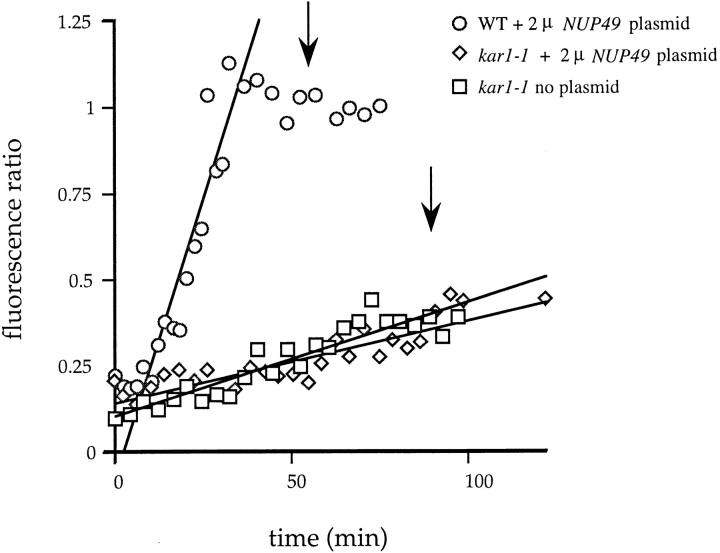
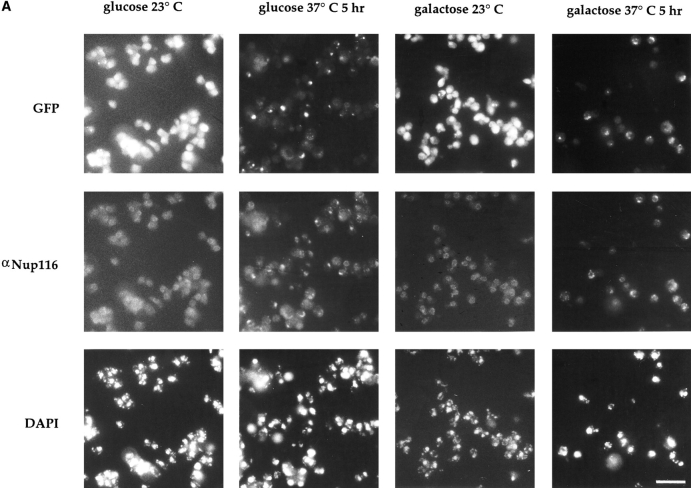
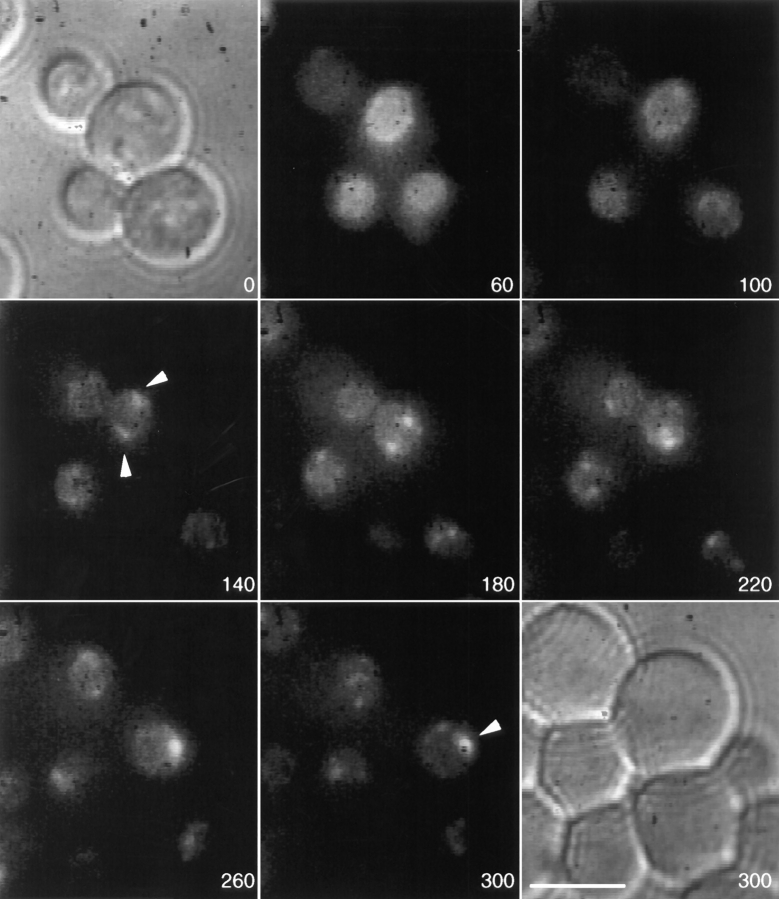
While much is known about the role of nuclear pore complexes (NPCs) in nucleocytoplasmic transport, the mechanism of NPC assembly into pores formed through the double lipid bilayer of the nuclear envelope is not well defined. To investigate the dynamics of NPCs, we developed a live-cell assay in the yeast Saccharomyces cerevisiae. The nucleoporin Nup49p was fused to the green fluorescent protein (GFP) of Aequorea victoria and expressed in nup49 null haploid yeast cells. When the GFP-Nup49p donor cell was mated with a recipient cell harboring only unlabeled Nup49p, the nuclei fused as a consequence of the normal mating process. By monitoring the distribution of the GFP-Nup49p, we could assess whether NPCs were able to move from the donor section of the nuclear envelope to that of the recipient nucleus. We observed that fluorescent NPCs moved and encircled the entire nucleus within 25 min after fusion. When assays were done in mutant kar1-1 strains, where nuclear fusion does not occur, GFP-Nup49p appearance in the recipient nucleus occurred at a very slow rate, presumably due to new NPC biogenesis or to exchange of GFP-Nup49p into existing recipient NPCs. Interestingly, in a number of existing mutant strains, NPCs are clustered together at permissive growth temperatures. This has been explained with two different hypotheses: by movement of NPCs through the double nuclear membranes with subsequent clustering at a central location; or, alternatively, by assembly of all NPCs at a central location (such as the spindle pole body) with NPCs in mutant cells unable to move away from this point. Using the GFP-Nup49p system with a mutant in the NPC-associated factor Gle2p that exhibits formation of NPC clusters only at 37 degrees C, it was possible to distinguish between these two models for NPC dynamics. GFP-Nup49p-labeled NPCs, assembled at 23 degrees C, moved into clusters when the cells were shifted to growth at 37 degrees C. These results indicate that NPCs can move through the double nuclear membranes and, moreover, can do so to form NPC clusters in mutant strains. Such clusters may result by releasing NPCs from a nuclear tether, or by disappearance of a protein that normally prevents pore aggregation. This system represents a novel approach for identifying regulators of NPC assembly and movement in the future.
虽然人们对核孔复合体(NPC)在核质运输中的作用了解很多,但NPC组装进入通过核膜双层脂质形成的孔的机制尚未明确界定。为了研究NPC的动态变化,我们在酿酒酵母中开发了一种活细胞检测方法。核孔蛋白Nup49p与维多利亚水母的绿色荧光蛋白(GFP)融合,并在nup49缺失的单倍体酵母细胞中表达。当GFP-Nup49p供体细胞与仅含有未标记Nup49p的受体细胞交配时,由于正常的交配过程,细胞核融合。通过监测GFP-Nup49p的分布,我们可以评估NPC是否能够从核膜的供体部分移动到受体细胞核的部分。我们观察到,荧光NPC在融合后25分钟内移动并环绕整个细胞核。当在突变的kar1-1菌株中进行检测时,由于不发生核融合,GFP-Nup49p在受体细胞核中的出现速率非常缓慢,推测这是由于新的NPC生物合成或GFP-Nup49p与现有受体NPC的交换。有趣的是,在许多现有的突变菌株中,NPC在允许生长温度下聚集在一起。对此有两种不同的假说:通过NPC穿过双层核膜并随后在中心位置聚集;或者,通过所有NPC在中心位置(如纺锤体极体)组装,突变细胞中的NPC无法从该点移开。使用GFP-Nup49p系统以及与NPC相关因子Gle2p的突变体,该突变体仅在37℃时表现出NPC簇的形成,从而有可能区分这两种NPC动态模型。在23℃组装的GFP-Nup49p标记的NPC,当细胞转移到37℃生长时会移动到簇中。这些结果表明,NPC可以穿过双层核膜,而且在突变菌株中可以这样做以形成NPC簇。这种簇可能是由于从核系绳释放NPC,或者是由于通常阻止孔聚集的蛋白质消失所致。该系统代表了一种未来鉴定NPC组装和运动调节因子的新方法。