Bastos R, Ribas de Pouplana L, Enarson M, Bodoor K, Burke B
Department of Cell Biology, Harvard Medical School, Boston, Massachusetts 02115, USA.
J Cell Biol. 1997 Jun 2;137(5):989-1000. doi: 10.1083/jcb.137.5.989.
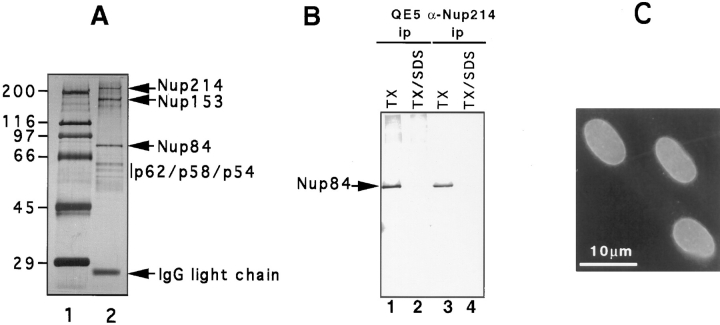
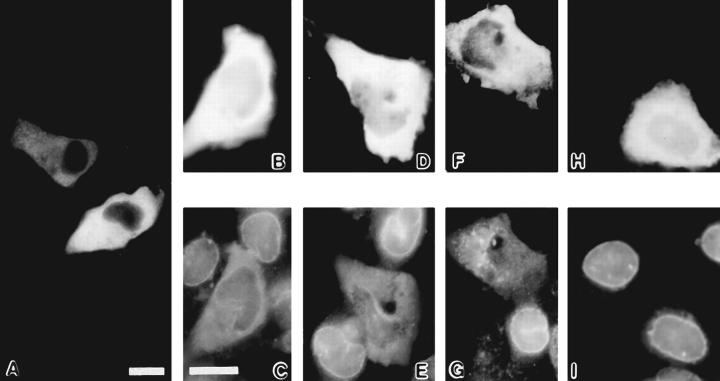
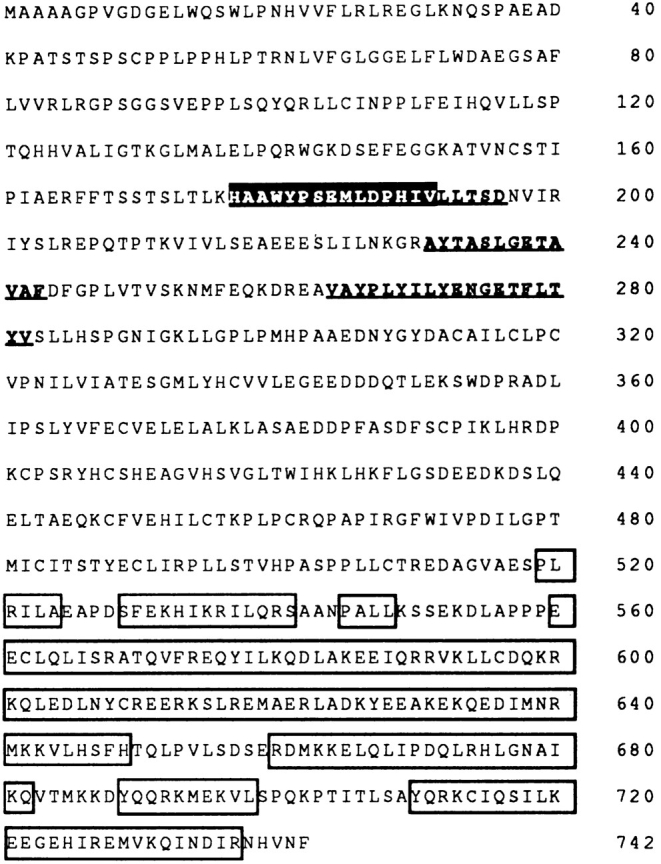
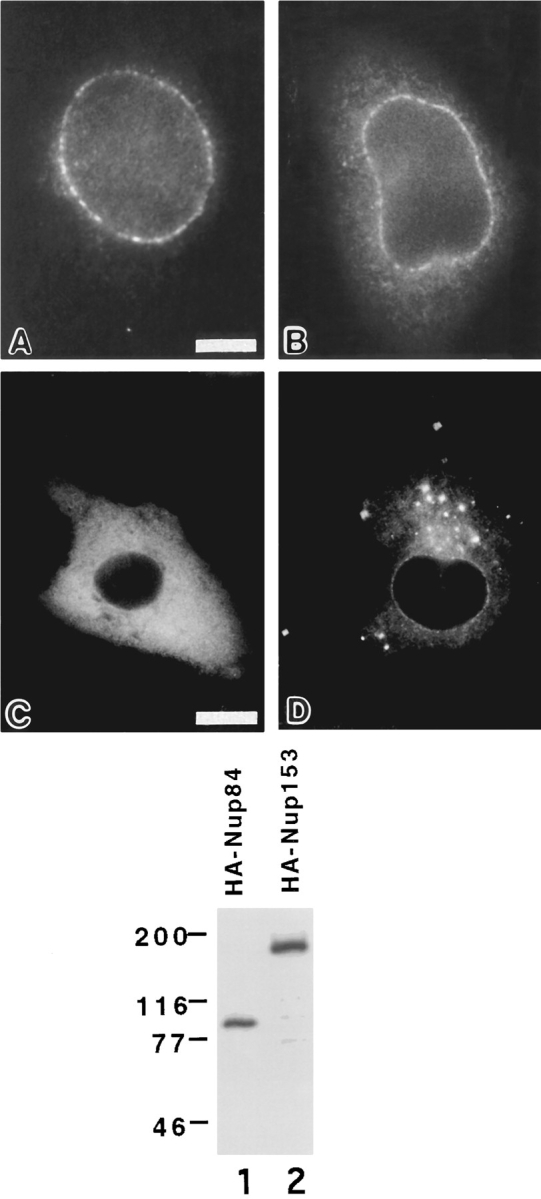
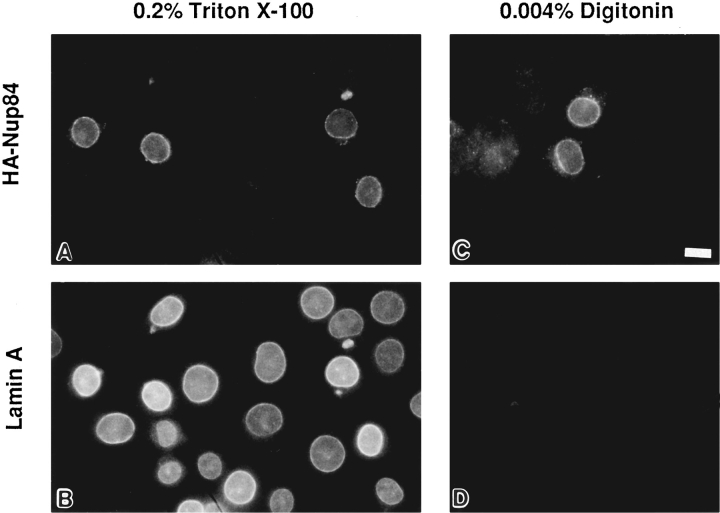
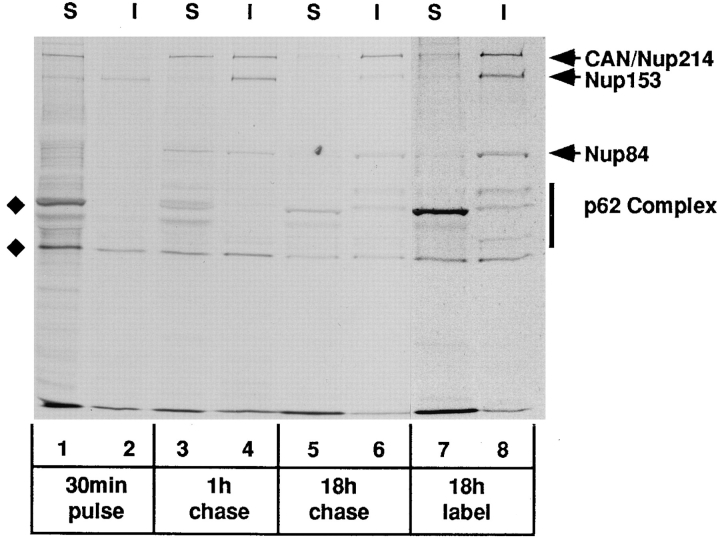
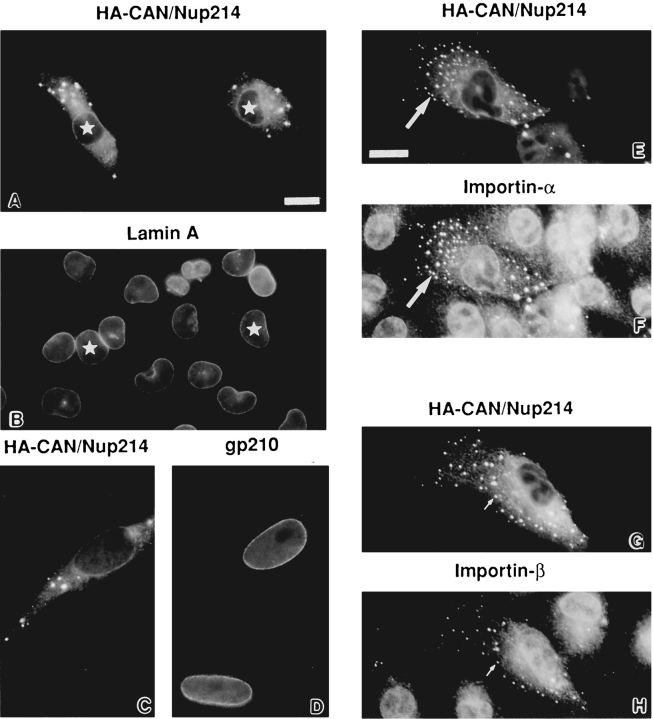
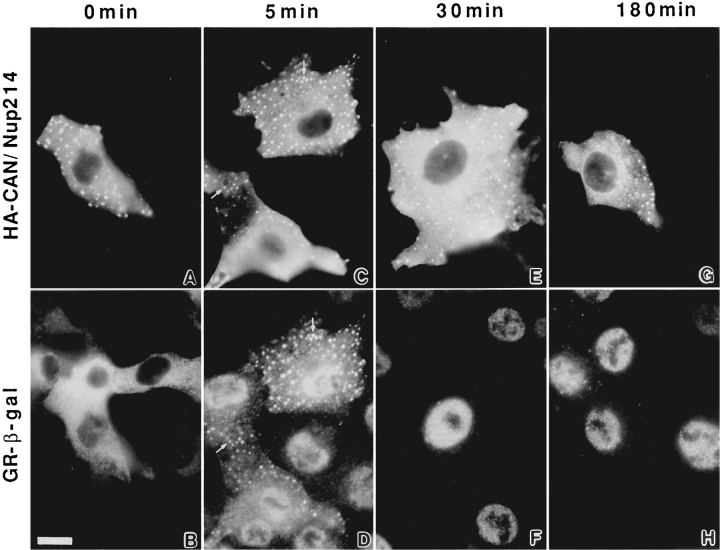
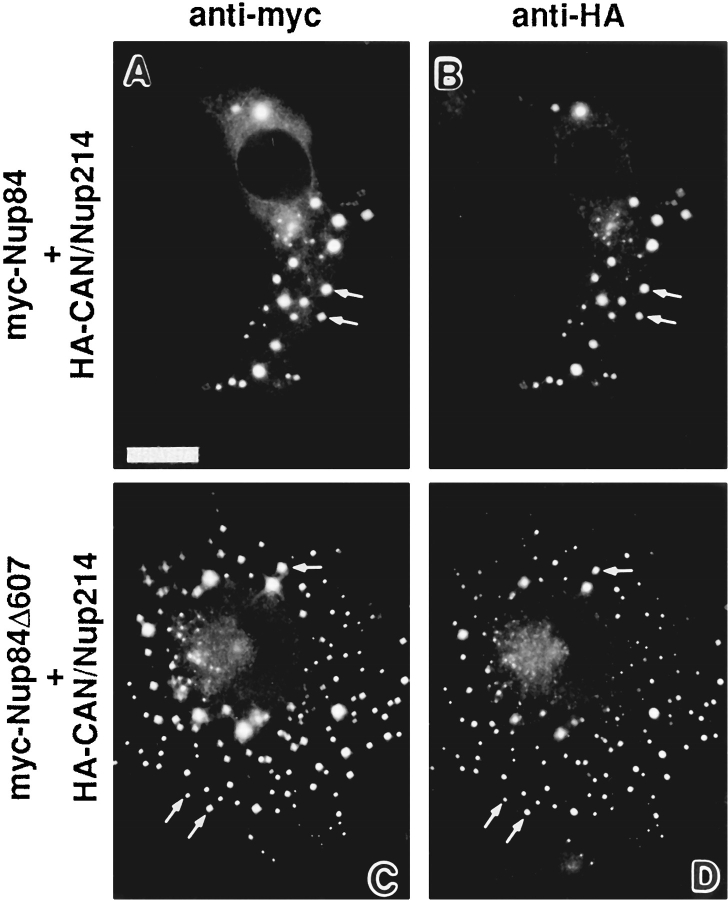
The short filaments extending from the cytoplasmic face of nuclear pore complexes are thought to contain docking sites for nuclear import substrates. One component of these filaments is the large O-linked glycoprotein CAN/Nup214. Immunoprecipitation studies carried out under nondenaturing conditions, and using a variety of antibodies, reveal a novel nonglycosylated nucleoporin, Nup84, that is tightly associated with CAN/Nup214. Consistent with such an association, Nup84 is found to be exposed on the cytoplasmic face of the nuclear pore complex. cDNA sequence analyses indicate that Nup84 contains neither the GLFG nor the XFXFG repeats that are a characteristic of a number of other nuclear pore complex proteins. Secondary structure predictions, however, suggest that Nup84 contains a coiled-coil COOH-terminal domain, a conclusion supported by the observation of significant sequence similarity between this region of the molecule and various members of the tropomyosin family. Mutagenesis and expression studies indicate that the putative coiled-coil domain is required for association with the cytoplasmic face of the nuclear pore complex, whereas it is the NH2-terminal region of Nup84 that contains the site of interaction with CAN/Nup214. These findings suggest a model in which Nup84 may function in the attachment of CAN/Nup214 to the central framework of the nuclear pore complex. In this way, Nup84 could play a central role in the organization of the interface between the pore complex and the cytoplasm.
从核孔复合体胞质面伸出的短细丝被认为含有核输入底物的对接位点。这些细丝的一个组成部分是大的O-连接糖蛋白CAN/Nup214。在非变性条件下使用多种抗体进行的免疫沉淀研究揭示了一种新的非糖基化核孔蛋白Nup84,它与CAN/Nup214紧密相关。与这种关联一致,发现Nup84暴露在核孔复合体的胞质面上。cDNA序列分析表明,Nup84既不包含许多其他核孔复合体蛋白所特有的GLFG重复序列,也不包含XFXFG重复序列。然而,二级结构预测表明,Nup84含有一个卷曲螺旋COOH末端结构域,这一结论得到了该分子这一区域与原肌球蛋白家族各成员之间显著序列相似性观察结果的支持。诱变和表达研究表明,假定的卷曲螺旋结构域是与核孔复合体胞质面结合所必需的,而Nup84的NH2末端区域则含有与CAN/Nup214相互作用的位点。这些发现提示了一个模型,其中Nup84可能在将CAN/Nup214附着到核孔复合体的中央框架中发挥作用。通过这种方式,Nup84可能在孔复合体与细胞质之间界面的组织中发挥核心作用。