Adams D H, Yannelli J R, Newman W, Lawley T, Ades E, Rosenberg S A, Shaw S
Department of Medicine, University of Birmingham, Edgbaston, UK.
Br J Cancer. 1997;75(10):1421-31. doi: 10.1038/bjc.1997.245.
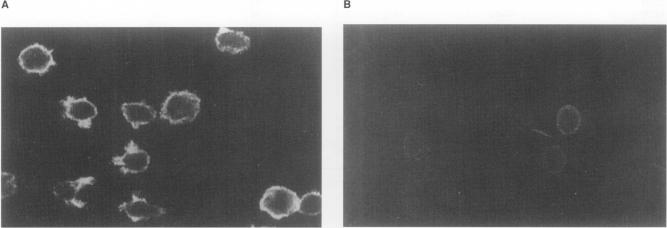
Efficacy of cancer immunotherapy with cultured tumour-infiltrating lymphocytes (TILs) depends upon infused TILs migrating into tumour-bearing tissue, in which they mediate an anti-tumour response. For TILs to enter a tumour, they must first bind to tumour endothelium, and this process depends on TILs expressing and regulating the function of relevant cell-surface receptors. We analysed the cell-surface phenotype and endothelial binding of TILs cultured from human melanoma and compared them with peripheral blood T cells and with allostimulated T cells cultured under similar conditions. Compared with peripheral blood T cells, TILs expressed high levels of five integrins, two other adhesion molecules, including the skin homing molecule CLA, and several activation markers and showed markedly enhanced integrin-mediated adhesion to a dermal microvascular endothelial cell line in vitro. Compared with the allostimulated T cells, TILs expressed higher levels of the cutaneous lymphocyte antigen (CLA), the adhesion molecule CD31 and the activation markers CD30 and CD69, but lower levels of several other adhesion and activation molecules. These phenotypic and functional properties of TILs should have complex effects on their migration in vivo. Expression of CLA, the skin homing receptor, may increase migration to melanoma (a skin cancer), whereas integrin activation may cause non-specific binding of TILs to other endothelium. Manipulation of the culture conditions in which TILs are expanded might result in a phenotype that is more conducive to selective tumour homing in vivo.
用培养的肿瘤浸润淋巴细胞(TIL)进行癌症免疫治疗的疗效取决于注入的TIL迁移到荷瘤组织中,在该组织中它们介导抗肿瘤反应。TIL要进入肿瘤,必须首先与肿瘤内皮细胞结合,而这个过程取决于TIL表达和调节相关细胞表面受体的功能。我们分析了从人黑色素瘤培养的TIL的细胞表面表型和内皮细胞结合情况,并将它们与外周血T细胞以及在相似条件下培养的异体刺激T细胞进行比较。与外周血T细胞相比,TIL高表达五种整合素、另外两种黏附分子(包括皮肤归巢分子CLA)以及几种活化标志物,并且在体外对真皮微血管内皮细胞系的整合素介导的黏附明显增强。与异体刺激T细胞相比,TIL表达更高水平的皮肤淋巴细胞抗原(CLA)、黏附分子CD31以及活化标志物CD3a和CD69,但其他几种黏附和活化分子的水平较低。TILs的这些表型和功能特性对其体内迁移应该有复杂的影响。皮肤归巢受体CLA的表达可能会增加向黑色素瘤(一种皮肤癌)的迁移,而整合素激活可能导致TIL与其他内皮细胞的非特异性结合。对TIL扩增培养条件的操控可能会产生一种更有利于体内选择性肿瘤归巢的表型。