• 文献检索
  • 文档翻译
  • 深度研究
  • 学术资讯
  • Suppr Zotero 插件Zotero 插件
  • 邀请有礼
  • 套餐&价格
  • 历史记录
应用&插件
Suppr Zotero 插件Zotero 插件浏览器插件Mac 客户端Windows 客户端微信小程序
定价
高级版会员购买积分包购买API积分包
服务
文献检索文档翻译深度研究API 文档MCP 服务
关于我们
关于 Suppr公司介绍联系我们用户协议隐私条款
关注我们

Suppr 超能文献

核心技术专利:CN118964589B侵权必究
粤ICP备2023148730 号-1Suppr @ 2026

文献检索

告别复杂PubMed语法,用中文像聊天一样搜索,搜遍4000万医学文献。AI智能推荐,让科研检索更轻松。

立即免费搜索

文件翻译

保留排版,准确专业,支持PDF/Word/PPT等文件格式,支持 12+语言互译。

免费翻译文档

深度研究

AI帮你快速写综述,25分钟生成高质量综述,智能提取关键信息,辅助科研写作。

立即免费体验

在CD4阳性细胞中表达的两种孤儿七跨膜片段受体支持猿猴免疫缺陷病毒感染。

Two orphan seven-transmembrane segment receptors which are expressed in CD4-positive cells support simian immunodeficiency virus infection.

作者信息

Farzan M, Choe H, Martin K, Marcon L, Hofmann W, Karlsson G, Sun Y, Barrett P, Marchand N, Sullivan N, Gerard N, Gerard C, Sodroski J

机构信息

Division of Human Retrovirology, Dana-Farber Cancer Institute, Boston, Massachusetts 02115, USA.

出版信息

J Exp Med. 1997 Aug 4;186(3):405-11. doi: 10.1084/jem.186.3.405.

DOI:10.1084/jem.186.3.405
PMID:9236192
原文链接:https://pmc.ncbi.nlm.nih.gov/articles/PMC2198994/
Abstract

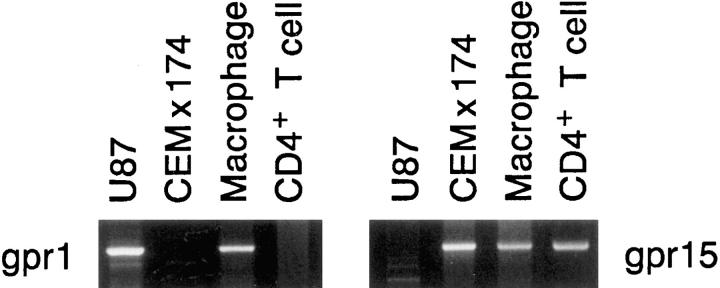
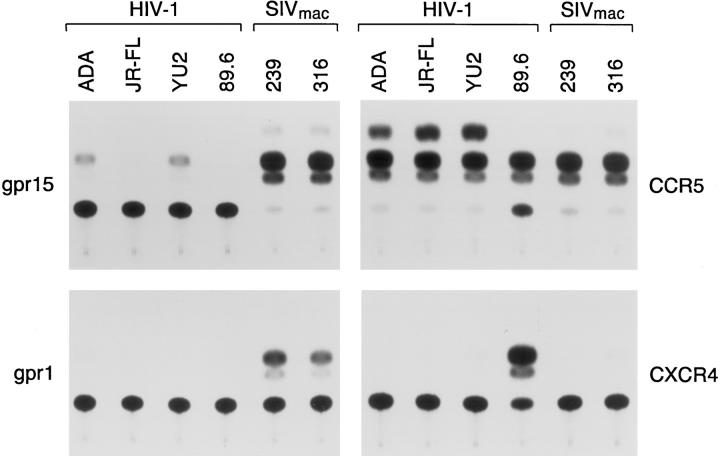
Clinical isolates of primate immunodeficiency viruses, including human immunodeficiency virus type 1 (HIV-1), enter target cells by sequential binding to CD4 and the chemokine receptor CCR5, a member of the seven-transmembrane receptor family. HIV-1 variants which use additional chemokine receptors are present in the central nervous system or emerge during the course of infection. Simian immunodeficiency viruses (SIV) have been shown to use CCR5 as a coreceptor, but no other receptors for these viruses have been identified. Here we show that two orphan seven-transmembrane segment receptors, gpr1 and gpr15, serve as coreceptors for SIV, and are expressed in human alveolar macrophages. The more efficient of these, gpr15, is also expressed in human CD4(+) T lymphocytes and activated rhesus macaque peripheral blood mononuclear cells. The gpr15 and gpr1 proteins lack several hallmarks of chemokine receptors, but share with CCR5 an amino-terminal motif rich in tyrosine residues. These results underscore the potential diversity of seven-transmembrane segment receptors used as entry cofactors by primate immunodeficiency viruses, and may contribute to an understanding of viral variation and pathogenesis.

摘要

灵长类免疫缺陷病毒的临床分离株,包括1型人类免疫缺陷病毒(HIV-1),通过依次与CD4和趋化因子受体CCR5(七跨膜受体家族的一员)结合进入靶细胞。使用其他趋化因子受体的HIV-1变体存在于中枢神经系统中或在感染过程中出现。猿猴免疫缺陷病毒(SIV)已被证明使用CCR5作为共受体,但尚未鉴定出这些病毒的其他受体。在此我们表明,两个孤儿七跨膜片段受体gpr1和gpr15作为SIV的共受体,并在人肺泡巨噬细胞中表达。其中效率更高的gpr15也在人CD4(+) T淋巴细胞和活化的恒河猴外周血单个核细胞中表达。gpr15和gpr1蛋白缺乏趋化因子受体的几个特征,但与CCR5共享富含酪氨酸残基的氨基末端基序。这些结果强调了用作灵长类免疫缺陷病毒进入辅助因子的七跨膜片段受体的潜在多样性,并可能有助于理解病毒变异和发病机制。
https://cdn.ncbi.nlm.nih.gov/pmc/blobs/25a9/2198994/27a44f5b04a2/JEM.970770f3.jpg
https://cdn.ncbi.nlm.nih.gov/pmc/blobs/25a9/2198994/75710f7caa8b/JEM.970770f1.jpg
https://cdn.ncbi.nlm.nih.gov/pmc/blobs/25a9/2198994/438d0f2e457b/JEM.970770f2.jpg
https://cdn.ncbi.nlm.nih.gov/pmc/blobs/25a9/2198994/27a44f5b04a2/JEM.970770f3.jpg
https://cdn.ncbi.nlm.nih.gov/pmc/blobs/25a9/2198994/75710f7caa8b/JEM.970770f1.jpg
https://cdn.ncbi.nlm.nih.gov/pmc/blobs/25a9/2198994/438d0f2e457b/JEM.970770f2.jpg
https://cdn.ncbi.nlm.nih.gov/pmc/blobs/25a9/2198994/27a44f5b04a2/JEM.970770f3.jpg

相似文献

1
Two orphan seven-transmembrane segment receptors which are expressed in CD4-positive cells support simian immunodeficiency virus infection.在CD4阳性细胞中表达的两种孤儿七跨膜片段受体支持猿猴免疫缺陷病毒感染。
J Exp Med. 1997 Aug 4;186(3):405-11. doi: 10.1084/jem.186.3.405.
2
CXCR6-Mediated Simian Immunodeficiency Virus SIVagmSab Entry into Sabaeus African Green Monkey Lymphocytes Implicates Widespread Use of Non-CCR5 Pathways in Natural Host Infections.CXCR6介导的猴免疫缺陷病毒SIVagmSab进入非洲绿猴淋巴细胞表明非CCR5途径在自然宿主感染中广泛使用。
J Virol. 2017 Jan 31;91(4). doi: 10.1128/JVI.01626-16. Print 2017 Feb 15.
3
Use of GPR1, GPR15, and STRL33 as coreceptors by diverse human immunodeficiency virus type 1 and simian immunodeficiency virus envelope proteins.多种人类免疫缺陷病毒1型和猿猴免疫缺陷病毒包膜蛋白将GPR1、GPR15和STRL33用作共受体。
Virology. 1998 Sep 30;249(2):367-78. doi: 10.1006/viro.1998.9306.
4
Genetically divergent strains of simian immunodeficiency virus use CCR5 as a coreceptor for entry.基因差异的猿猴免疫缺陷病毒株将CCR5用作进入细胞的共受体。
J Virol. 1997 Apr;71(4):2705-14. doi: 10.1128/JVI.71.4.2705-2714.1997.
5
Primary SIVsm isolates use the CCR5 coreceptor from sooty mangabeys naturally infected in west Africa: a comparison of coreceptor usage of primary SIVsm, HIV-2, and SIVmac.原发性SIVsm分离株使用来自西非自然感染的黑猩猩的CCR5共受体:原发性SIVsm、HIV-2和SIVmac共受体使用情况的比较。
Virology. 1998 Jun 20;246(1):113-24. doi: 10.1006/viro.1998.9174.
6
Amino acid 324 in the simian immunodeficiency virus SIVmac V3 loop can confer CD4 independence and modulate the interaction with CCR5 and alternative coreceptors.猿猴免疫缺陷病毒SIVmac V3环中的324位氨基酸可赋予其不依赖CD4的特性,并调节与CCR5及其他共受体的相互作用。
J Virol. 2004 Apr;78(7):3223-32. doi: 10.1128/jvi.78.7.3223-3232.2004.
7
Simian Immunodeficiency Virus SIVagm Efficiently Utilizes Non-CCR5 Entry Pathways in African Green Monkey Lymphocytes: Potential Role for GPR15 and CXCR6 as Viral Coreceptors.猿猴免疫缺陷病毒SIVagm在非洲绿猴淋巴细胞中有效利用非CCR5进入途径:GPR15和CXCR6作为病毒共受体的潜在作用
J Virol. 2015 Dec 9;90(5):2316-31. doi: 10.1128/JVI.02529-15.
8
CD4-independent, CCR5-dependent infection of brain capillary endothelial cells by a neurovirulent simian immunodeficiency virus strain.一种神经毒性猿猴免疫缺陷病毒株对脑毛细血管内皮细胞的CD4非依赖性、CCR5依赖性感染。
Proc Natl Acad Sci U S A. 1997 Dec 23;94(26):14742-7. doi: 10.1073/pnas.94.26.14742.
9
Envelope glycoproteins from human immunodeficiency virus types 1 and 2 and simian immunodeficiency virus can use human CCR5 as a coreceptor for viral entry and make direct CD4-dependent interactions with this chemokine receptor.1型和2型人类免疫缺陷病毒以及猿猴免疫缺陷病毒的包膜糖蛋白可将人类CCR5用作病毒进入的共受体,并与这种趋化因子受体进行直接的CD4依赖性相互作用。
J Virol. 1997 Sep;71(9):6296-304. doi: 10.1128/JVI.71.9.6296-6304.1997.
10
Simian immunodeficiency virus variants with differential T-cell and macrophage tropism use CCR5 and an unidentified cofactor expressed in CEMx174 cells for efficient entry.具有不同T细胞和巨噬细胞嗜性的猿猴免疫缺陷病毒变体利用CCR5和在CEMx174细胞中表达的一种未知辅助因子实现有效进入。
J Virol. 1997 Sep;71(9):6509-16. doi: 10.1128/JVI.71.9.6509-6516.1997.

引用本文的文献

1
Timely T cell recruitment protects against viral myocarditis.及时的T细胞募集可预防病毒性心肌炎。
Nat Cardiovasc Res. 2024 Jan;3(1):26-27. doi: 10.1038/s44161-023-00404-w.
2
GPR15 in colon cancer development and anti-tumor immune responses.GPR15在结肠癌发展和抗肿瘤免疫反应中的作用
Front Oncol. 2023 Nov 24;13:1254307. doi: 10.3389/fonc.2023.1254307. eCollection 2023.
3
Emerging roles of a chemoattractant receptor GPR15 and ligands in pathophysiology.趋化因子受体 GPR15 及其配体在病理生理学中的新兴作用。

本文引用的文献

1
CCR5 levels and expression pattern correlate with infectability by macrophage-tropic HIV-1, in vitro.在体外,CCR5水平和表达模式与巨噬细胞嗜性HIV-1的感染性相关。
J Exp Med. 1997 May 5;185(9):1681-91. doi: 10.1084/jem.185.9.1681.
2
A novel G protein-coupled receptor with homology to neuropeptide and chemoattractant receptors expressed during bone development.一种与神经肽和趋化因子受体具有同源性的新型G蛋白偶联受体,在骨骼发育过程中表达。
Biochem Biophys Res Commun. 1997 Apr 17;233(2):336-42. doi: 10.1006/bbrc.1997.6455.
3
Cloning of STRL22, a new human gene encoding a G-protein-coupled receptor related to chemokine receptors and located on chromosome 6q27.
Front Immunol. 2023 Jun 30;14:1179456. doi: 10.3389/fimmu.2023.1179456. eCollection 2023.
4
HIV-2 Neutralization Sensitivity in Relation to Co-Receptor Entry Pathways and Env Motifs.HIV-2 中和敏感性与共受体进入途径和Env 基序有关。
Int J Mol Sci. 2022 Apr 26;23(9):4766. doi: 10.3390/ijms23094766.
5
CCR5 as a Coreceptor for Human Immunodeficiency Virus and Simian Immunodeficiency Viruses: A Prototypic Love-Hate Affair.CCR5 作为人类免疫缺陷病毒和猴免疫缺陷病毒的核心受体:一种典型的爱恨情仇关系。
Front Immunol. 2022 Jan 27;13:835994. doi: 10.3389/fimmu.2022.835994. eCollection 2022.
6
Ligand-binding and -scavenging of the chemerin receptor GPR1.凯莫瑞蛋白受体GPR1的配体结合与清除
Cell Mol Life Sci. 2021 Sep;78(17-18):6265-6281. doi: 10.1007/s00018-021-03894-8. Epub 2021 Jul 9.
7
Natural cystatin C fragments inhibit GPR15-mediated HIV and SIV infection without interfering with GPR15L signaling.天然胱抑素 C 片段可抑制 GPR15 介导的 HIV 和 SIV 感染,而不干扰 GPR15L 信号。
Proc Natl Acad Sci U S A. 2021 Jan 19;118(3). doi: 10.1073/pnas.2023776118.
8
γδ T cell migration: Separating trafficking from surveillance behaviors at barrier surfaces.γδ T 细胞迁移:在屏障表面将运输与监视行为分开。
Immunol Rev. 2020 Nov;298(1):165-180. doi: 10.1111/imr.12915. Epub 2020 Aug 26.
9
Limited HIV-2 reservoirs in central-memory CD4 T-cells associated to CXCR6 co-receptor expression in attenuated HIV-2 infection.在HIV-2 感染衰减中,与 CXCR6 共受体表达相关的中央记忆性 CD4 T 细胞中的 HIV-2 储存有限。
PLoS Pathog. 2019 May 16;15(5):e1007758. doi: 10.1371/journal.ppat.1007758. eCollection 2019 May.
10
Intragenus (Homo) variation in a chemokine receptor gene (CCR5).种内(人类)趋化因子受体基因(CCR5)的变异。
PLoS One. 2018 Oct 2;13(10):e0204989. doi: 10.1371/journal.pone.0204989. eCollection 2018.
STRL22基因的克隆,该基因是一种新的人类基因,编码一种与趋化因子受体相关的G蛋白偶联受体,定位于6号染色体q27区。
Genomics. 1997 Feb 15;40(1):175-80. doi: 10.1006/geno.1996.4544.
4
Chemokine receptor specific for IP10 and mig: structure, function, and expression in activated T-lymphocytes.对IP10和mig特异的趋化因子受体:在活化T淋巴细胞中的结构、功能及表达
J Exp Med. 1996 Sep 1;184(3):963-9. doi: 10.1084/jem.184.3.963.
5
Genetically divergent strains of simian immunodeficiency virus use CCR5 as a coreceptor for entry.基因差异的猿猴免疫缺陷病毒株将CCR5用作进入细胞的共受体。
J Virol. 1997 Apr;71(4):2705-14. doi: 10.1128/JVI.71.4.2705-2714.1997.
6
The HIV coreceptors CXCR4 and CCR5 are differentially expressed and regulated on human T lymphocytes.HIV共受体CXCR4和CCR5在人类T淋巴细胞上的表达和调控存在差异。
Proc Natl Acad Sci U S A. 1997 Mar 4;94(5):1925-30. doi: 10.1073/pnas.94.5.1925.
7
Change in coreceptor use correlates with disease progression in HIV-1--infected individuals.共受体使用情况的变化与HIV-1感染个体的疾病进展相关。
J Exp Med. 1997 Feb 17;185(4):621-8. doi: 10.1084/jem.185.4.621.
8
Utilization of C-C chemokine receptor 5 by the envelope glycoproteins of a pathogenic simian immunodeficiency virus, SIVmac239.致病性猿猴免疫缺陷病毒SIVmac239的包膜糖蛋白对C-C趋化因子受体5的利用
J Virol. 1997 Mar;71(3):2522-7. doi: 10.1128/JVI.71.3.2522-2527.1997.
9
CCR3 and CCR5 are co-receptors for HIV-1 infection of microglia.CCR3和CCR5是小胶质细胞被HIV-1感染的共受体。
Nature. 1997 Feb 13;385(6617):645-9. doi: 10.1038/385645a0.
10
Efficient interaction of HIV-1 with purified dendritic cells via multiple chemokine coreceptors.HIV-1通过多种趋化因子共受体与纯化的树突状细胞进行有效相互作用。
J Exp Med. 1996 Dec 1;184(6):2433-8. doi: 10.1084/jem.184.6.2433.