Luo W j, Chang A
Department of Anatomy and Structural Biology, Albert Einstein College of Medicine, Bronx, New York 10461, USA.
J Cell Biol. 1997 Aug 25;138(4):731-46. doi: 10.1083/jcb.138.4.731.
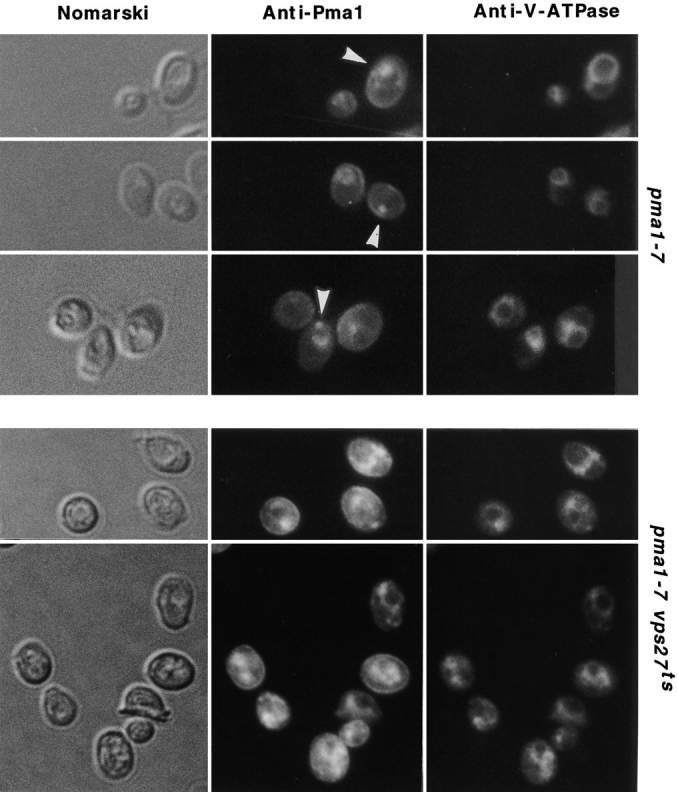
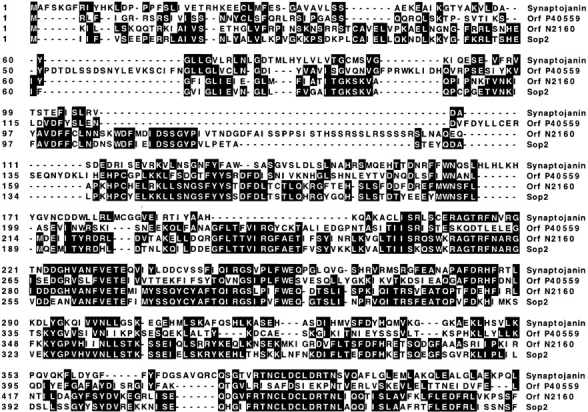
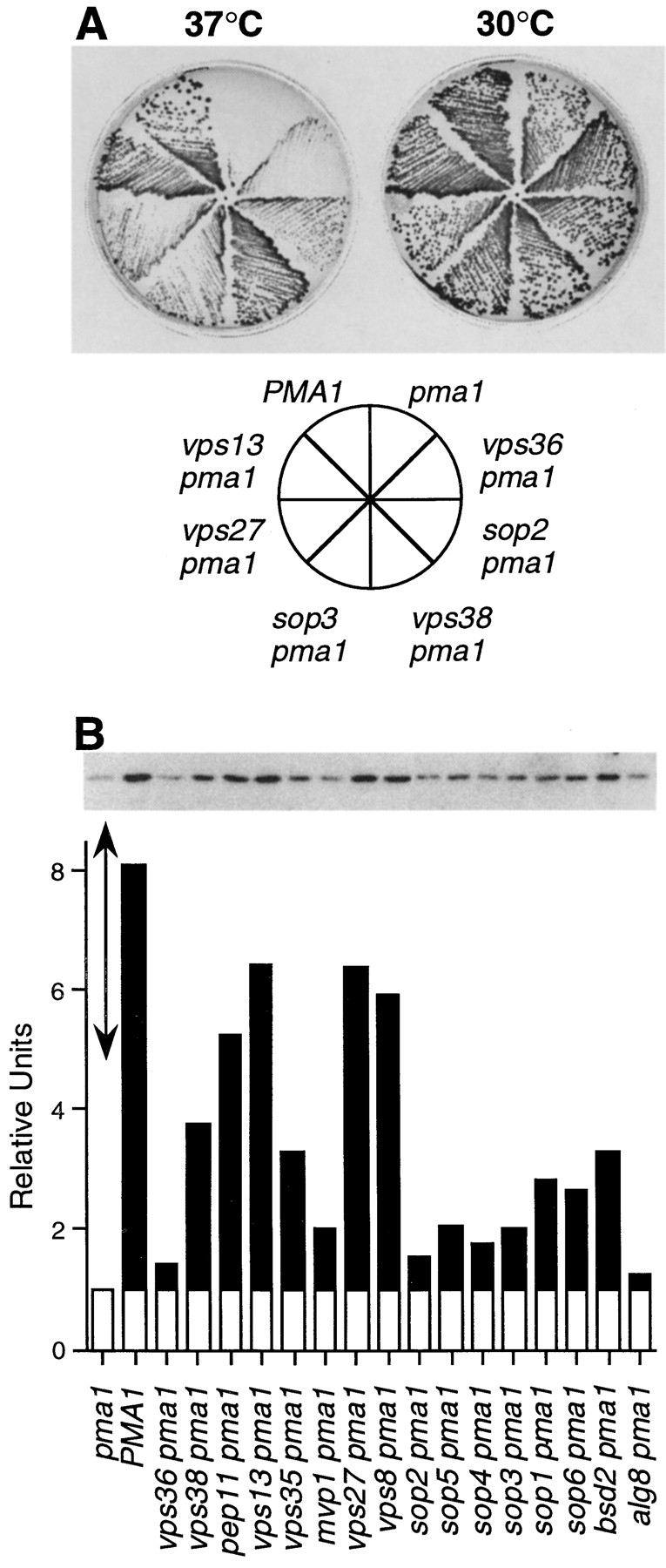
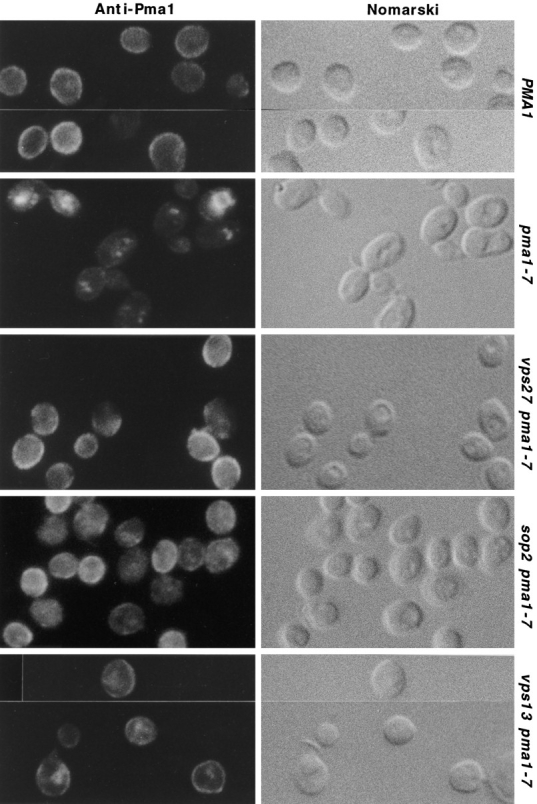
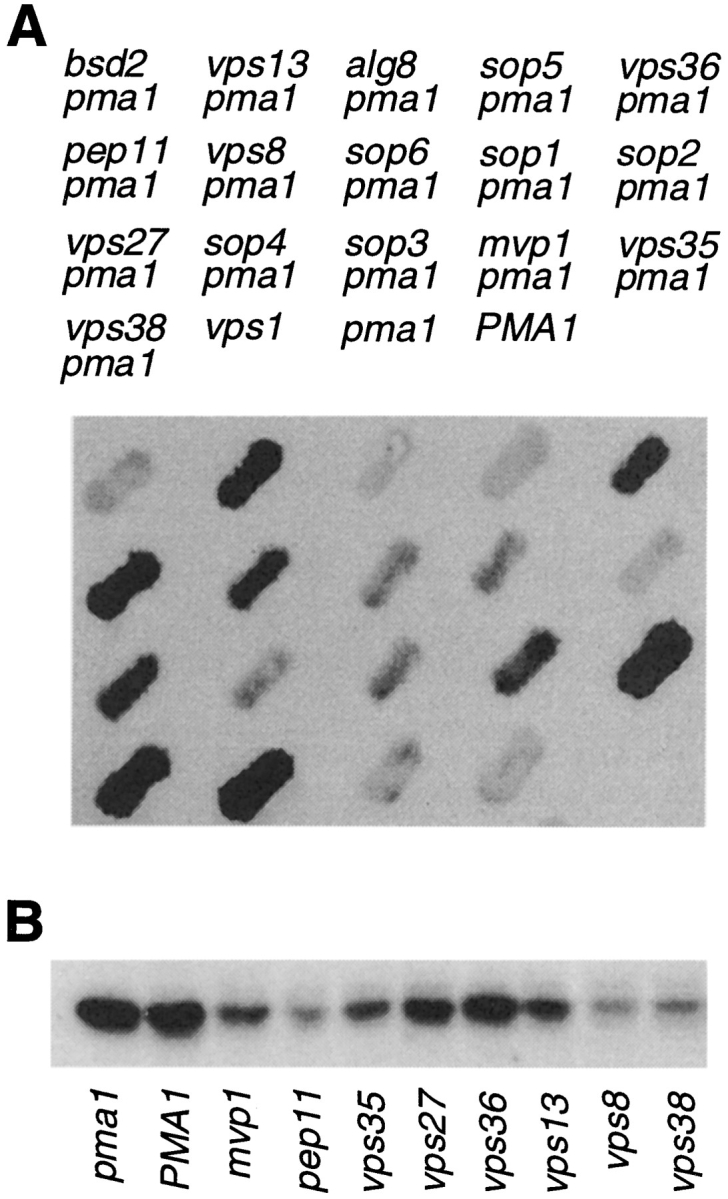
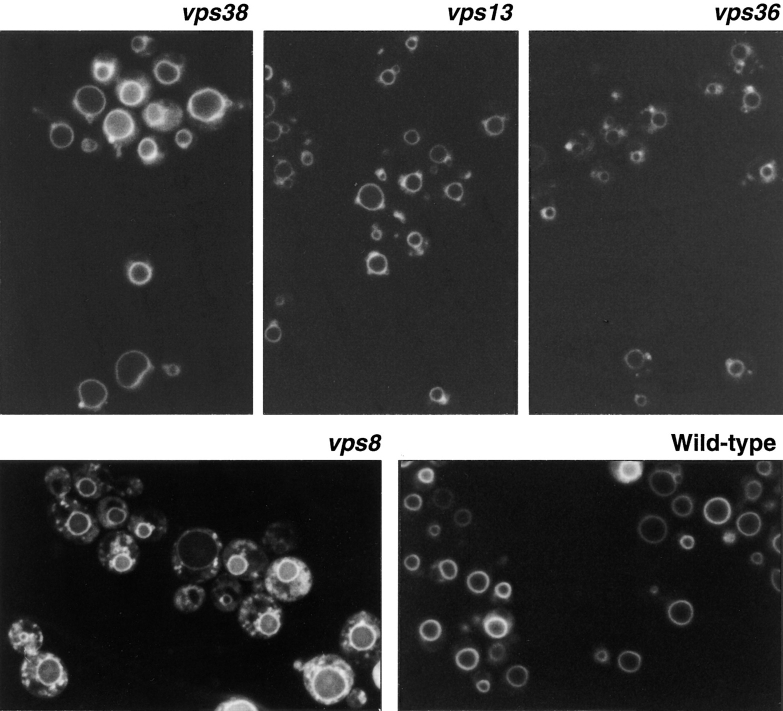
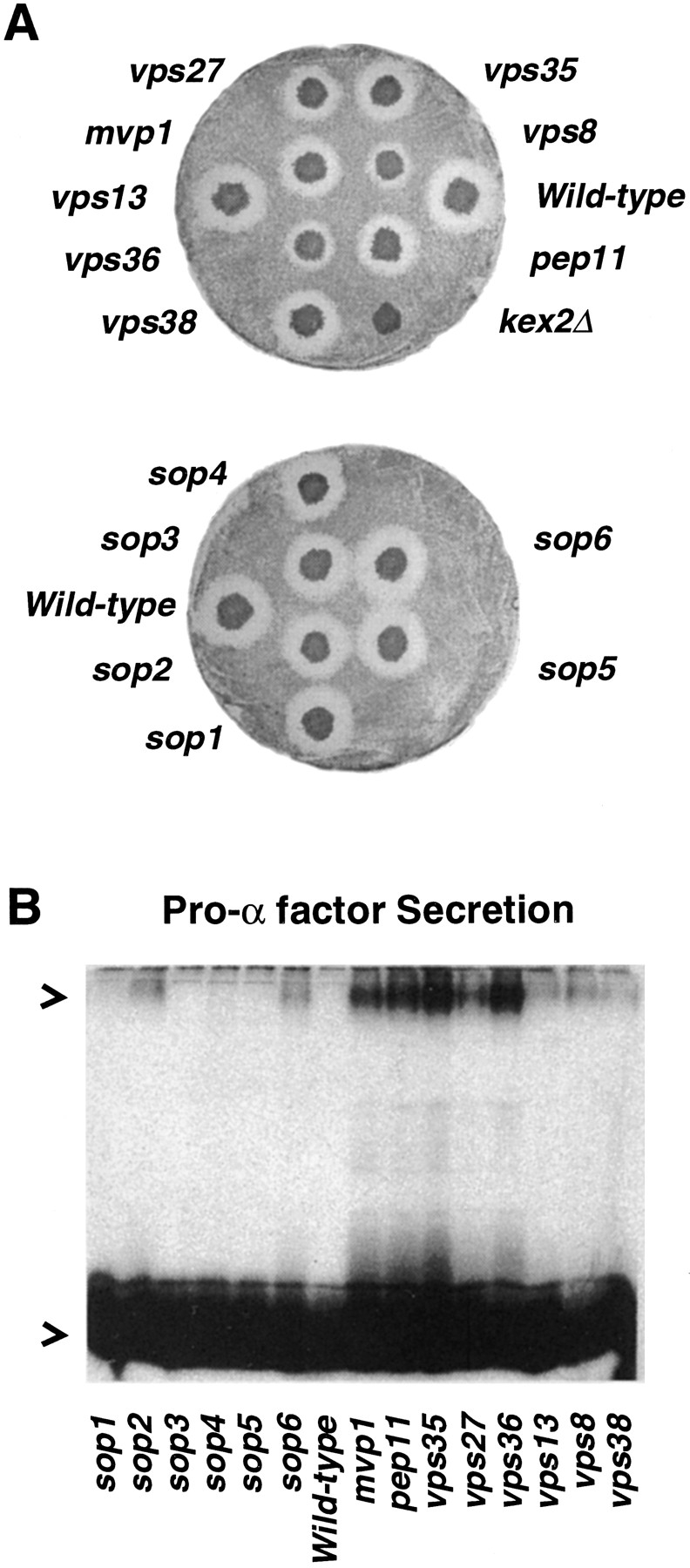
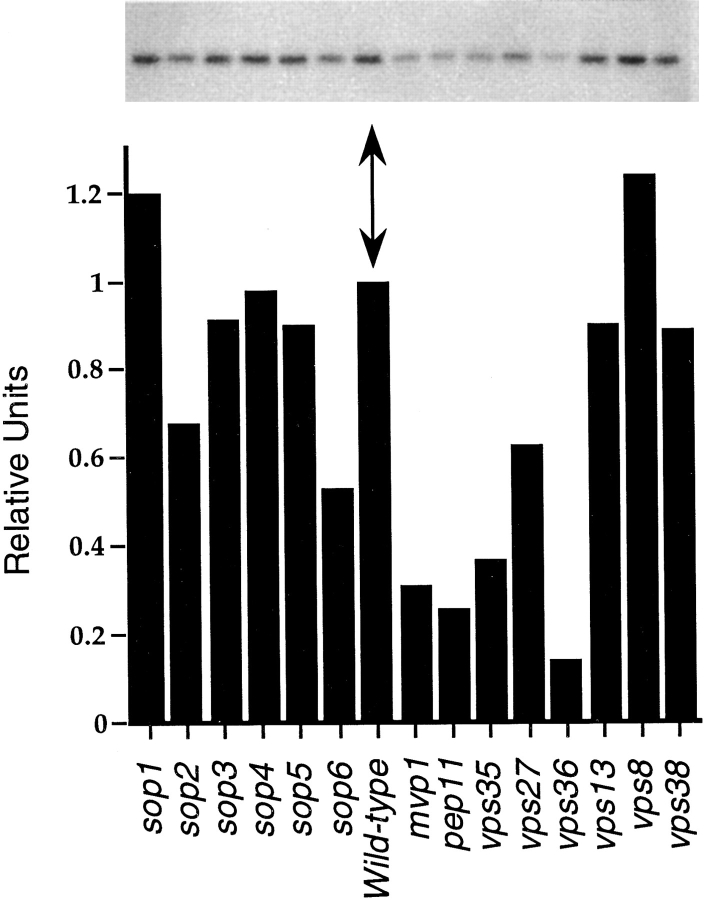
A novel genetic selection was used to identify genes regulating traffic in the yeast endosomal system. We took advantage of a temperature-sensitive mutant in PMA1, encoding the plasma membrane ATPase, in which newly synthesized Pma1 is mislocalized to the vacuole via the endosome. Diversion of mutant Pma1 from vacuolar delivery and rerouting to the plasma membrane is a major mechanism of suppression of pma1(ts). 16 independent suppressor of pma1 (sop) mutants were isolated. Identification of the corresponding genes reveals eight that are identical with VPS genes required for delivery of newly synthesized vacuolar proteins. A second group of SOP genes participates in vacuolar delivery of mutant Pma1 but is not essential for delivery of the vacuolar protease carboxypeptidase Y. Because the biosynthetic pathway to the vacuole intersects with the endocytic pathway, internalization of a bulk membrane endocytic marker FM 4-64 was assayed in the sop mutants. By this means, defective endosome-to-vacuole trafficking was revealed in a subset of sop mutants. Another subset of sop mutants displays perturbed trafficking between endosome and Golgi: impaired pro-alpha factor processing in these strains was found to be due to defective recycling of the trans-Golgi protease Kex2. One of these strains defective in Kex2 trafficking carries a mutation in SOP2, encoding a homologue of mammalian synaptojanin (implicated in synaptic vesicle endocytosis and recycling). Thus, cell surface delivery of mutant Pma1 can occur as a consequence of disturbances at several different sites in the endosomal system.
一种新的基因筛选方法被用于鉴定调控酵母内体系统中运输的基因。我们利用了PMA1基因的温度敏感突变体,该基因编码质膜ATP酶,在这种突变体中,新合成的Pma1通过内体被错误定位到液泡中。将突变型Pma1从液泡运输中转移并重新定向到质膜是抑制pma1(ts)的主要机制。我们分离出了16个独立于pma1的抑制子(sop)突变体。对相应基因的鉴定揭示了8个与新合成的液泡蛋白运输所需的VPS基因相同的基因。第二组SOP基因参与突变型Pma1的液泡运输,但对于液泡蛋白酶羧肽酶Y的运输不是必需的。由于通向液泡的生物合成途径与内吞途径相交,因此在sop突变体中检测了大量膜内吞标记物FM 4-64的内化。通过这种方法,在一部分sop突变体中发现了内体到液泡运输缺陷。另一部分sop突变体在内体和高尔基体之间的运输出现紊乱:在这些菌株中发现前α因子加工受损是由于反式高尔基体蛋白酶Kex2的循环缺陷所致。其中一个在Kex2运输方面有缺陷的菌株在SOP2基因上发生了突变,该基因编码哺乳动物突触素(参与突触小泡内吞和循环)的同源物。因此,突变型Pma1的细胞表面运输可能是内体系统中几个不同位点受到干扰的结果。