
人类肠道糖转运蛋白(SGLT1)表达的营养调控
Nutrient regulation of human intestinal sugar transporter (SGLT1) expression.
作者信息
Dyer J, Hosie K B, Shirazi-Beechey S P
机构信息
Institute of Biological Sciences, University of Wales, Aberystwyth, Ceredigion.
出版信息
Gut. 1997 Jul;41(1):56-9. doi: 10.1136/gut.41.1.56.
BACKGROUND
The activity of most intestinal nutrient transporters is adaptively regulated by the type and amounts of nutrients entering the intestinal lumen. The concentration and activity of the intestinal Na+/glucose cotransporter (SGLT1) are regulated by dietary sugars in most animal species. The activity and abundance of SGLT1 in biopsy specimens removed from human jejunal regions exposed to, and having limited access to, luminal nutrients have been measured and compared.
AIMS
To study the effects of luminal nutrients on the expression of SGLT1 in the human intestine.
PATIENT AND METHODS
Brush border membrane vesicles (BBMV) were prepared from biopsy specimens removed from the intestine of a 50 year old man who had developed a high output jejunal fistula, and adjacent mucosal fistula, a condition present for 12 months after surgery for a strangulated hernia. BBMV prepared from intestine exposed to luminal nutrients, and from dysfunctional intestine with a limited exposure to nutrients, were used to measure Na+ dependent glucose transport and abundance of SGLT1 protein.
RESULTS
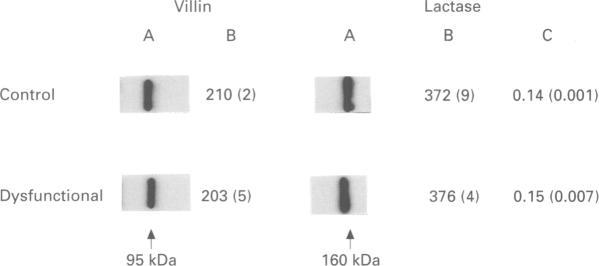
The levels of SGLT1 activity and abundance in the BBMV prepared from control biopsy specimens were similar to those found in BBMV prepared from the intestine of healthy individuals. BBMV from the dysfunctional intestine, exposed to limited levels of luminal nutrients, had reduced levels of SGLT1 activity. This reduction in SGLT1 activity and abundance was above that associated with any villus atrophy, as assessed by the abundance/activity of lactase and villin concentrations.
CONCLUSIONS
These data indicate that the activity and expression of SGLT1 in human intestine is maintained by the presence of luminal nutrients.
背景
大多数肠道营养转运体的活性受进入肠腔的营养物质类型和数量的适应性调节。在大多数动物物种中,肠道钠/葡萄糖共转运体(SGLT1)的浓度和活性受膳食糖类调节。已对从暴露于肠腔营养物质且获取有限的人类空肠区域获取的活检标本中SGLT1的活性和丰度进行了测量和比较。
目的
研究肠腔营养物质对人肠道中SGLT1表达的影响。
患者和方法
从一名50岁男性的肠道获取活检标本制备刷状缘膜囊泡(BBMV),该男性因绞窄性疝手术后出现高输出空肠瘘及相邻黏膜瘘,此情况已持续12个月。从暴露于肠腔营养物质的肠道以及暴露于有限营养物质的功能失调肠道制备的BBMV,用于测量钠依赖性葡萄糖转运和SGLT1蛋白的丰度。
结果
从对照活检标本制备的BBMV中SGLT1的活性和丰度水平与从健康个体肠道制备的BBMV中发现的水平相似。来自暴露于有限肠腔营养物质的功能失调肠道的BBMV,其SGLT1活性水平降低。通过乳糖酶的丰度/活性和绒毛蛋白浓度评估,SGLT1活性和丰度的这种降低高于与任何绒毛萎缩相关的降低。
结论
这些数据表明,肠腔营养物质的存在维持了人肠道中SGLT1的活性和表达。


 Zotero 插件