Sharara A I, Perkins D J, Misukonis M A, Chan S U, Dominitz J A, Weinberg J B
Division of Gastroenterology, Department of Medicine, Veterans Affairs and Duke University Medical Centers, Durham, North Carolina 27705, USA.
J Exp Med. 1997 Nov 3;186(9):1495-502. doi: 10.1084/jem.186.9.1495.
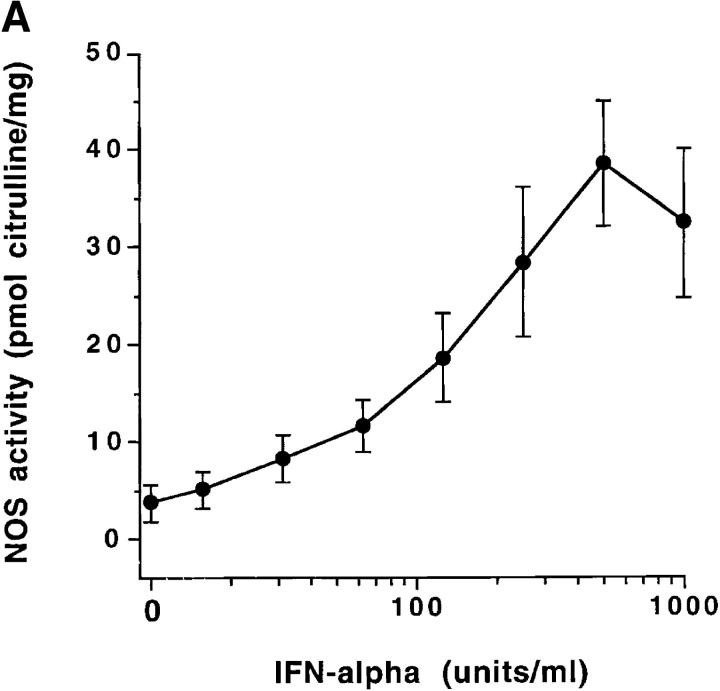
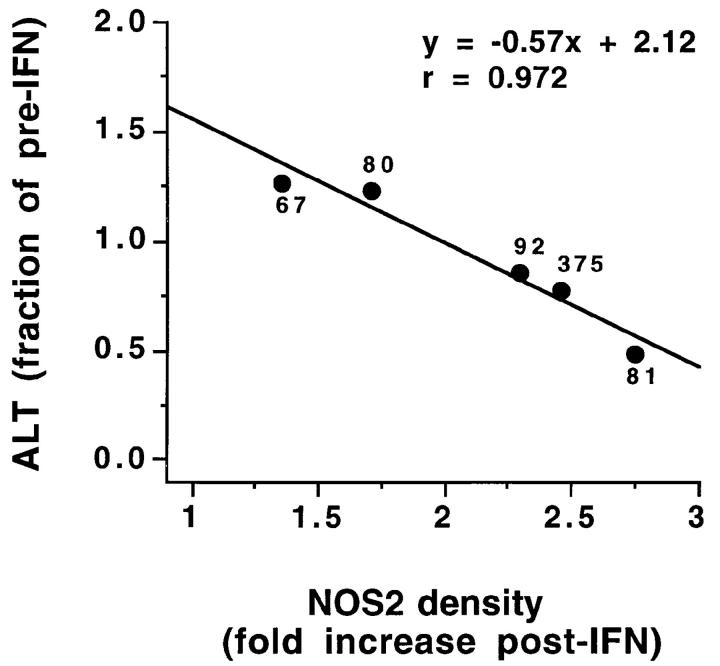
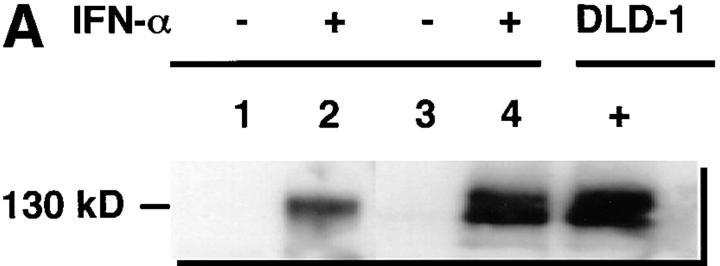
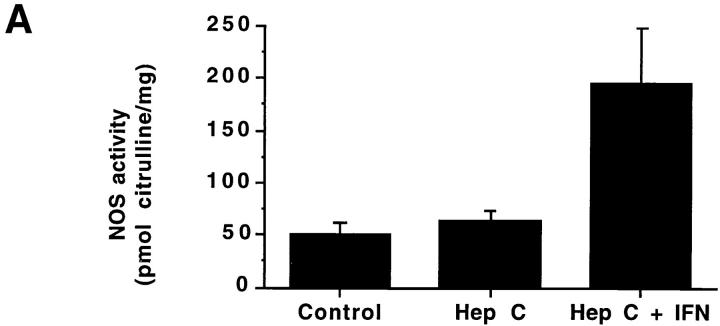
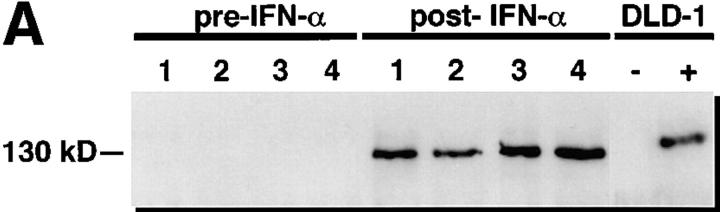
Although researchers have noted high level activation of rodent mononuclear phagocytes for nitric oxide (NO) synthase type 2 (S2) expression and NO production with a variety of agents such as interferon (IFN) gamma and endotoxin, it has been difficult to demonstrate activation of human mononuclear phagocytes. The purpose of this study was to determine if IFN-alpha serves as an activator in vitro and in vivo in humans. Treatment of normal monocytes or mononuclear cells in vitro with IFN-alpha caused a dose-dependent increase in monocyte NOS2 activity and NO production, and increased expression of NOS2 protein and mRNA expression. To determine if in vivo administration of IFN-alpha also modulated NOS2, we studied blood cells from patients with hepatitis C before and after IFN-alpha therapy. Untreated patients with chronic hepatitis C virus infection had levels of NOS activity and NOS2 antigen in freshly isolated mononuclear cells similar to those of healthy subjects, and they expressed minimal or no NOS2 mRNA. However, IFN-alpha treatment of patients with hepatitis C infection was associated with a significant elevation in mononuclear cell NOS activity, NOS2 antigen content, and NOS2 mRNA content. IFN-alpha-treated patients had significant decreases in levels of serum alanine aminotransferase and plasma hepatitis C mRNA. The degree of IFN-alpha-enhanced mononuclear cell NOS2 antigen content correlated significantly with the degree of reduction in serum alanine aminotransferase levels. Thus, IFN-alpha treatment of cells in vitro or administration of IFN-alpha to hepatitis C patients in vivo increases expression of mononuclear cell NOS2 mRNA expression, NOS activity, NOS2 antigen expression, and NO production. Since NO has been reported to have antiviral activity for a variety of viruses, we speculate that induced NO production may be related to the antiviral action(s) of IFN-alpha in hepatitis C infection.
尽管研究人员已注意到,用多种试剂(如γ干扰素和内毒素)刺激时,啮齿动物单核吞噬细胞会高水平激活,以表达2型一氧化氮(NO)合酶(S2)并产生NO,但一直难以证明人类单核吞噬细胞的激活情况。本研究的目的是确定α干扰素在体外和体内是否可作为人类单核吞噬细胞的激活剂。在体外,用α干扰素处理正常单核细胞或单个核细胞,会使单核细胞NOS2活性和NO产生呈剂量依赖性增加,并增加NOS2蛋白表达和mRNA表达。为了确定体内给予α干扰素是否也能调节NOS2,我们研究了丙型肝炎患者在接受α干扰素治疗前后的血细胞。未经治疗的慢性丙型肝炎病毒感染患者,其新鲜分离的单个核细胞中的NOS活性和NOS2抗原水平与健康受试者相似,且表达极少或不表达NOS2 mRNA。然而,对丙型肝炎感染患者进行α干扰素治疗后,单个核细胞的NOS活性、NOS2抗原含量和NOS2 mRNA含量均显著升高。接受α干扰素治疗的患者血清丙氨酸转氨酶水平和血浆丙型肝炎mRNA水平显著降低。α干扰素增强的单个核细胞NOS2抗原含量程度与血清丙氨酸转氨酶水平降低程度显著相关。因此,体外对细胞进行α干扰素处理或在体内对丙型肝炎患者给予α干扰素,均可增加单个核细胞NOS2 mRNA表达、NOS活性、NOS2抗原表达及NO产生。由于据报道NO对多种病毒具有抗病毒活性,我们推测诱导产生的NO可能与α干扰素在丙型肝炎感染中的抗病毒作用有关。