Olcese R, Latorre R, Toro L, Bezanilla F, Stefani E
Department of Anesthesiology, University of California, Los Angeles, CA 90095-1778, USA.
J Gen Physiol. 1997 Nov;110(5):579-89. doi: 10.1085/jgp.110.5.579.
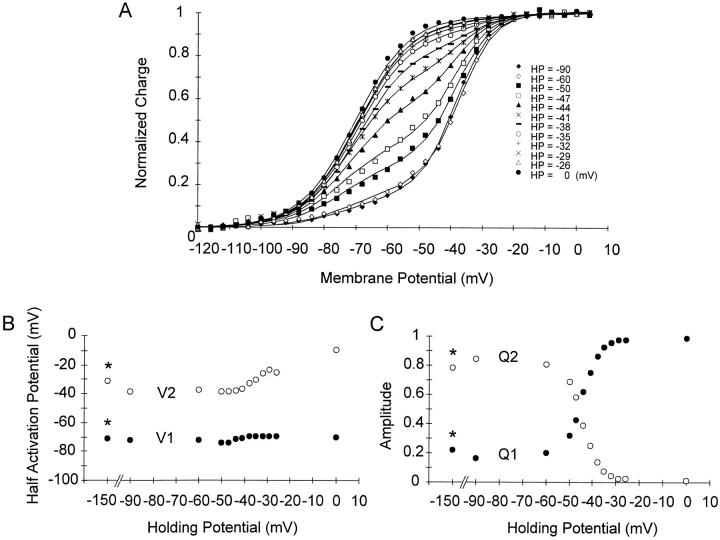
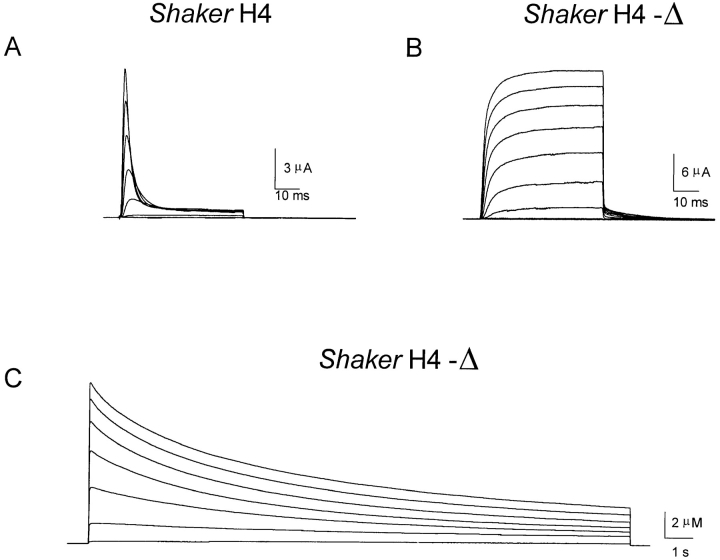
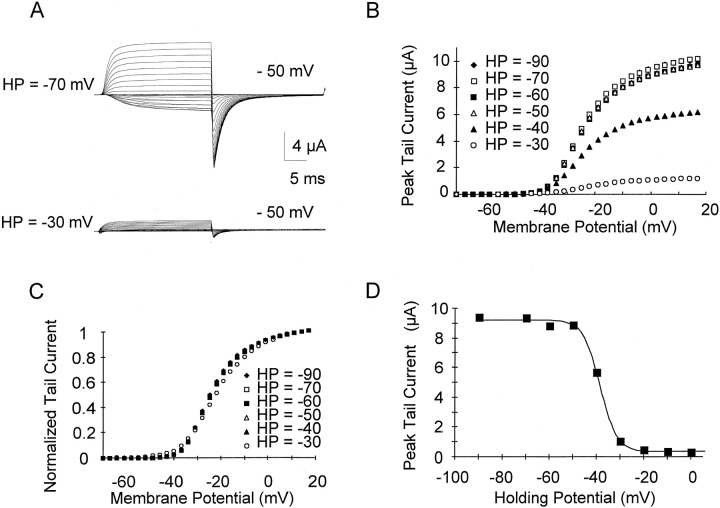
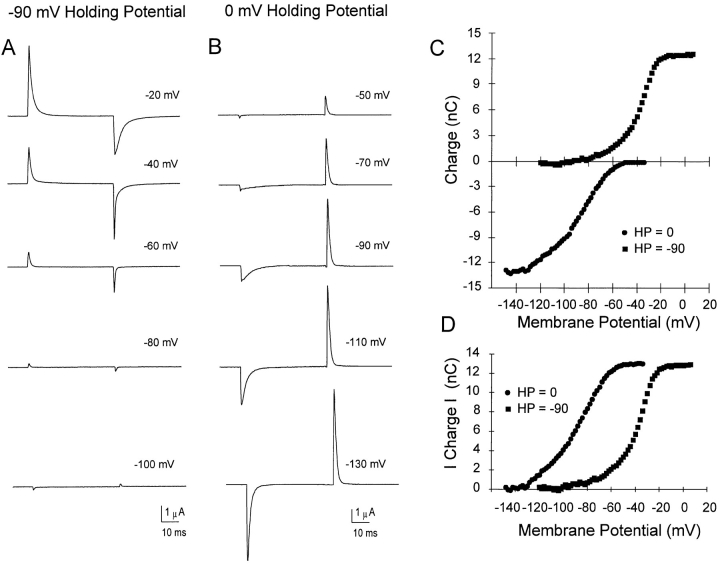
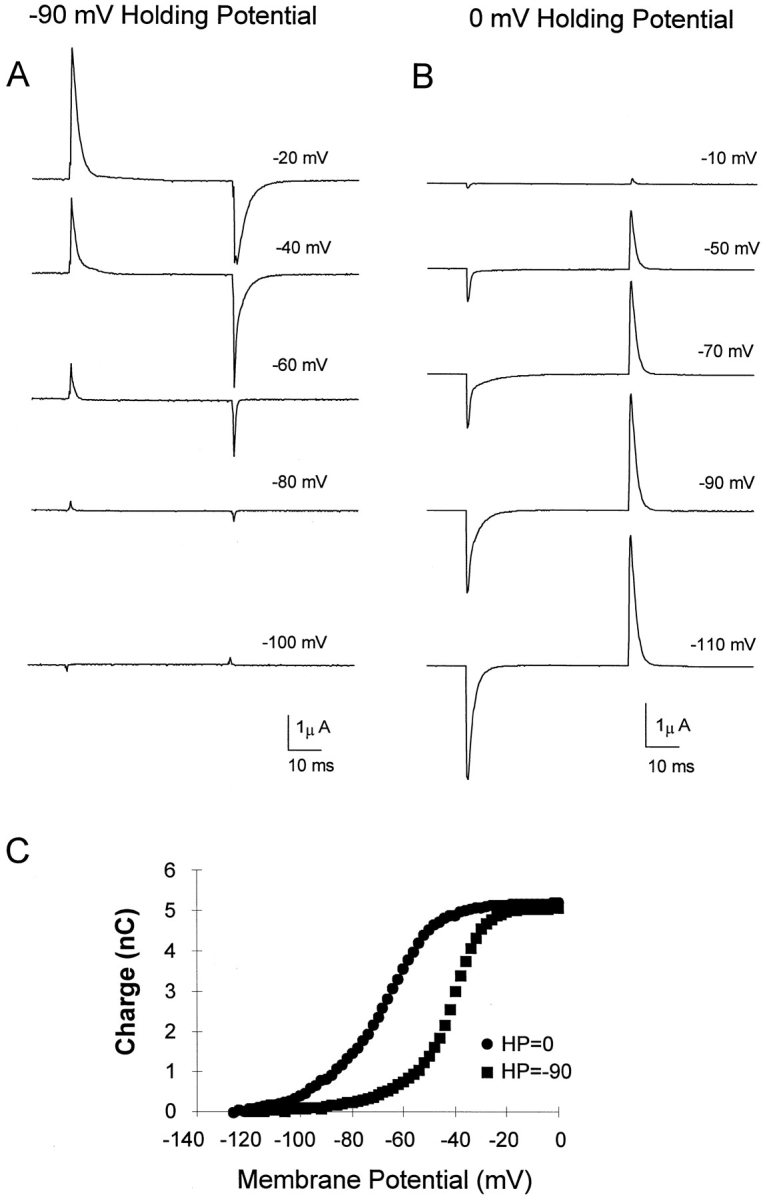
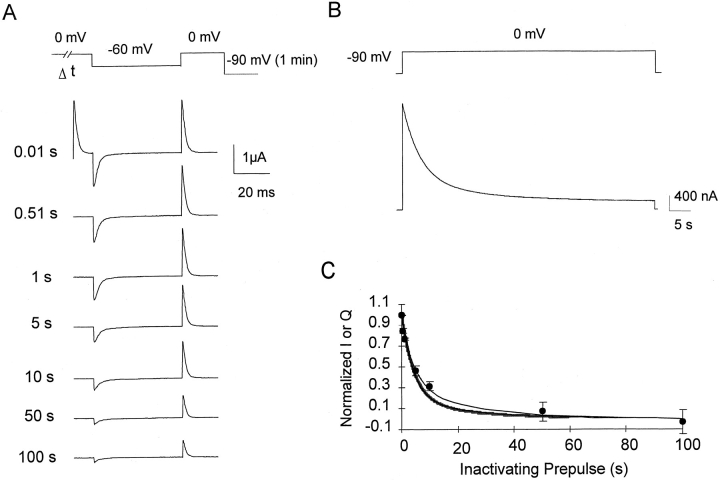
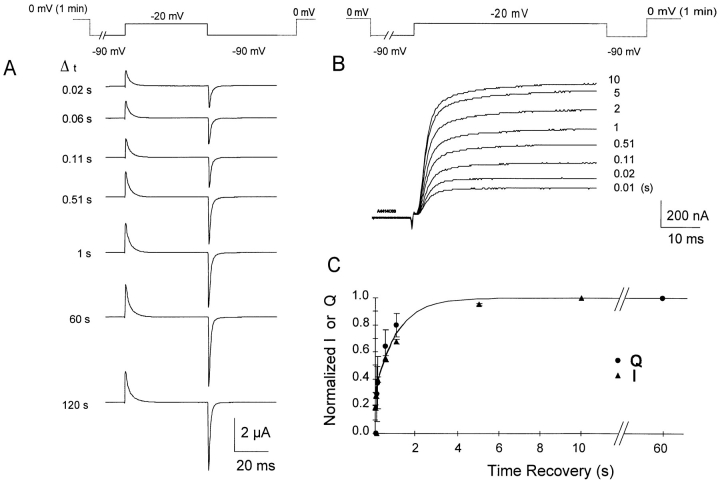
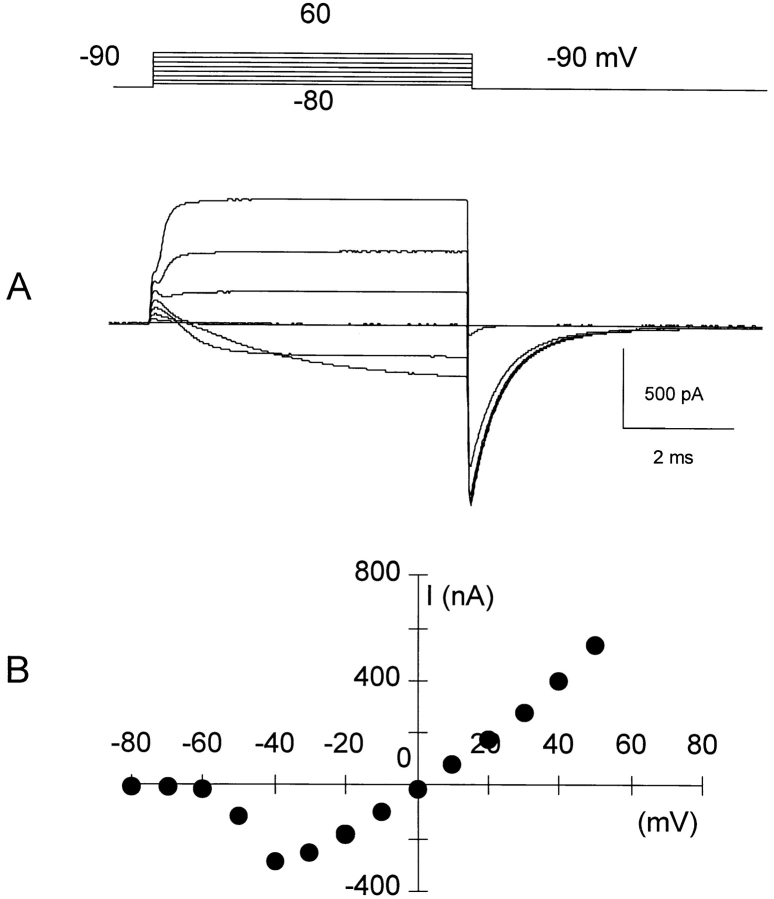
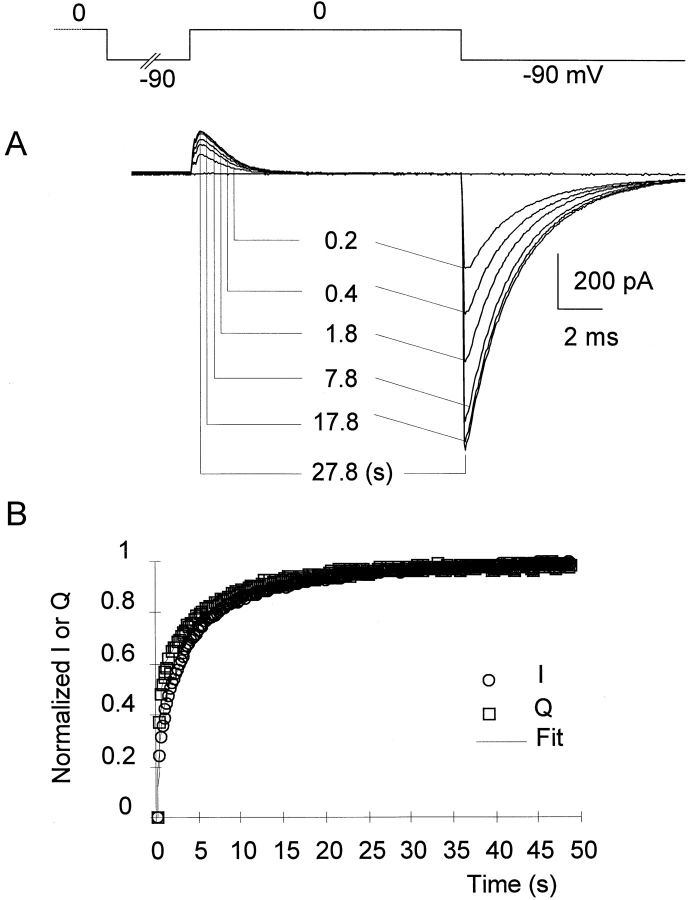
Prolonged depolarization induces a slow inactivation process in some K+ channels. We have studied ionic and gating currents during long depolarizations in the mutant Shaker H4-Delta(6-46) K+ channel and in the nonconducting mutant (Shaker H4-Delta(6-46)-W434F). These channels lack the amino terminus that confers the fast (N-type) inactivation (Hoshi, T., W.N. Zagotta, and R.W. Aldrich. 1991. Neuron. 7:547-556). Channels were expressed in oocytes and currents were measured with the cut-open-oocyte and patch-clamp techniques. In both clones, the curves describing the voltage dependence of the charge movement were shifted toward more negative potentials when the holding potential was maintained at depolarized potentials. The evidences that this new voltage dependence of the charge movement in the depolarized condition is associated with the process of slow inactivation are the following: (a) the installation of both the slow inactivation of the ionic current and the inactivation of the charge in response to a sustained 1-min depolarization to 0 mV followed the same time course; and (b) the recovery from inactivation of both ionic and gating currents (induced by repolarizations to -90 mV after a 1-min inactivating pulse at 0 mV) also followed a similar time course. Although prolonged depolarizations induce inactivation of the majority of the channels, a small fraction remains non-slow inactivated. The voltage dependence of this fraction of channels remained unaltered, suggesting that their activation pathway was unmodified by prolonged depolarization. The data could be fitted to a sequential model for Shaker K+ channels (Bezanilla, F., E. Perozo, and E. Stefani. 1994. Biophys. J. 66:1011-1021), with the addition of a series of parallel nonconducting (inactivated) states that become populated during prolonged depolarization. The data suggest that prolonged depolarization modifies the conformation of the voltage sensor and that this change can be associated with the process of slow inactivation.
长时间去极化会在某些钾离子通道中诱导一个缓慢失活过程。我们研究了突变型Shaker H4-Delta(6-46)钾离子通道以及非传导性突变体(Shaker H4-Delta(6-46)-W434F)在长时间去极化期间的离子电流和门控电流。这些通道缺乏赋予快速(N型)失活的氨基末端(星野,T.,W.N.扎戈塔,和R.W.奥尔德里奇。1991年。《神经元》。7:547-556)。通道在卵母细胞中表达,电流用切开卵母细胞和膜片钳技术进行测量。在这两个克隆中,当保持电位维持在去极化电位时,描述电荷移动电压依赖性的曲线向更负的电位移动。去极化条件下这种电荷移动新的电压依赖性与缓慢失活过程相关的证据如下:(a)离子电流的缓慢失活和响应持续1分钟至0 mV去极化的电荷失活的建立遵循相同的时间进程;(b)离子电流和门控电流从失活状态恢复(在0 mV进行1分钟失活脉冲后复极化至-90 mV诱导)也遵循相似的时间进程。尽管长时间去极化会诱导大多数通道失活,但仍有一小部分保持非缓慢失活。这部分通道的电压依赖性保持不变,表明它们的激活途径未因长时间去极化而改变。这些数据可以拟合到Shaker钾离子通道的顺序模型(贝萨尼利亚,F.,E.佩罗佐,和E.斯特凡尼。1994年。《生物物理杂志》。66:1011-1021),并增加一系列在长时间去极化期间占据的平行非传导(失活)状态。数据表明长时间去极化会改变电压传感器的构象,并且这种变化可能与缓慢失活过程相关。