Mauerer U R, Boulpaep E L, Segal A S
Department of Cellular and Molecular Physiology, Yale University School of Medicine, New Haven, Connecticut 06520, USA.
J Gen Physiol. 1998 Jan;111(1):161-80. doi: 10.1085/jgp.111.1.161.
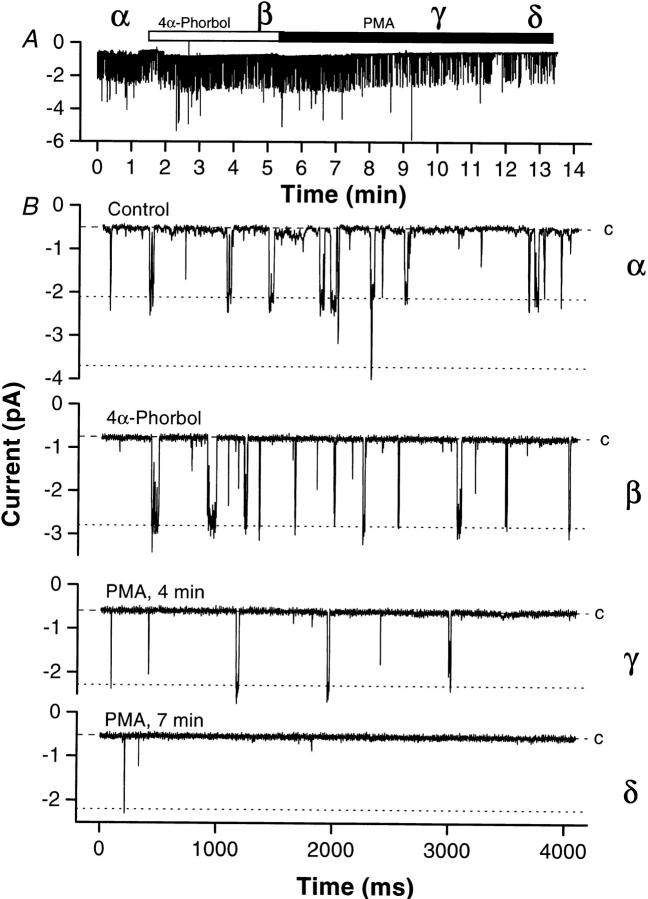
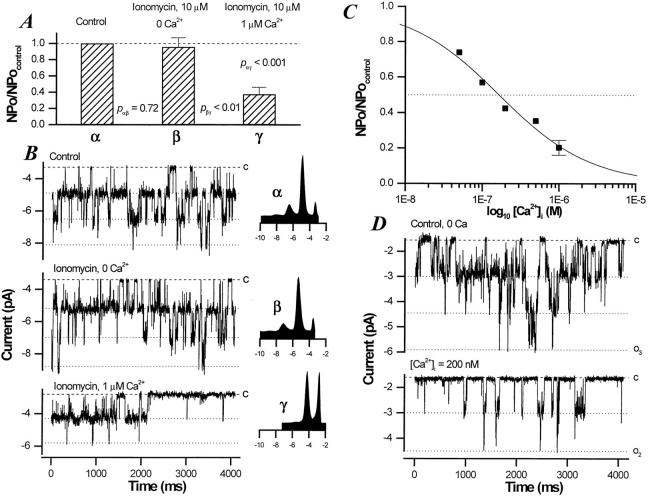
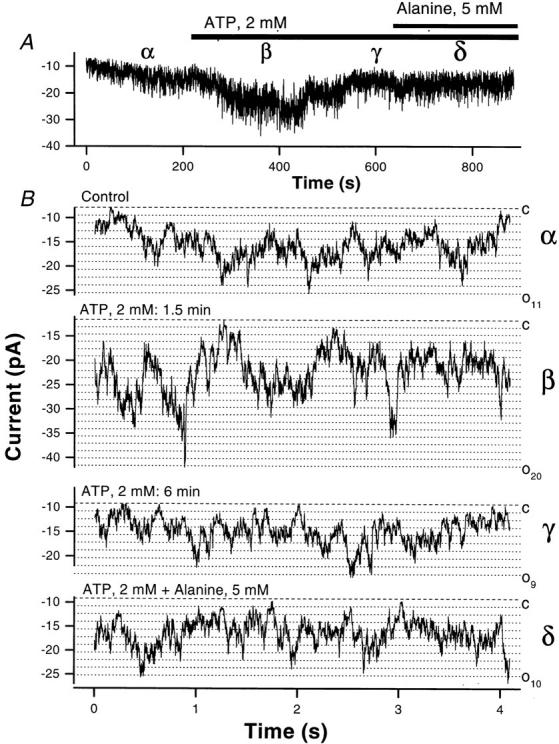
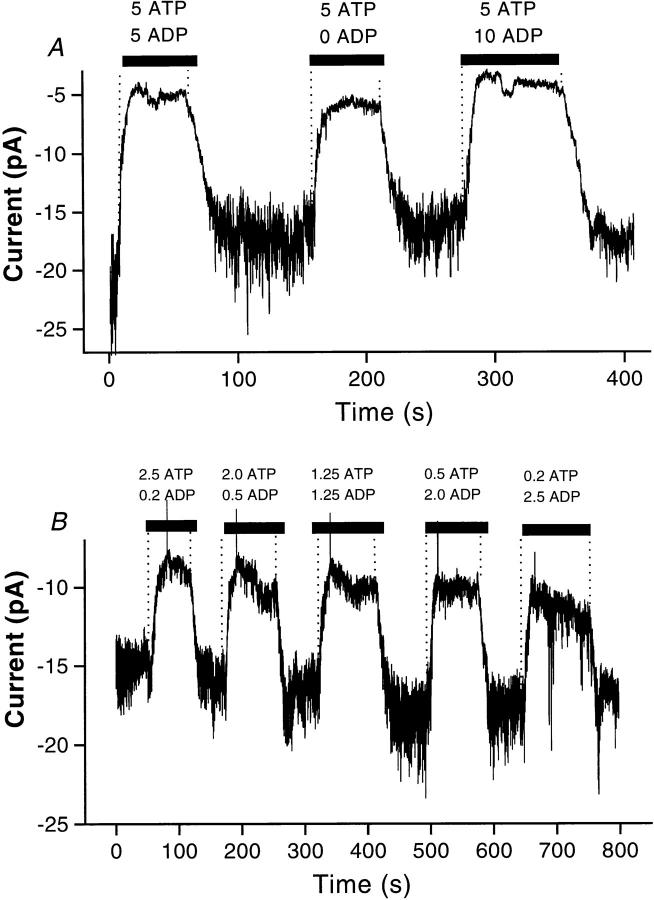
Functional coupling of Na+,K+-ATPase pump activity to a basolateral membrane (BLM) K+ conductance is crucial for sustaining transport in the proximal tubule. Apical sodium entry stimulates pump activity, lowering cytosolic [ATP], which in turn disinhibits ATP-sensitive K+ (KATP) channels. Opening of these KATP channels mediates hyperpolarization of the BLM that facilitates Na+ reabsorption and K+ recycling required for continued Na+,K+-ATPase pump turnover. Despite its physiological importance, little is known about the regulation of this channel. The present study focuses on the regulation of the BLM KATP channel by second messengers and protein kinases using membrane patches from dissociated, polarized Ambystoma proximal tubule cells. The channel is regulated by protein kinases A and C, but in opposing directions. The channel is activated by forskolin in cell-attached (c/a) patches, and by PKA in inside-out (i/o) membrane patches. However, phosphorylation by PKA is not sufficient to prevent channel rundown. In contrast, the channel is inhibited by phorbol ester in c/a patches, and PKC decreases channel activity (nPo) in i/o patches. The channel is pH sensitive, and lowering cytosolic pH reduces nPo. Increasing intracellular [Ca2+] ([Ca2+]i) in c/a patches decreases nPo, and this effect is direct since [Ca2+]i inhibits nPo with a Ki of approximately 170 nM in i/o patches. Membrane stretch and hypotonic swelling do not significantly affect channel behavior, but the channel appears to be regulated by the actin cytoskeleton. Finally, the activity of this BLM KATP channel is coupled to transcellular transport. In c/a patches, maneuvers that inhibit turnover of the Na+,K+-ATPase pump reduce nPo, presumably due to a rise in intracellular [ATP], although the associated cell depolarization cannot be ruled out as the possible cause. Conversely, stimulation of transport (and thus pump turnover) leads to increases in nPo, presumably due to a fall in intracellular [ATP]. These results show that the inwardly rectifying KATP channel in the BLM of the proximal tubule is a key element in the feedback system that links cellular metabolism with transport activity. We conclude that coupling of this KATP channel to the activity of the Na+,K+-ATPase pump is a mechanism by which steady state NaCl reabsorption in the proximal tubule may be maintained.
钠钾ATP酶泵活性与基底外侧膜(BLM)钾离子电导的功能偶联对于维持近端小管的物质转运至关重要。顶端钠离子内流刺激泵活性,降低胞质[ATP],进而解除对ATP敏感性钾离子(KATP)通道的抑制。这些KATP通道的开放介导BLM的超极化,促进持续的钠钾ATP酶泵周转所需的钠离子重吸收和钾离子循环。尽管其具有生理重要性,但对该通道的调节知之甚少。本研究利用分离的、极化的美西螈近端小管细胞的膜片,聚焦于第二信使和蛋白激酶对BLM KATP通道的调节。该通道受蛋白激酶A和C的调节,但方向相反。在细胞贴附(c/a)膜片中,毛喉素可激活该通道,在内外翻(i/o)膜片中PKA可激活该通道。然而,PKA磷酸化不足以防止通道衰减。相反,在c/a膜片中佛波酯可抑制该通道,在i/o膜片中PKC可降低通道活性(nPo)。该通道对pH敏感,降低胞质pH会降低nPo。在c/a膜片中增加细胞内[Ca2+]([Ca2+]i)会降低nPo,这种效应是直接的,因为在i/o膜片中[Ca2+]i以约170 nM的Ki抑制nPo。膜拉伸和低渗肿胀对通道行为无显著影响,但该通道似乎受肌动蛋白细胞骨架调节。最后,该BLM KATP通道的活性与跨细胞转运偶联。在c/a膜片中,抑制钠钾ATP酶泵周转的操作会降低nPo,推测是由于细胞内[ATP]升高,尽管不能排除相关的细胞去极化作为可能原因。相反,刺激转运(从而泵周转)会导致nPo增加,推测是由于细胞内[ATP]下降。这些结果表明,近端小管BLM中的内向整流KATP通道是将细胞代谢与转运活性联系起来的反馈系统中的关键要素。我们得出结论,该KATP通道与钠钾ATP酶泵活性的偶联是近端小管中维持稳态氯化钠重吸收的一种机制。