Carmeliet P, Moons L, Dewerchin M, Rosenberg S, Herbert J M, Lupu F, Collen D
The Center for Transgene Technology and Gene Therapy, Flanders Interuniversity Institute for Biotechnology, Leuven, Belgium.
J Cell Biol. 1998 Jan 12;140(1):233-45. doi: 10.1083/jcb.140.1.233.
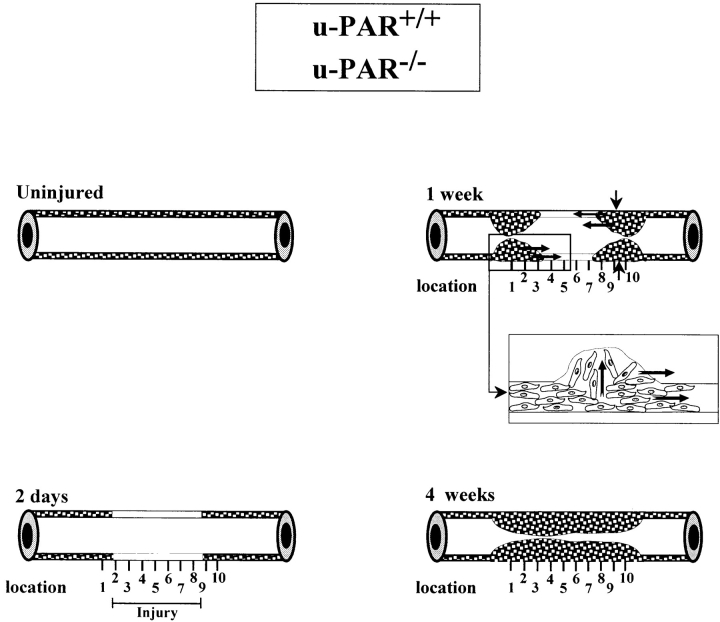
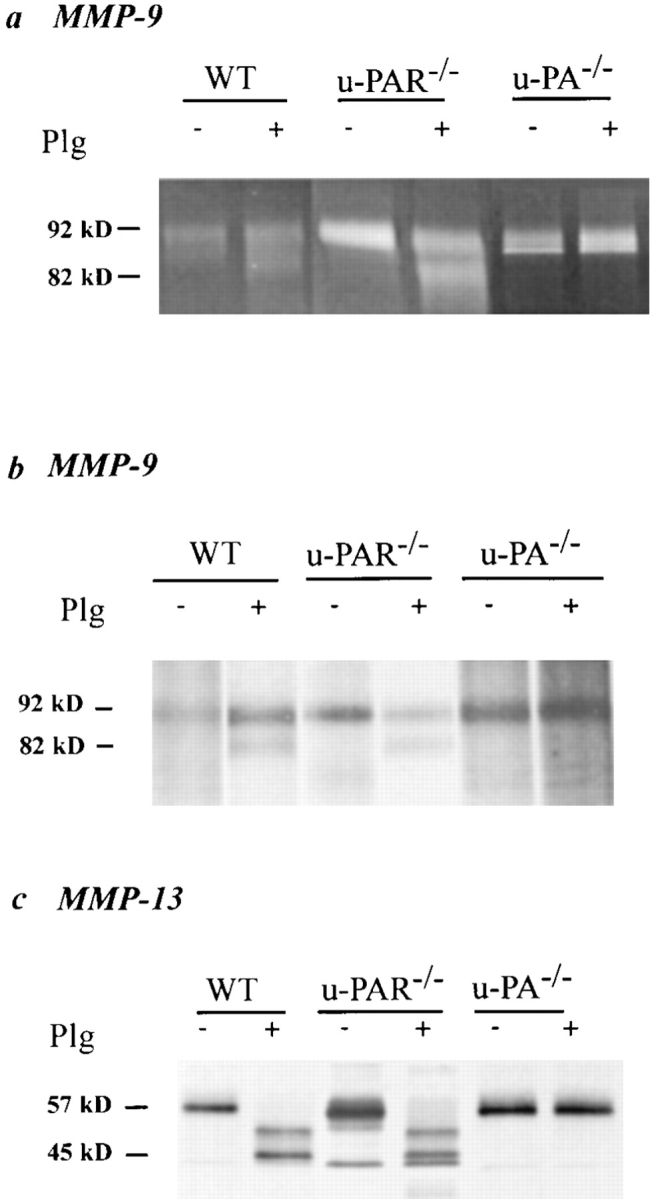
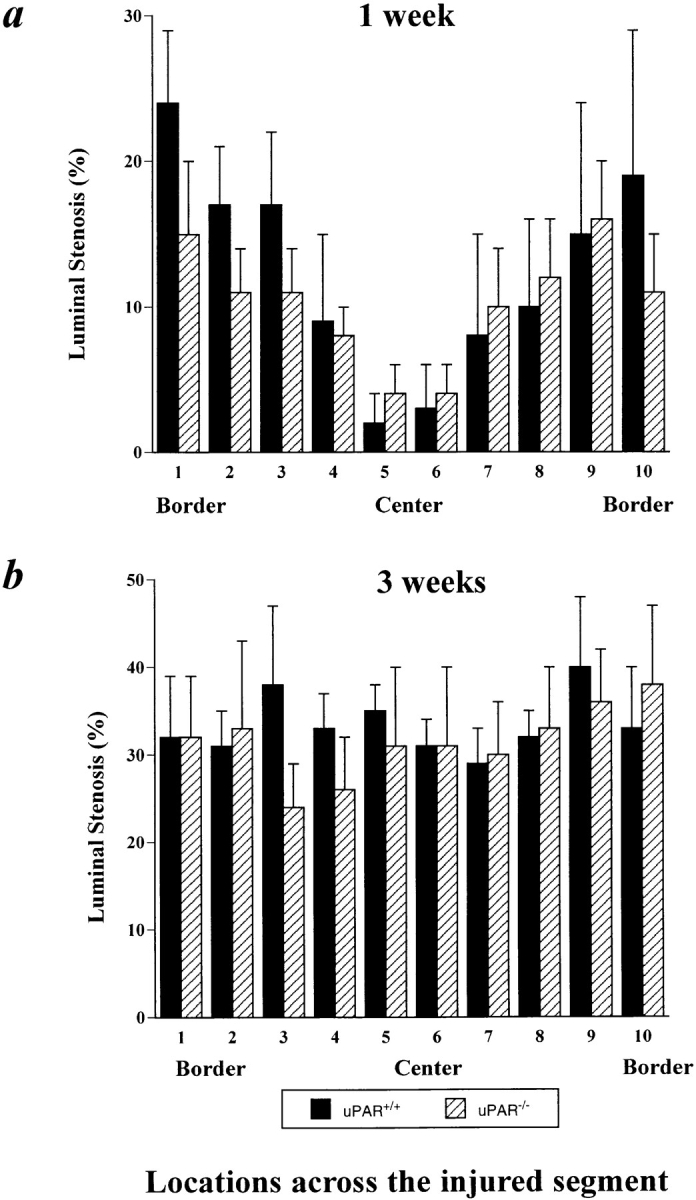
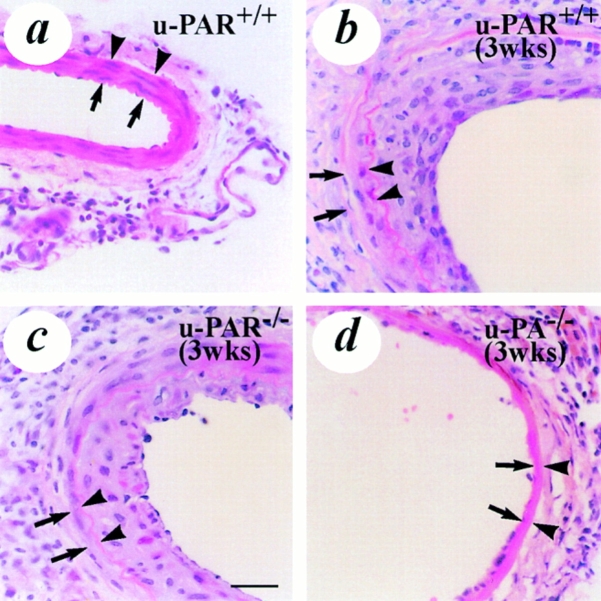
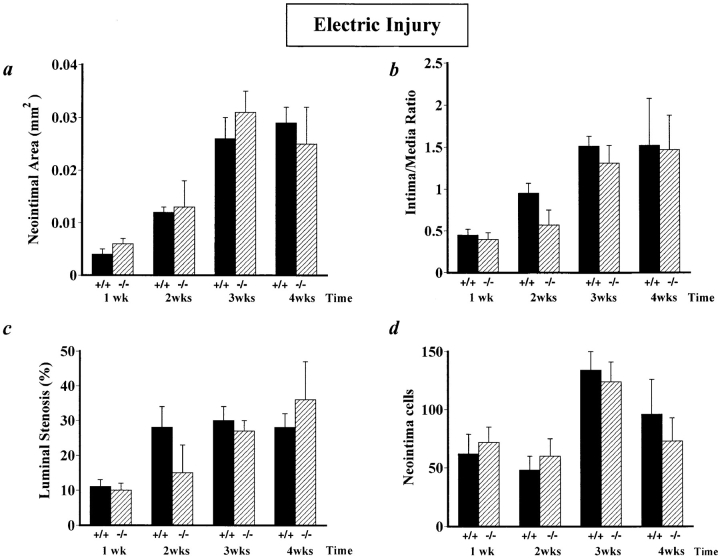
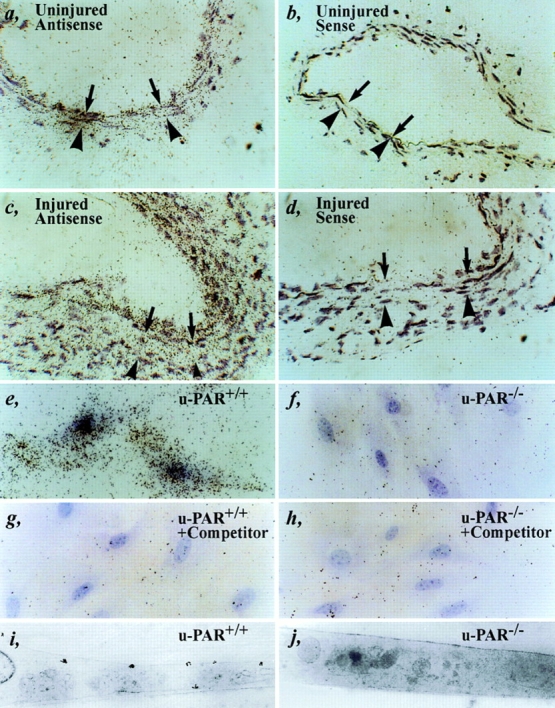
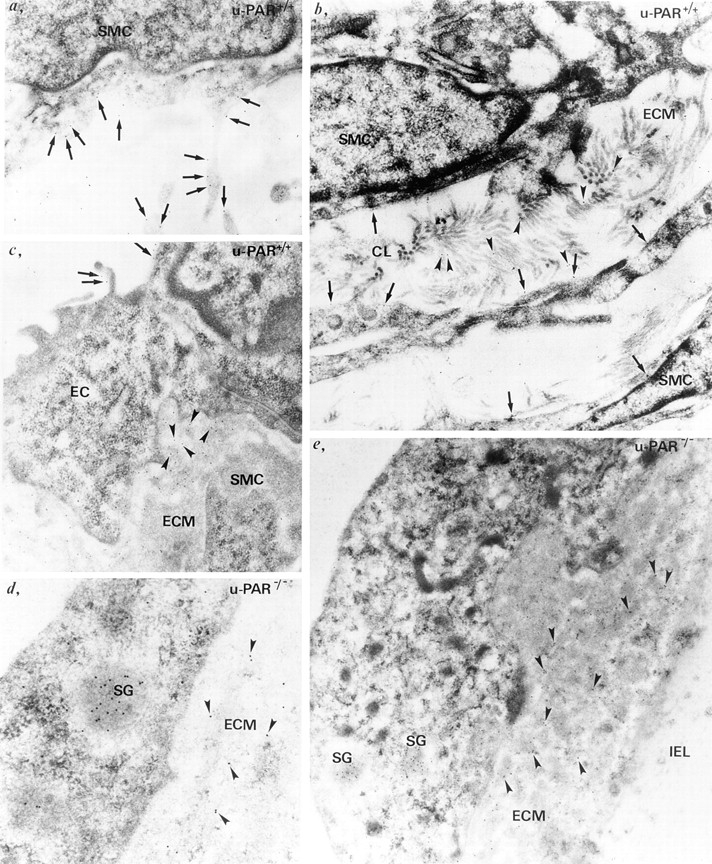
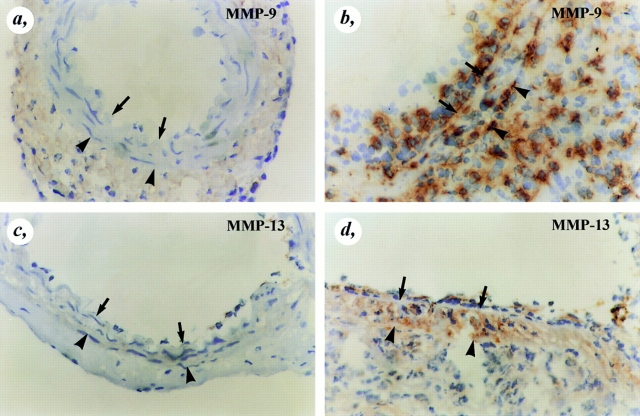
It has been proposed that the urokinase receptor (u-PAR) is essential for the various biological roles of urokinase-type plasminogen activator (u-PA) in vivo, and that smooth muscle cells require u-PA for migration during arterial neointima formation. The present study was undertaken to evaluate the role of u-PAR during this process in mice with targeted disruption of the u-PAR gene (u-PAR-/-). Surprisingly, u-PAR deficiency did not affect arterial neointima formation, neointimal cell accumulation, or migration of smooth muscle cells. Indeed, topographic analysis of arterial wound healing after electric injury revealed that u-PAR-/- smooth muscle cells, originating from the uninjured borders, migrated over a similar distance and at a similar rate into the necrotic center of the wound as wild-type (u-PAR+/+) smooth muscle cells. In addition, u-PAR deficiency did not impair migration of wounded cultured smooth muscle cells in vitro. There were no genotypic differences in reendothelialization of the vascular wound. The minimal role of u-PAR in smooth muscle cell migration was not because of absent expression, since wild-type smooth muscle cells expressed u-PAR mRNA and functional receptor in vitro and in vivo. Pericellular plasmin proteolysis, evaluated by degradation of 125I-labeled fibrin and activation of zymogen matrix metalloproteinases, was similar for u-PAR-/- and u-PAR+/+ cells. Immunoelectron microscopy of injured arteries in vivo revealed that u-PA was bound on the cell surface of u-PAR+/+ cells, whereas it was present in the pericellular space around u-PAR-/- cells. Taken together, these results suggest that binding of u-PA to u-PAR is not required to provide sufficient pericellular u-PA-mediated plasmin proteolysis to allow cellular migration into a vascular wound.
有人提出,尿激酶受体(u-PAR)对于尿激酶型纤溶酶原激活剂(u-PA)在体内的各种生物学作用至关重要,并且平滑肌细胞在动脉内膜形成过程中的迁移需要u-PA。本研究旨在评估u-PAR基因靶向破坏的小鼠(u-PAR-/-)在此过程中的作用。令人惊讶的是,u-PAR缺乏并不影响动脉内膜形成、内膜细胞积聚或平滑肌细胞迁移。实际上,电损伤后动脉伤口愈合的拓扑分析显示,源自未受伤边界的u-PAR-/-平滑肌细胞迁移到伤口坏死中心的距离和速率与野生型(u-PAR+/+)平滑肌细胞相似。此外,u-PAR缺乏并不损害体外受伤培养的平滑肌细胞的迁移。血管伤口的再内皮化没有基因型差异。u-PAR在平滑肌细胞迁移中的作用极小并非由于表达缺失,因为野生型平滑肌细胞在体外和体内均表达u-PAR mRNA和功能性受体。通过125I标记纤维蛋白的降解和酶原基质金属蛋白酶的激活评估的细胞周纤溶酶蛋白水解,在u-PAR-/-和u-PAR+/+细胞中相似。体内受损动脉的免疫电子显微镜检查显示,u-PA结合在u-PAR+/+细胞的细胞表面,而它存在于u-PAR-/-细胞周围的细胞周间隙中。综上所述,这些结果表明,u-PA与u-PAR的结合并非为细胞迁移到血管伤口中提供足够的细胞周u-PA介导的纤溶酶蛋白水解所必需。