Kawamata H, Nakashiro K, Uchida D, Hino S, Omotehara F, Yoshida H, Sato M
Second Department of Oral and Maxillofacial Surgery, Tokushima University School of Dentistry, Kuramoto, Japan.
Br J Cancer. 1998;77(1):71-8. doi: 10.1038/bjc.1998.11.
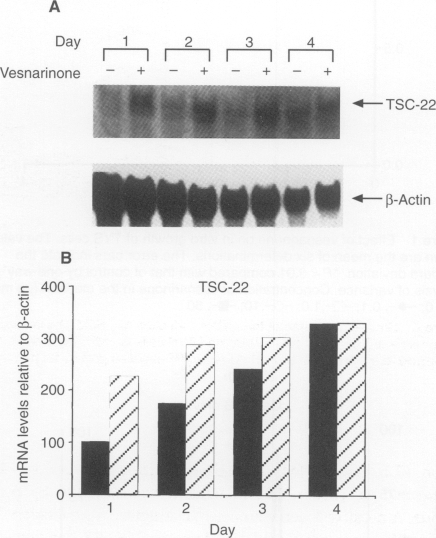
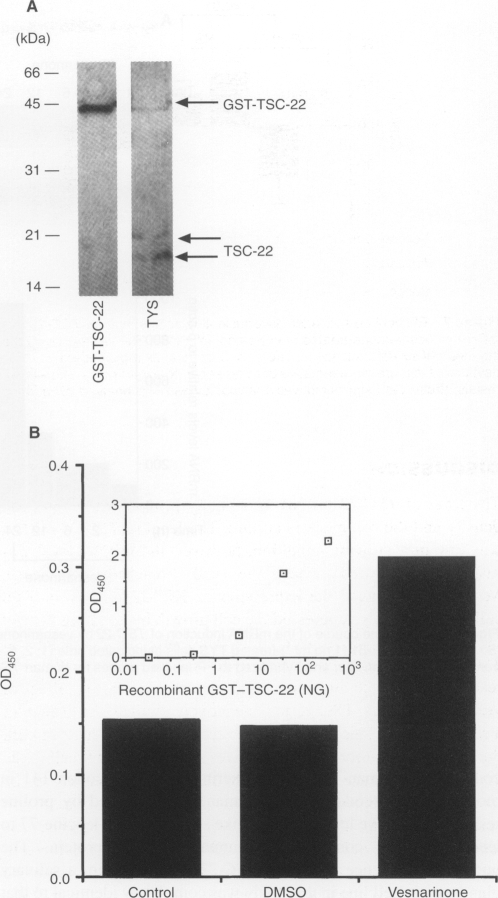
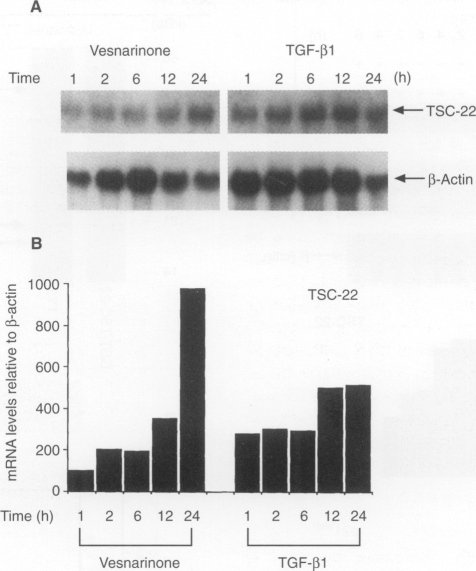
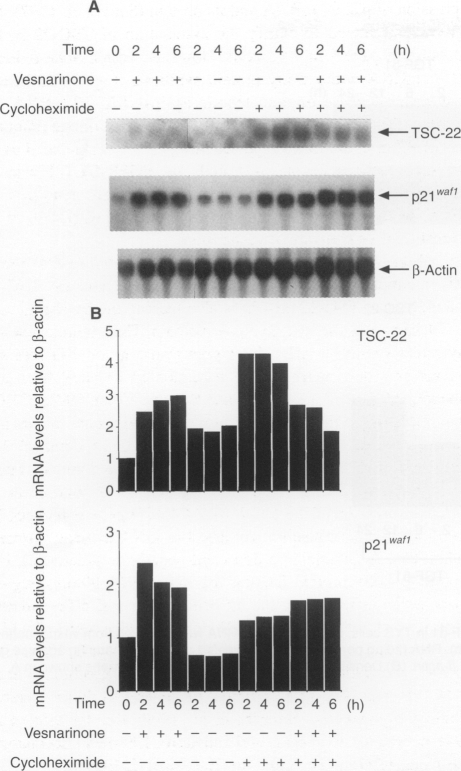
We undertook the present study to clarify the molecular mechanism of the effect of a new anti-cancer drug, vesnarinone, on a human salivary gland cancer cell line, TYS. We isolated TSC-22cDNA as avesnarinone-inducible gene from a cDNA library constructed from vesnarinone-treated TYS cells. TSC-22 was originally reported as a transforming growth factor (TGF)-beta-inducible gene. The expression of TSC-22 was up-regulated within a few hours after treatment with vesnarinone and was continued for 3 days. The level of TSC-22 mRNA in TYS cells was continuously increased until the cells reached confluency. Furthermore, the induction of TSC-22 by vesnarinone was inhibited by treatment with cycloheximide. When we treated the cells with an antisense oligonucleotide against TSC-22 mRNA under quiescent conditions, the antisense oligonucleotide stimulated the growth of TYS cells; however, under growing conditions the antisense oligonucleotide did not affect cell growth. Furthermore, the antisense oligonucleotide suppressed the antiproliferative effect of vesnarinone. These results suggest that TSC-22 may be a negative growth regulator and may play an important role in the antiproliferative effect of vesnarinone.
我们开展了本研究,以阐明新型抗癌药物维斯那林酮对人唾液腺癌细胞系TYS作用的分子机制。我们从用维斯那林酮处理过的TYS细胞构建的cDNA文库中分离出TSC - 22 cDNA作为维斯那林酮诱导基因。TSC - 22最初被报道为一种转化生长因子(TGF)-β诱导基因。在用维斯那林酮处理后的数小时内,TSC - 22的表达上调,并持续3天。在TYS细胞中,TSC - 22 mRNA的水平持续增加,直到细胞达到汇合状态。此外,用放线菌酮处理可抑制维斯那林酮对TSC - 22的诱导。当我们在静止条件下用针对TSC - 22 mRNA的反义寡核苷酸处理细胞时,反义寡核苷酸刺激了TYS细胞的生长;然而,在生长条件下,反义寡核苷酸并不影响细胞生长。此外,反义寡核苷酸抑制了维斯那林酮的抗增殖作用。这些结果表明,TSC - 22可能是一种负生长调节因子,并且可能在维斯那林酮的抗增殖作用中发挥重要作用。