Borrego F, Ulbrecht M, Weiss E H, Coligan J E, Brooks A G
Laboratory of Molecular Structure, National Institute of Allergy and Infectious Diseases, National Institutes of Health, Rockville, Maryland 20852, USA.
J Exp Med. 1998 Mar 2;187(5):813-8. doi: 10.1084/jem.187.5.813.
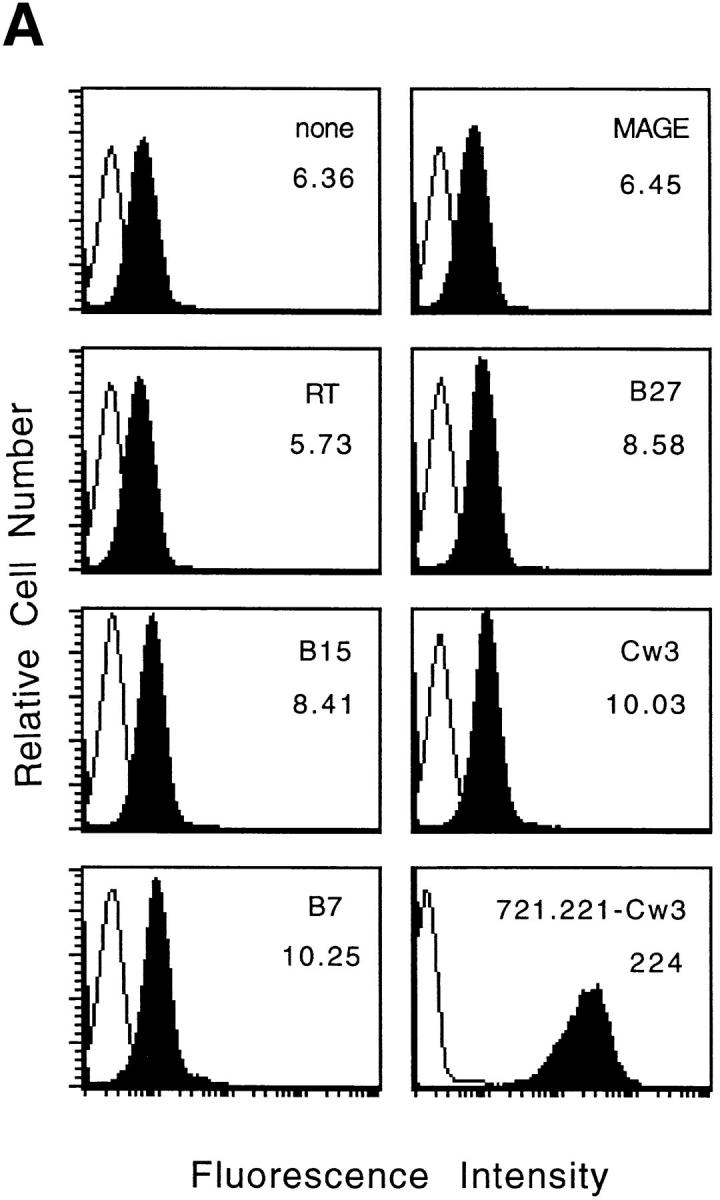
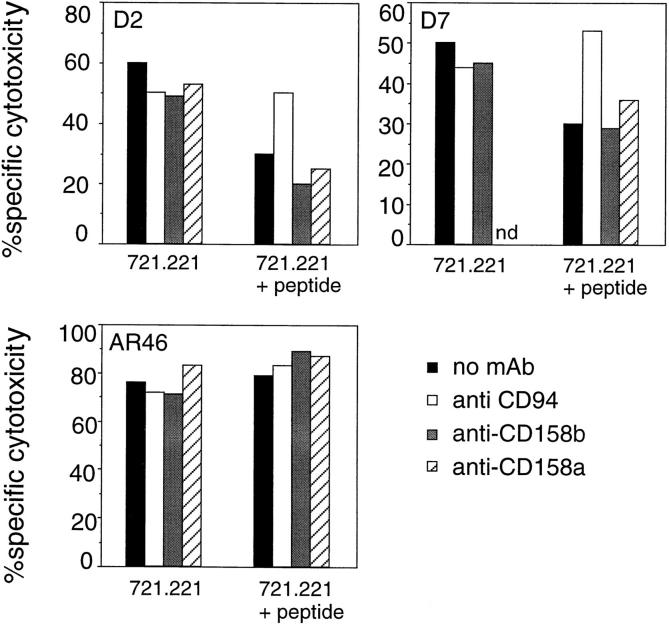
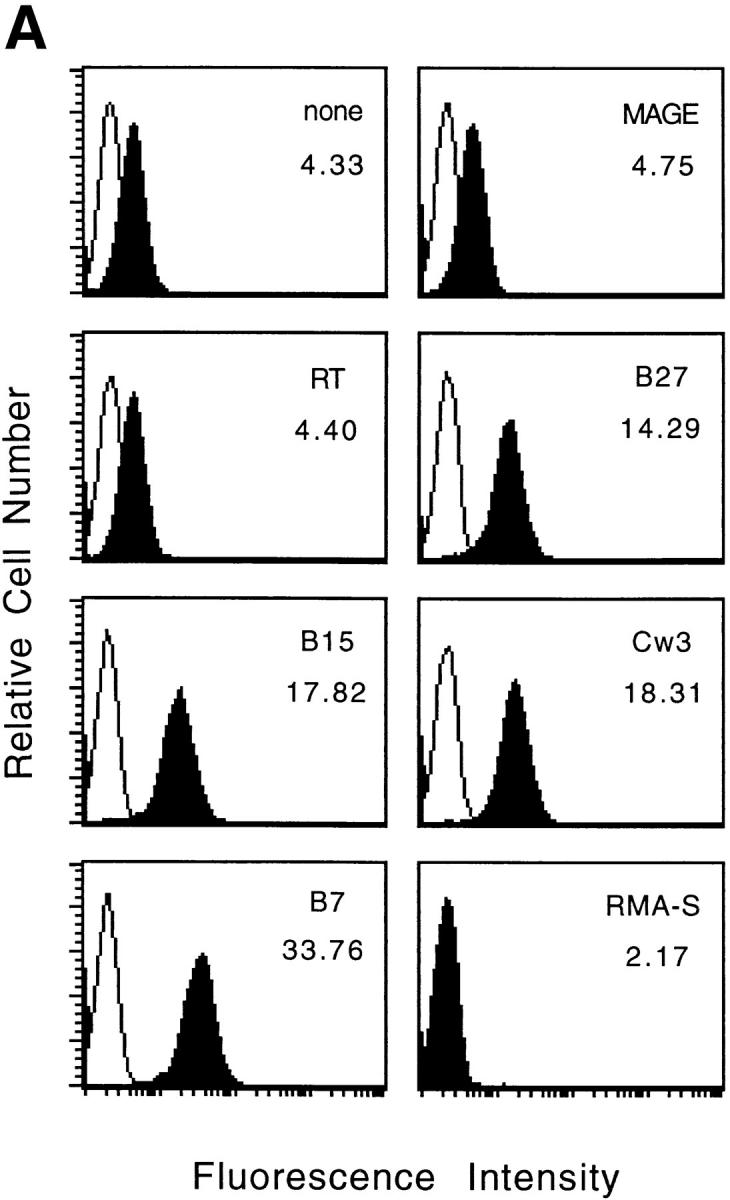
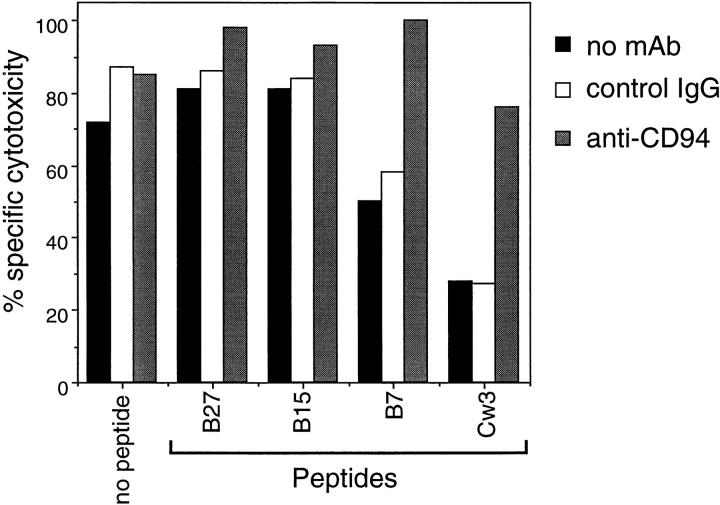
Human histocompatibility leukocyte antigen (HLA)-E is a nonclassical HLA class I molecule, the gene for which is transcribed in most tissues. It has recently been reported that this molecule binds peptides derived from the signal sequence of HLA class I proteins; however, no function for HLA-E has yet been described. We show that natural killer (NK) cells can recognize target cells expressing HLA-E molecules on the cell surface and this interaction results in inhibition of the lytic process. Furthermore, HLA-E recognition is mediated primarily through the CD94/NKG2-A heterodimer, as CD94-specific, but not killer cell inhibitory receptor (KIR)-specific mAbs block HLA-E-mediated protection of target cells. Cell surface HLA-E could be increased by incubation with synthetic peptides corresponding to residues 3-11 from the signal sequences of a number of HLA class I molecules; however, only peptides which contained a Met at position 2 were capable of conferring resistance to NK-mediated lysis, whereas those having Thr at position 2 had no effect. Interestingly, HLA class I molecules previously correlated with CD94/NKG2 recognition all have Met at residue 4 of the signal sequence (position 2 of the HLA-E binding peptide), whereas those which have been reported not to interact with CD94/NKG2 have Thr at this position. Thus, these data show a function for HLA-E and suggest an alternative explanation for the apparent broad reactivity of CD94/NKG2 with HLA class I molecules; that CD94/NKG2 interacts with HLA-E complexed with signal sequence peptides derived from "protective" HLA class I alleles rather than directly interacting with classical HLA class I proteins.
人类组织相容性白细胞抗原(HLA)-E是一种非经典的HLA I类分子,其基因在大多数组织中都有转录。最近有报道称,该分子能结合来源于HLA I类蛋白信号序列的肽段;然而,HLA-E的功能尚未被描述。我们发现自然杀伤(NK)细胞能够识别在细胞表面表达HLA-E分子的靶细胞,这种相互作用会抑制裂解过程。此外,HLA-E的识别主要通过CD94/NKG2-A异二聚体介导,因为CD94特异性单克隆抗体而非杀伤细胞抑制受体(KIR)特异性单克隆抗体能阻断HLA-E介导的靶细胞保护作用。通过与对应于多种HLA I类分子信号序列第3至11位残基的合成肽孵育,可增加细胞表面的HLA-E;然而,只有在第2位含有甲硫氨酸的肽段能够赋予对NK介导裂解的抗性,而在第2位含有苏氨酸的肽段则没有作用。有趣的是,先前与CD94/NKG2识别相关的HLA I类分子在信号序列的第4位残基(HLA-E结合肽的第2位)均为甲硫氨酸,而那些据报道不与CD94/NKG2相互作用的分子在该位置则为苏氨酸。因此,这些数据显示了HLA-E的一种功能,并为CD94/NKG2与HLA I类分子明显的广泛反应性提出了另一种解释;即CD94/NKG2与与来源于“保护性”HLA I类等位基因的信号序列肽段复合的HLA-E相互作用,而非直接与经典HLA I类蛋白相互作用。