Zheng W, Zhao Q, Graziano J H
School of Public Health, Department of Pharmacology, College of Physicians and Surgeons, Columbia University, New York, New York 10032, USA.
In Vitro Cell Dev Biol Anim. 1998 Jan;34(1):40-5. doi: 10.1007/s11626-998-0051-8.
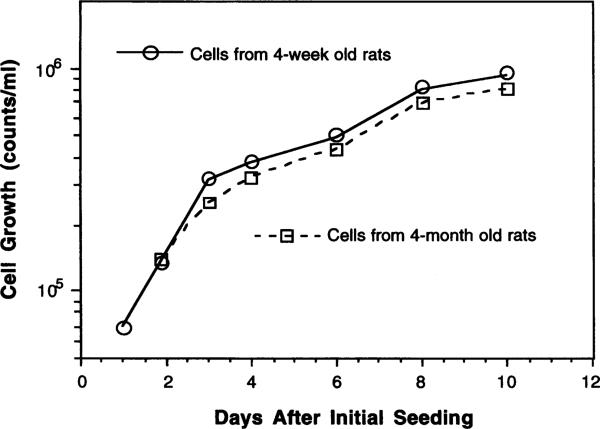
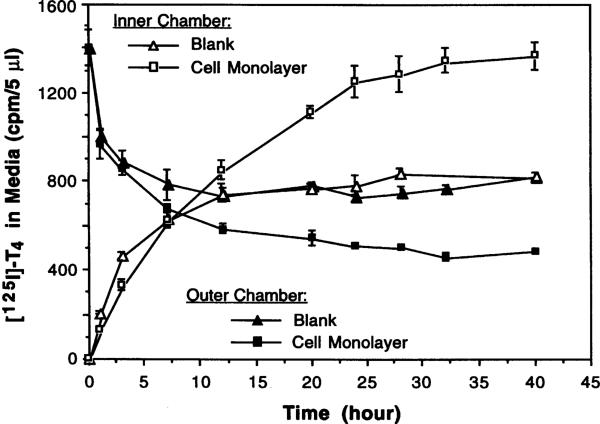
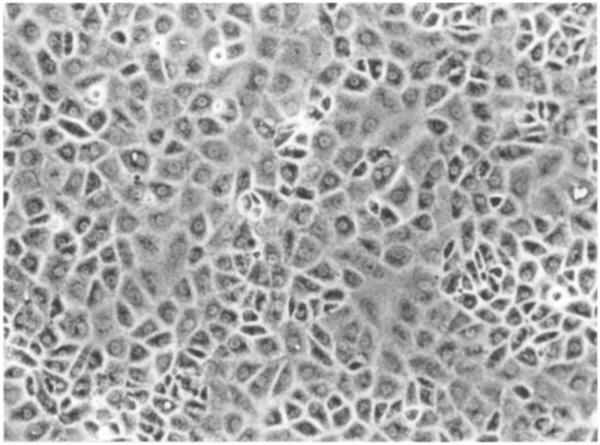
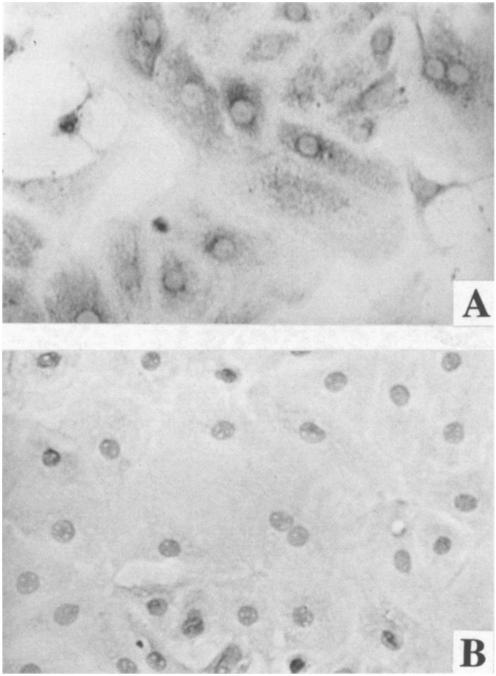
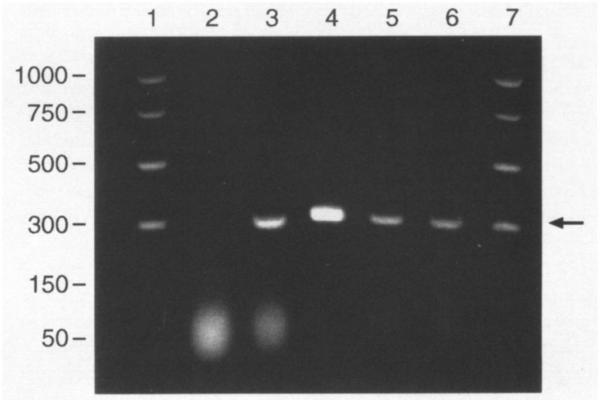
A primary rat choroidal epithelial cell culture system was developed to investigate mechanisms of heavy metal toxicity on the blood-cerebrospinal fluid (CSF) barrier. Epithelial cells were dissociated from choroidal tissue by pronase digestion and cultured in standard DMEM culture media supplemented with 10% fetal bovine serum and 10 ng epithelial growth factor per ml. The procedure yielded 2-5 x 10(4) cells from pooled plexuses of three to four rats, and a viability of 77-85%. The cultures displayed a dominant polygonal type of epithelial cells, with a population doubling time of 2-3 d. The cultures were of distinct choroidal epithelial origins. For example, immunocytochemical studies using monospecific rabbit anti-rat TTR polyclonal antibody revealed a strong positive stain of transthyretin (TTR), a thyroxine transport protein exclusively produced by the choroidal epithelia. Also, reverse-transcriptase polymerase chain reaction (PCR) confirmed the presence of specific TTR mRNA in the cultures. The cultures were further adapted to grow on a freely permeable membrane sandwiched between two culture chambers. The formation of an impermeable confluent monolayer occurred within 5 d after seeding and was verified by the presence of a steady electrical resistance across the membrane (80 +/- 10 ohm per cm2). The epithelial barriers appeared to actively transport [125I]-thyroxine from the basal to apical chamber. These results suggest that this primary cell culture system possesses typical choroidal epithelial characteristics and appears to be a suitable model for in vitro mechanistic investigations of blood-CSF barrier.
为了研究重金属对血脑脊髓液(CSF)屏障的毒性作用机制,我们建立了原代大鼠脉络膜上皮细胞培养系统。通过链霉蛋白酶消化从脉络膜组织中分离出上皮细胞,并在添加了10%胎牛血清和每毫升10 ng上皮生长因子的标准DMEM培养基中培养。该方法从三到四只大鼠的合并丛中获得了2 - 5×10⁴个细胞,细胞活力为77 - 85%。培养物中呈现出占主导地位的多边形上皮细胞类型,群体倍增时间为2 - 3天。这些培养物具有明显的脉络膜上皮起源。例如,使用单特异性兔抗大鼠TTR多克隆抗体的免疫细胞化学研究显示,转甲状腺素蛋白(TTR)呈强阳性染色,TTR是一种仅由脉络膜上皮产生的甲状腺素转运蛋白。此外,逆转录聚合酶链反应(PCR)证实了培养物中存在特异性TTR mRNA。培养物进一步适应在夹在两个培养室之间的可自由渗透膜上生长。接种后5天内形成了不可渗透的汇合单层,并通过膜上稳定的电阻(每平方厘米80±10欧姆)得以验证。上皮屏障似乎能将[¹²⁵I] - 甲状腺素从基底室主动转运至顶室。这些结果表明,该原代细胞培养系统具有典型的脉络膜上皮特征,似乎是用于血脑脊髓液屏障体外机制研究的合适模型。