Yonekawa Y, Harada A, Okada Y, Funakoshi T, Kanai Y, Takei Y, Terada S, Noda T, Hirokawa N
Department of Cell Biology and Anatomy, Graduate School of Medicine, University of Tokyo, Tokyo 113, Japan.
J Cell Biol. 1998 Apr 20;141(2):431-41. doi: 10.1083/jcb.141.2.431.
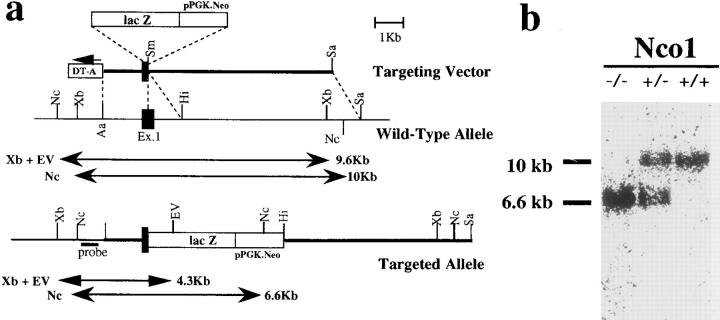
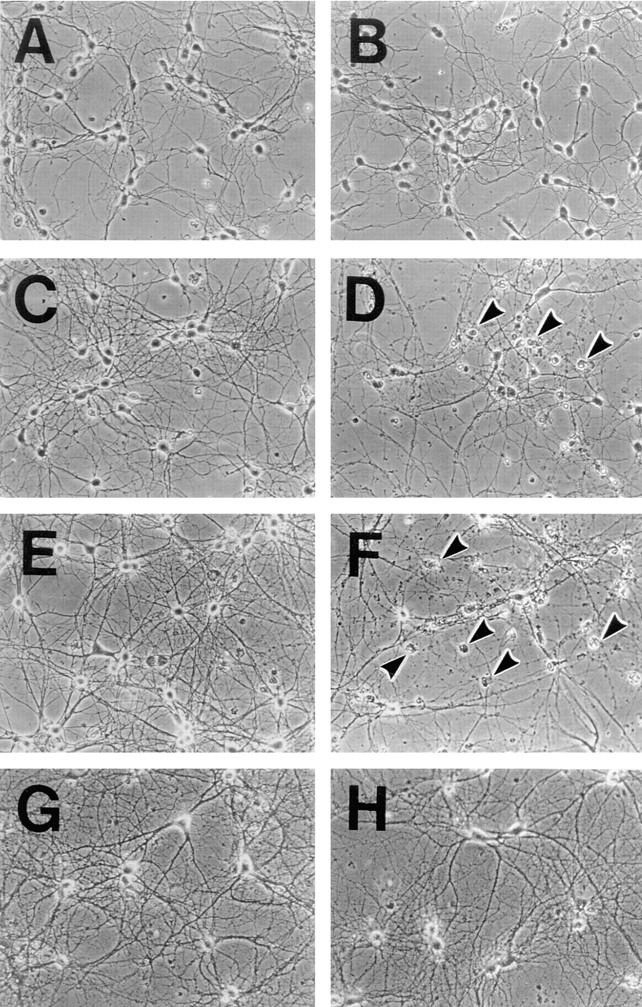
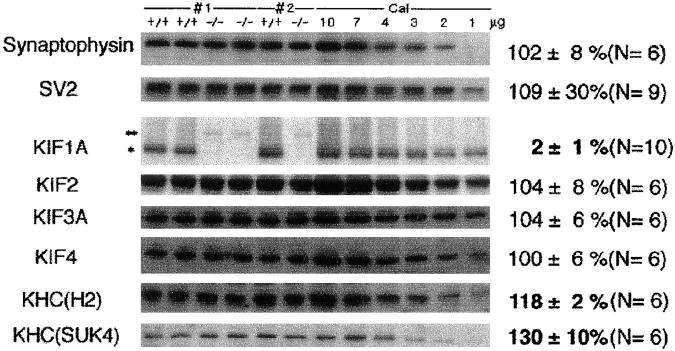
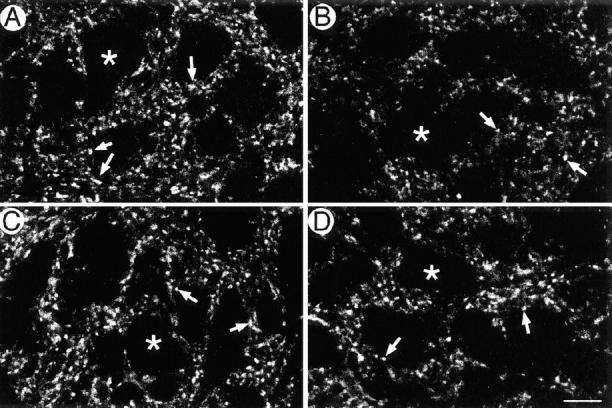
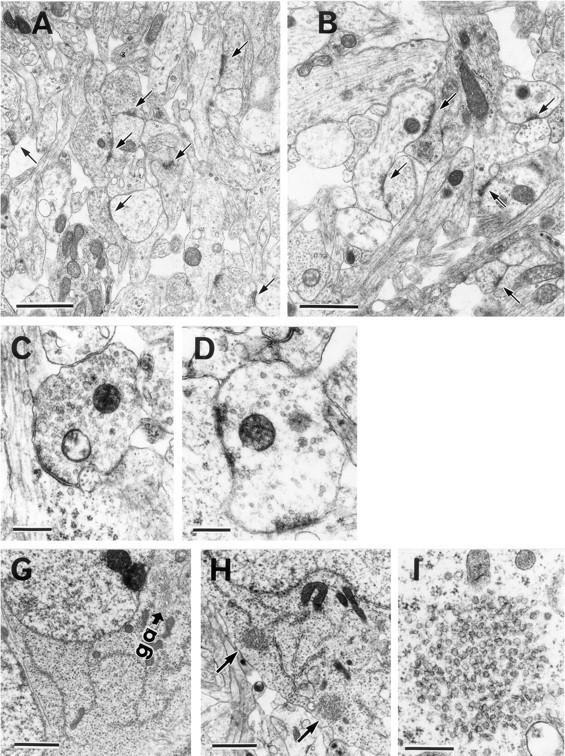
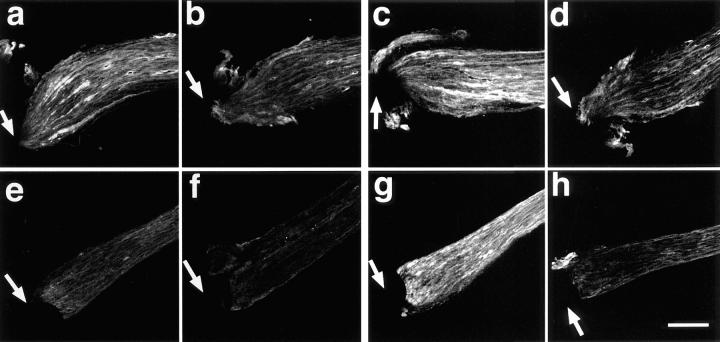
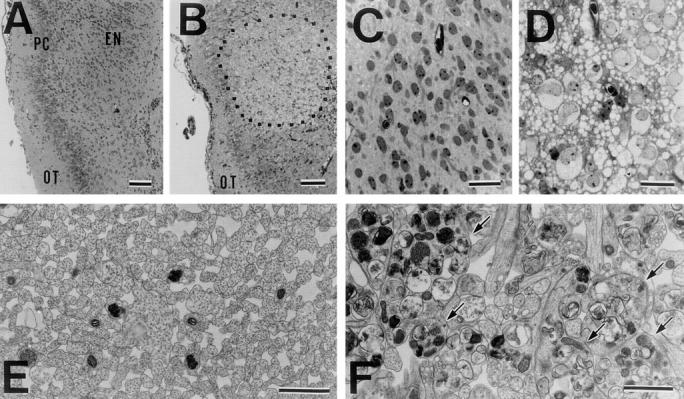
The nerve axon is a good model system for studying the molecular mechanism of organelle transport in cells. Recently, the new kinesin superfamily proteins (KIFs) have been identified as candidate motor proteins involved in organelle transport. Among them KIF1A, a murine homologue of unc-104 gene of Caenorhabditis elegans, is a unique monomeric neuron- specific microtubule plus end-directed motor and has been proposed as a transporter of synaptic vesicle precursors (Okada, Y., H. Yamazaki, Y. Sekine-Aizawa, and N. Hirokawa. 1995. Cell. 81:769-780). To elucidate the function of KIF1A in vivo, we disrupted the KIF1A gene in mice. KIF1A mutants died mostly within a day after birth showing motor and sensory disturbances. In the nervous systems of these mutants, the transport of synaptic vesicle precursors showed a specific and significant decrease. Consequently, synaptic vesicle density decreased dramatically, and clusters of clear small vesicles accumulated in the cell bodies. Furthermore, marked neuronal degeneration and death occurred both in KIF1A mutant mice and in cultures of mutant neurons. The neuronal death in cultures was blocked by coculture with wild-type neurons or exposure to a low concentration of glutamate. These results in cultures suggested that the mutant neurons might not sufficiently receive afferent stimulation, such as neuronal contacts or neurotransmission, resulting in cell death. Thus, our results demonstrate that KIF1A transports a synaptic vesicle precursor and that KIF1A-mediated axonal transport plays a critical role in viability, maintenance, and function of neurons, particularly mature neurons.
神经轴突是研究细胞内细胞器运输分子机制的良好模型系统。最近,新的驱动蛋白超家族蛋白(KIFs)已被确定为参与细胞器运输的候选运动蛋白。其中,KIF1A是秀丽隐杆线虫unc-104基因的小鼠同源物,是一种独特的单体神经元特异性微管正端定向运动蛋白,并被认为是突触小泡前体的转运蛋白(冈田洋、山崎浩、关根爱泽和广川信男,1995年。《细胞》。81:769 - 780)。为了阐明KIF1A在体内的功能,我们破坏了小鼠中的KIF1A基因。KIF1A突变体大多在出生后一天内死亡,表现出运动和感觉障碍。在这些突变体的神经系统中,突触小泡前体的运输显示出特异性且显著的减少。因此,突触小泡密度急剧下降,透明小泡簇在细胞体内积累。此外,KIF1A突变小鼠和突变神经元培养物中均发生了明显的神经元变性和死亡。培养物中的神经元死亡可通过与野生型神经元共培养或暴露于低浓度谷氨酸来阻断。培养物中的这些结果表明,突变神经元可能没有充分接受传入刺激,如神经元接触或神经传递,从而导致细胞死亡。因此,我们的结果表明KIF1A运输突触小泡前体,并且KIF1A介导的轴突运输在神经元尤其是成熟神经元的活力、维持和功能中起关键作用。