Lobell A, Weissert R, Storch M K, Svanholm C, de Graaf K L, Lassmann H, Andersson R, Olsson T, Wigzell H
Microbiology and Tumorbiology Center, Karolinska Institute, S-171 77 Stockholm, Sweden.
J Exp Med. 1998 May 4;187(9):1543-8. doi: 10.1084/jem.187.9.1543.
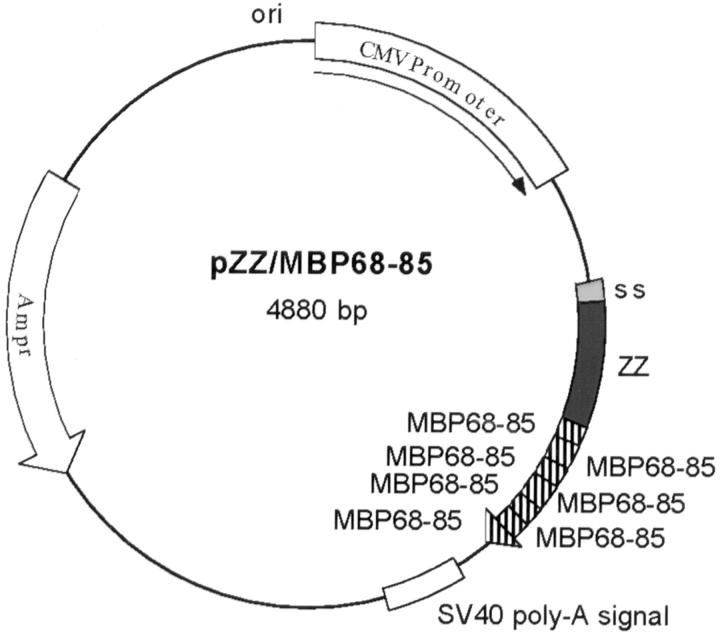
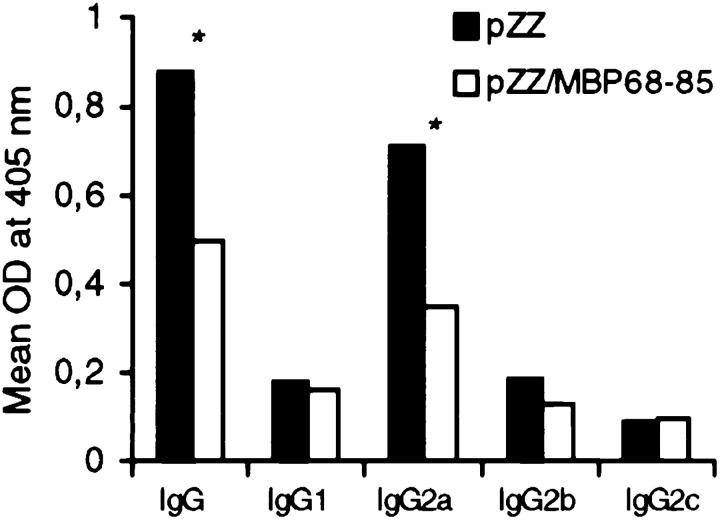
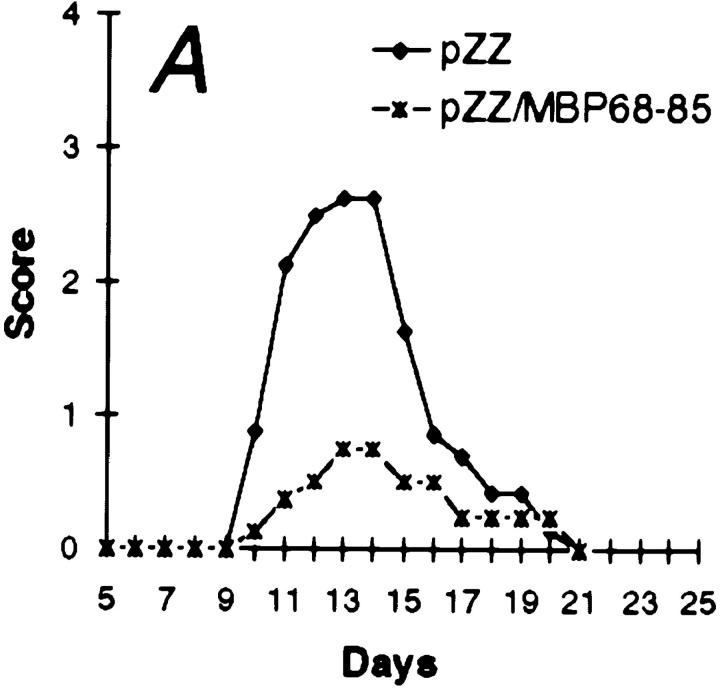
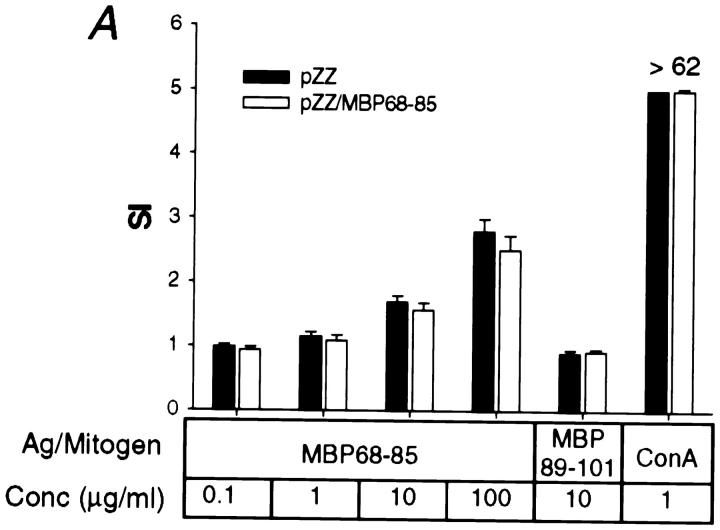
We explore here if vaccination with DNA encoding an autoantigenic peptide can suppress autoimmune disease. For this purpose we used experimental autoimmune encephalomyelitis (EAE), which is an autoaggressive disease in the central nervous system and an animal model for multiple sclerosis. Lewis rats were vaccinated with DNA encoding an encephalitogenic T cell epitope, guinea pig myelin basic protein peptide 68-85 (MBP68-85), before induction of EAE with MBP68-85 in complete Freund's adjuvant. Compared to vaccination with a control DNA construct, the vaccination suppressed clinical and histopathological signs of EAE, and reduced the interferon gamma production after challenge with MBP68-85. Targeting of the gene product to Fc of IgG was essential for this effect. There were no signs of a Th2 cytokine bias. Our data suggest that DNA vaccines encoding autoantigenic peptides may be useful tools in controlling autoimmune disease.
我们在此探究接种编码自身抗原肽的DNA能否抑制自身免疫性疾病。为此,我们使用了实验性自身免疫性脑脊髓炎(EAE),它是一种中枢神经系统的自身攻击性疾病,也是多发性硬化症的动物模型。在用完全弗氏佐剂中的MBP68 - 85诱导EAE之前,给Lewis大鼠接种编码致脑炎性T细胞表位豚鼠髓鞘碱性蛋白肽68 - 85(MBP68 - 85)的DNA。与接种对照DNA构建体相比,该接种抑制了EAE的临床和组织病理学症状,并降低了用MBP68 - 85攻击后的γ干扰素产生。将基因产物靶向IgG的Fc对于此效应至关重要。没有Th2细胞因子偏向的迹象。我们的数据表明,编码自身抗原肽的DNA疫苗可能是控制自身免疫性疾病的有用工具。