Wang X M, Wang X, Li J, Evers B M
Department of Surgery, The University of Texas Medical Branch, Galveston 77555-0533, USA.
Ann Surg. 1998 Jun;227(6):922-31. doi: 10.1097/00000658-199806000-00016.
To determine the cellular effects of 5-azacytidine (5-azaC) and sodium butyrate on two human liver cancers, HepG2 and Hep3B.
Primary liver cancer is a significant health problem; treatment options are limited and prognosis is poor. Recent studies have focused on the role that programmed cell death (i.e., apoptosis) plays in both normal and neoplastic growth: certain genes can either suppress (e.g., Bcl-2, Bcl-xL) or promote (e.g., Bik, Bax, Bak) apoptosis. The identification of novel agents targeted to specific molecular pathways may be beneficial in the treatment of this disease.
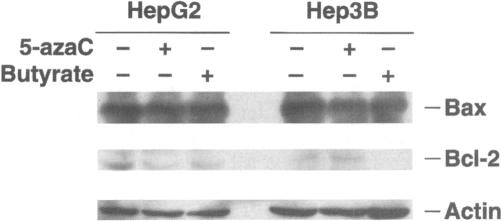
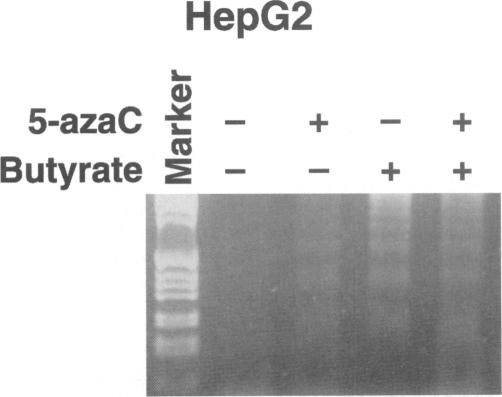
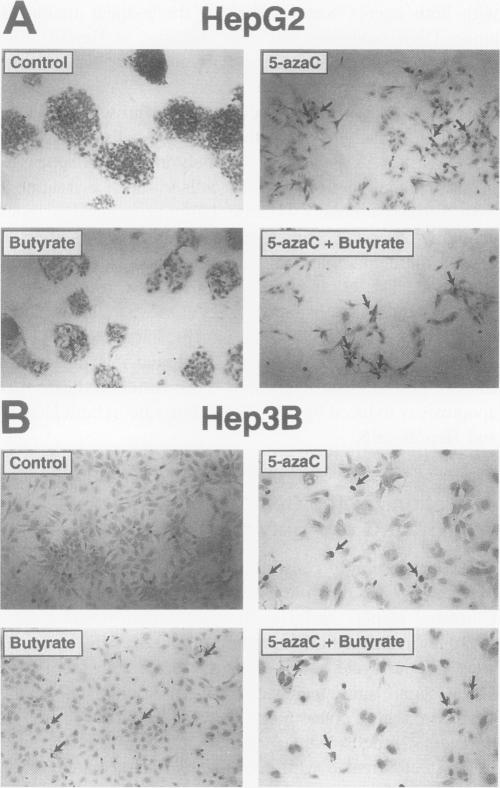
Human liver cancer cell lines HepG2 and Hep3B were treated with 5-azaC alone, butyrate alone, or 5-azaC and butyrate. Morphologic and proliferative changes were assessed by light microscopy and 5-bromo-2'-deoxyuridine staining; flow cytometry was used to determine cell cycle characteristics. Apoptosis was assessed by DNA laddering and the in situ apoptosis detection assay using the TdT-mediated dUTP nick end labeling method. In addition, total RNA and protein were analyzed by ribonuclease protection and Western blot, respectively, to assess changes in the expression of apoptosis-related genes.
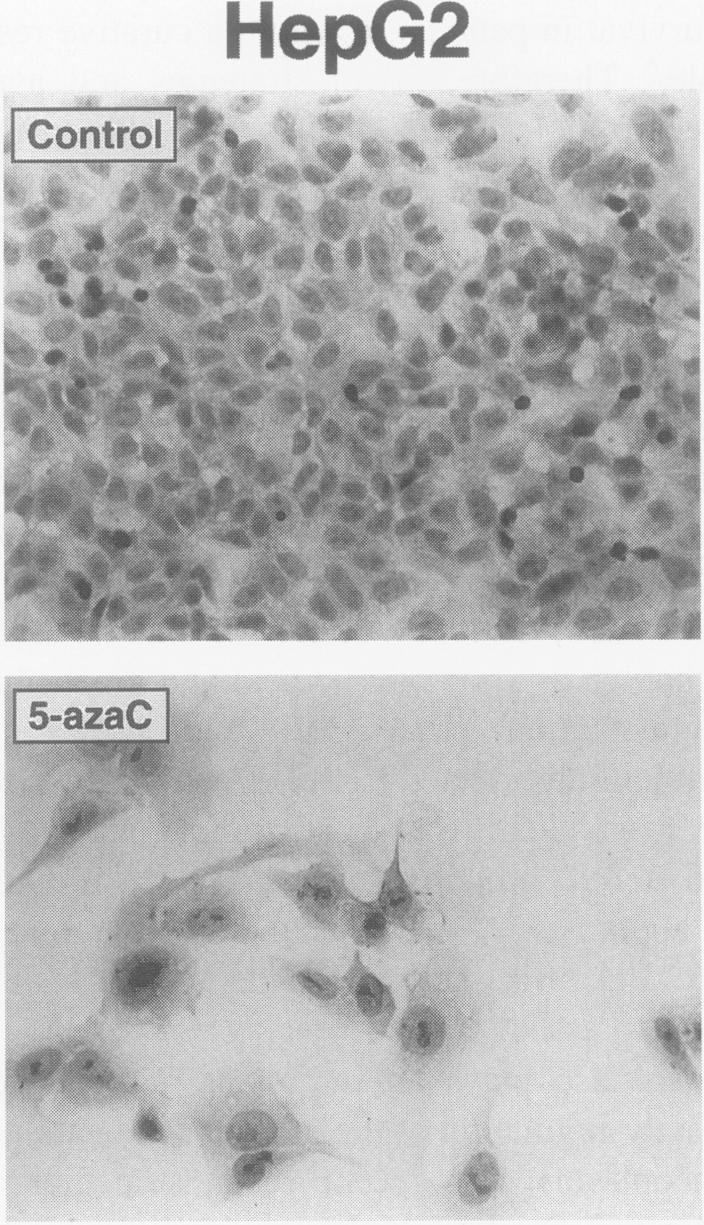
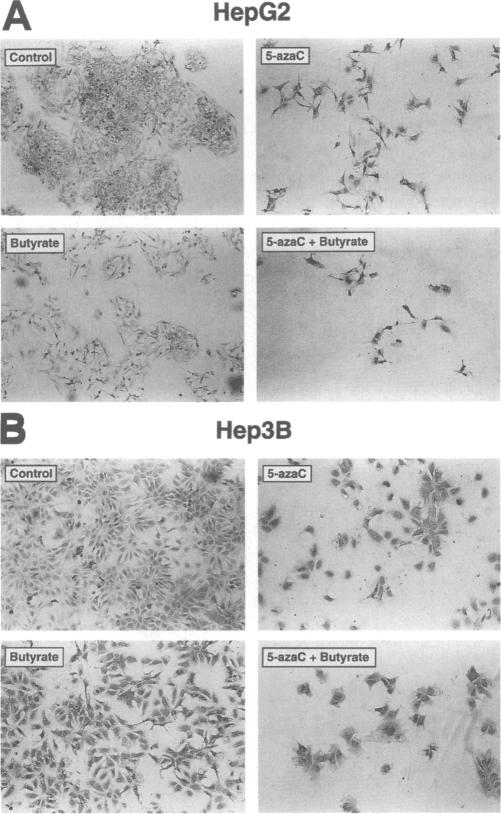
Treatment with either 5-azaC or butyrate inhibited cell growth and induced apoptosis in both HepG2 and Hep3B cells; the combination of 5-azaC and butyrate was not more effective than either agent alone. 5-azaC alone resulted in a more differentiated-appearing morphology and G2 cell cycle arrest in both cell lines. Treatment with 5-azaC or butyrate affected the expression levels of proteins of the Bcl-2 family.
Both 5-azaC and butyrate induced apoptosis in the HepG2 and Hep3B liver cancer cells; 5-azaC treatment alone produced G2 arrest in both cell lines. Proteins of the Bcl-2 family may play a role in the cellular changes that occur with treatment, but further studies are required to define this potential role. Products of the apoptotic pathway may prove to be useful therapeutic targets in the treatment of hepatic cancers.
确定5-氮杂胞苷(5-azaC)和丁酸钠对两种人类肝癌细胞系HepG2和Hep3B的细胞作用。
原发性肝癌是一个严重的健康问题;治疗选择有限且预后较差。最近的研究集中在程序性细胞死亡(即凋亡)在正常和肿瘤生长中所起的作用:某些基因可以抑制(如Bcl-2、Bcl-xL)或促进(如Bik、Bax、Bak)凋亡。鉴定针对特定分子途径的新型药物可能对这种疾病的治疗有益。
用5-azaC单独处理、丁酸钠单独处理或5-azaC与丁酸钠联合处理人类肝癌细胞系HepG2和Hep3B。通过光学显微镜和5-溴-2'-脱氧尿苷染色评估形态学和增殖变化;用流式细胞术确定细胞周期特征。通过DNA梯状条带分析和使用TdT介导的dUTP缺口末端标记法的原位凋亡检测试验评估凋亡。此外,分别通过核糖核酸酶保护和蛋白质印迹分析总RNA和蛋白质,以评估凋亡相关基因表达的变化。
5-azaC或丁酸钠处理均抑制HepG2和Hep3B细胞的生长并诱导凋亡;5-azaC与丁酸钠联合使用并不比单独使用任何一种药物更有效。单独使用5-azaC导致两种细胞系出现更分化的形态并使细胞周期停滞于G2期。5-azaC或丁酸钠处理影响Bcl-2家族蛋白的表达水平。
5-azaC和丁酸钠均诱导HepG2和Hep3B肝癌细胞凋亡;单独使用5-azaC处理使两种细胞系均停滞于G2期。Bcl-2家族蛋白可能在处理后发生的细胞变化中起作用,但需要进一步研究来确定这一潜在作用。凋亡途径的产物可能被证明是肝癌治疗中有用的治疗靶点。