Kudla A J, Jones N C, Rosenthal R S, Arthur K, Clase K L, Olwin B B
Department of Biological Sciences, Purdue University, West Lafayette, Indiana 47907, USA.
J Cell Biol. 1998 Jul 13;142(1):241-50. doi: 10.1083/jcb.142.1.241.
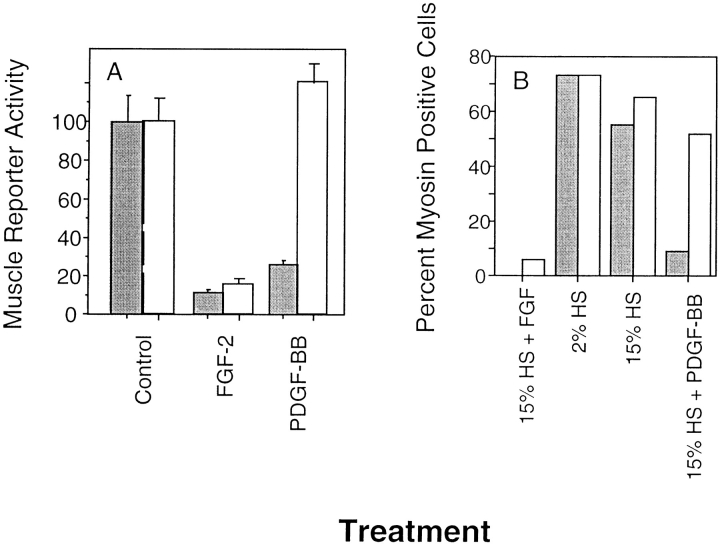
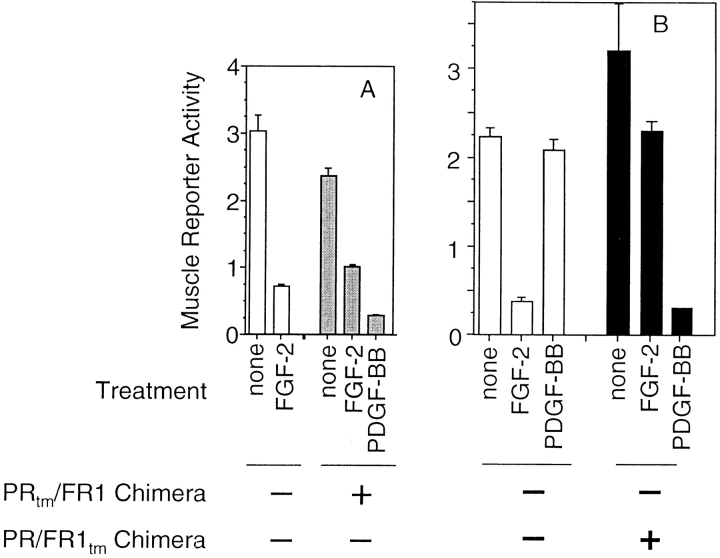
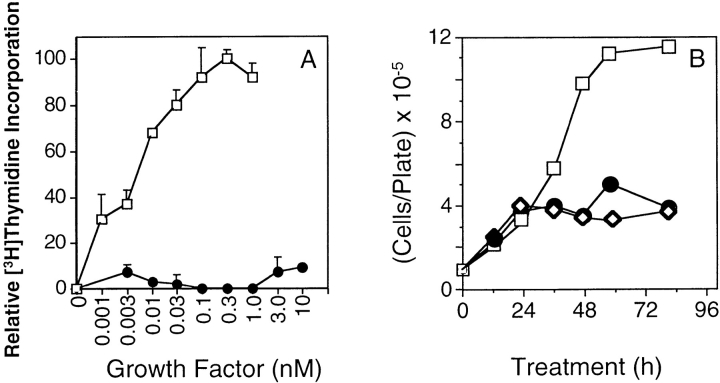
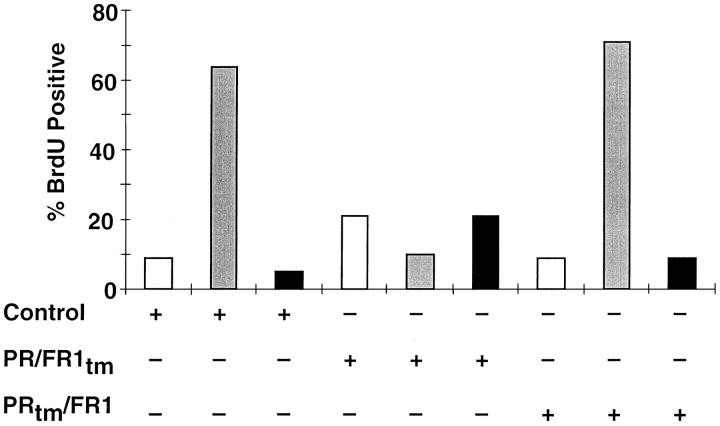
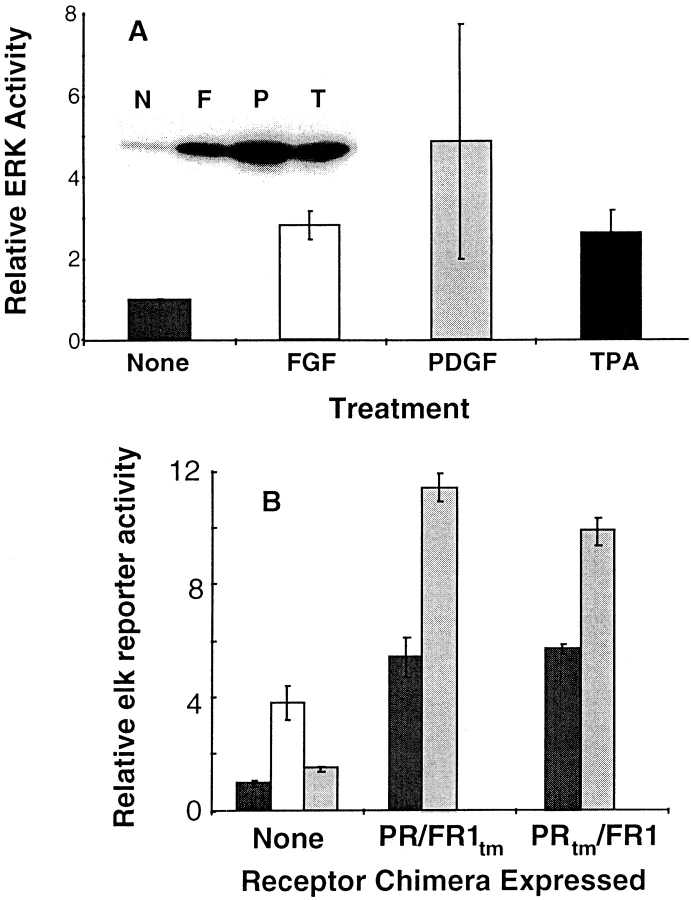
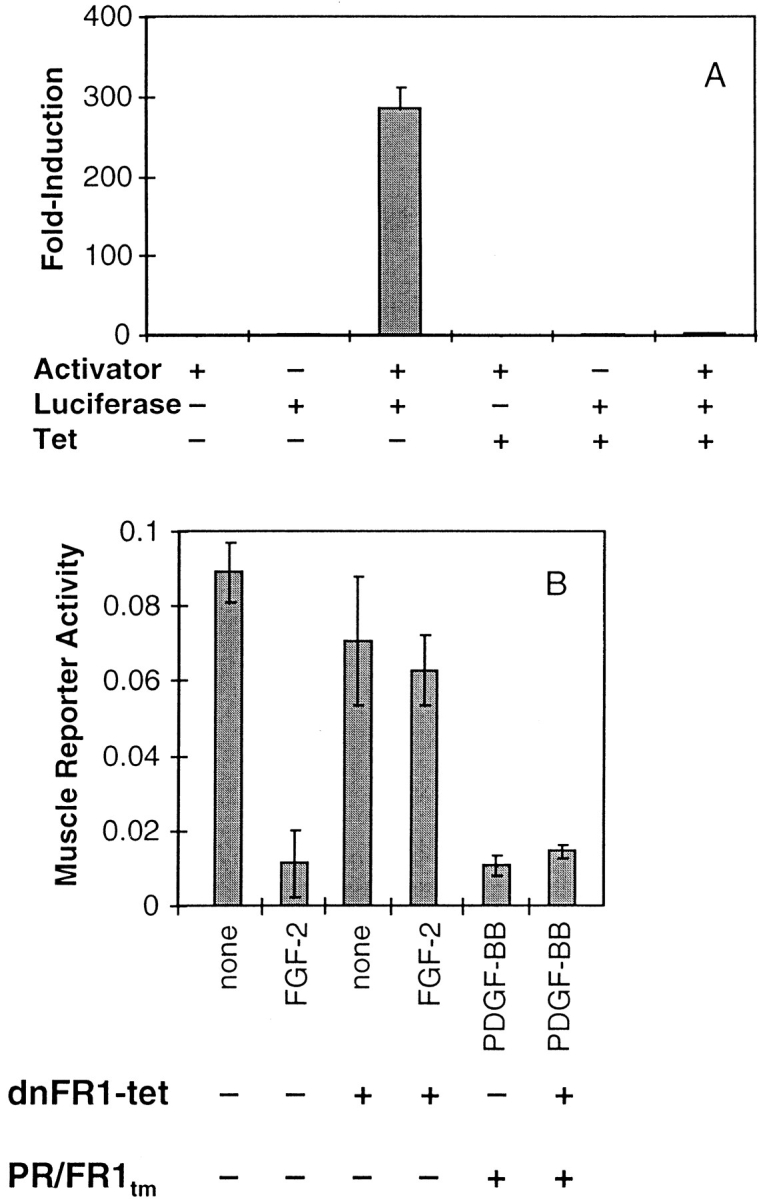
Ligand-stimulated activation of FGF receptors (FGFRs) in skeletal muscle cells represses terminal myogenic differentiation. Skeletal muscle cell lines and subsets of primary cells are dependent on FGFs to repress myogenesis and maintain growth. To understand the intracellular events that transduce these signals, MM14 skeletal muscle cells were transfected with expression vectors encoding chimeric receptors. The chimeras are comprised of the PDGF beta receptor (PDGFbetaR) extracellular domain, the FGFR-1 intracellular domain, and either the PDGFbetaR or FGFR-1 transmembrane domain. The chimeric receptors were autophosphorylated upon PDGF-BB stimulation and are capable of stimulating mitogen-activated protein kinase activity. Activation of the tyrosine kinase domain of either chimera repressed myogenesis, suggesting intracellular responses regulating skeletal muscle differentiation are transduced by activation of the FGFR-1 tyrosine kinase. Unexpectedly, we found that activation of either chimeric receptor failed to stimulate cellular proliferation. Thus, it appears that regulation of skeletal muscle differentiation by FGFs requires only activation of the FGFR tyrosine kinase. In contrast, stimulation of proliferation may require additional, as yet unidentified, signals involving the receptor ectodomain, the FGF ligand, and heparan sulfate either alone, or in combination.
配体刺激骨骼肌细胞中的成纤维细胞生长因子受体(FGFRs)会抑制终末肌源性分化。骨骼肌细胞系和原代细胞亚群依赖成纤维细胞生长因子来抑制肌生成并维持生长。为了了解转导这些信号的细胞内事件,用编码嵌合受体的表达载体转染MM14骨骼肌细胞。这些嵌合体由血小板衍生生长因子β受体(PDGFbetaR)胞外结构域、FGFR-1胞内结构域以及PDGFbetaR或FGFR-1跨膜结构域组成。嵌合受体在血小板衍生生长因子BB(PDGF-BB)刺激下发生自身磷酸化,并能够刺激丝裂原活化蛋白激酶活性。任一嵌合体酪氨酸激酶结构域的激活均抑制肌生成,这表明调节骨骼肌分化的细胞内反应是通过FGFR-1酪氨酸激酶的激活来转导的。出乎意料的是,我们发现任一嵌合受体的激活均未能刺激细胞增殖。因此,似乎成纤维细胞生长因子对骨骼肌分化的调节仅需要激活FGFR酪氨酸激酶。相比之下,增殖的刺激可能需要涉及受体胞外结构域、成纤维细胞生长因子配体和硫酸乙酰肝素单独或组合的其他尚未确定的信号。