Kurepa Z, Hasemann C A, Forman J
Immunology Graduate Program, University of Texas Southwestern Medical Center at Dallas 75235, USA.
J Exp Med. 1998 Sep 7;188(5):973-8. doi: 10.1084/jem.188.5.973.
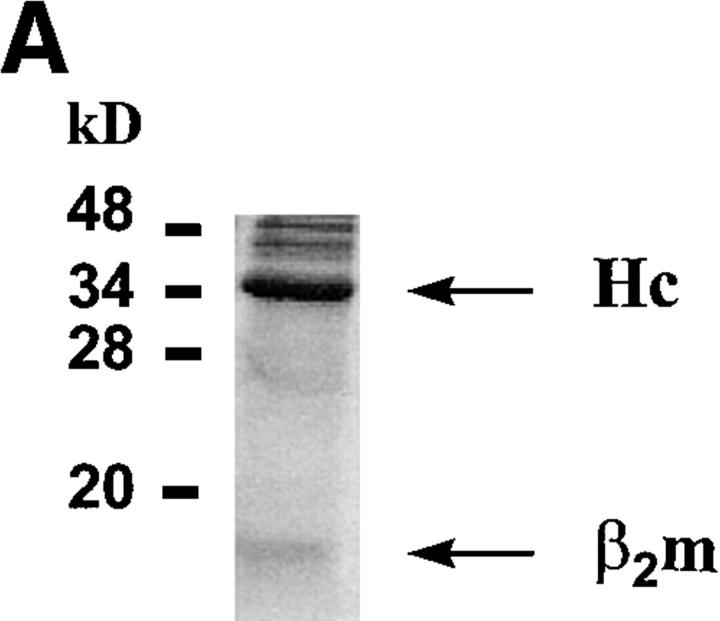
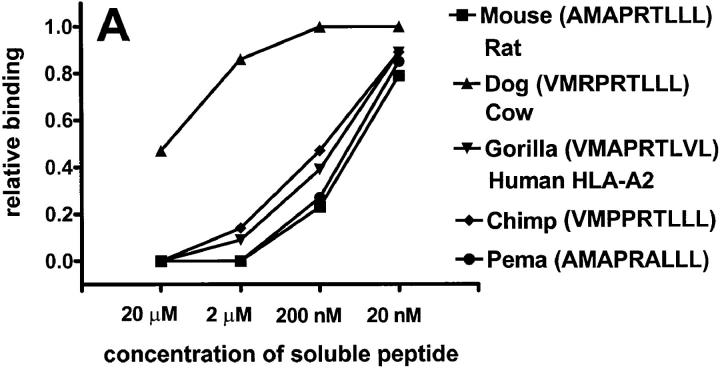
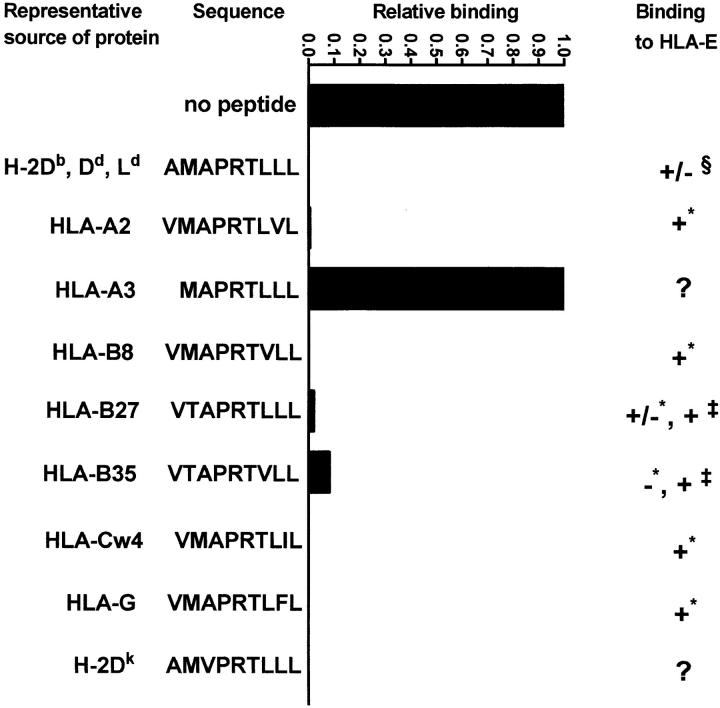
Qa-1b binds a peptide (AMAPRTLLL), referred to as Qdm (for Qa-1 determinant modifier), derived from the signal sequence of murine class Ia molecules. This peptide binds with high affinity and accounts for almost all of the peptides associated with this molecule. Human histocompatibility leukocyte antigen (HLA)-E, a homologue of Qa-1b, binds similar peptides derived from human class Ia molecules and interacts with CD94/NKG2 receptors on natural killer cells. We used surface plasmon resonance to determine the ability of Qa-1b to bind related ligands representing peptides derived from the leaders of class I molecules from several mammalian species. All of the peptides reported to bind HLA-E bound readily to Qa-1b. In addition, peptides derived from leader segments of different mammals also bound to Qa-1b, indicating a conservation of this "Qdm-like" epitope throughout mammalian evolution. We have attempted to define a minimal peptide on a polyglycine backbone that binds Qa-1b. Our previous findings showed that P2 and P9 are important but not sufficient for binding to Qa-1b. Although a minimum peptide (GMGGGGLLL) bound Qa-1(b), its interaction was relatively weak, as were peptides sharing five or six residues with Qdm, indicating that multiple native residues are required for a strong interaction. This finding is consistent with the observation that this molecule preferentially binds this single ligand.
Qa-1b结合一种肽(AMAPRTLLL),称为Qdm(Qa-1决定簇修饰物),它源自小鼠I类分子的信号序列。这种肽以高亲和力结合,并且几乎占了与该分子相关的所有肽。人类组织相容性白细胞抗原(HLA)-E是Qa-1b的同源物,它结合源自人类I类分子的相似肽,并与自然杀伤细胞上的CD94/NKG2受体相互作用。我们使用表面等离子体共振来确定Qa-1b结合代表来自几种哺乳动物物种I类分子前导肽的相关配体的能力。所有报道能结合HLA-E的肽都能很容易地与Qa-1b结合。此外,源自不同哺乳动物前导序列的肽也能与Qa-1b结合,这表明在整个哺乳动物进化过程中这种“类Qdm”表位是保守的。我们试图在聚甘氨酸主链上确定一种与Qa-1b结合的最小肽。我们之前的研究结果表明,P2和P9对于与Qa-1b结合很重要,但并不充分。尽管一种最小肽(GMGGGGLLL)能结合Qa-1(b),但其相互作用相对较弱,与Qdm共有五个或六个残基的肽也是如此,这表明需要多个天然残基才能产生强相互作用。这一发现与该分子优先结合这单一配体的观察结果一致。