Fanchiotti S, Fernández F, D'Alessio C, Parodi A J
Instituto de Investigaciones Bioquímicas Fundación Campomar, 1405 Buenos Aires, Argentina.
J Cell Biol. 1998 Nov 2;143(3):625-35. doi: 10.1083/jcb.143.3.625.
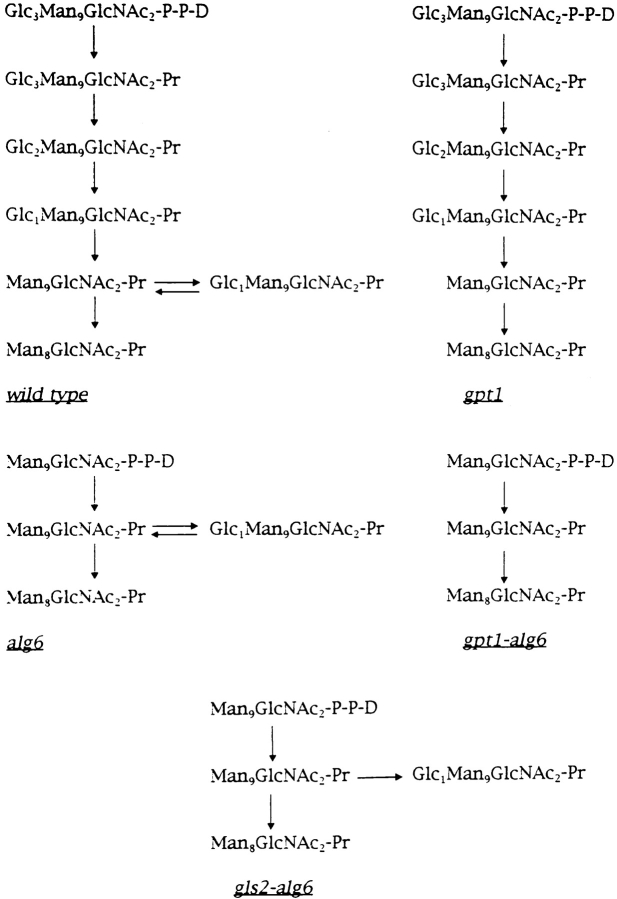
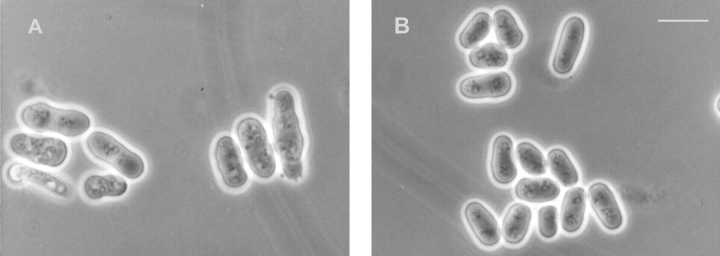
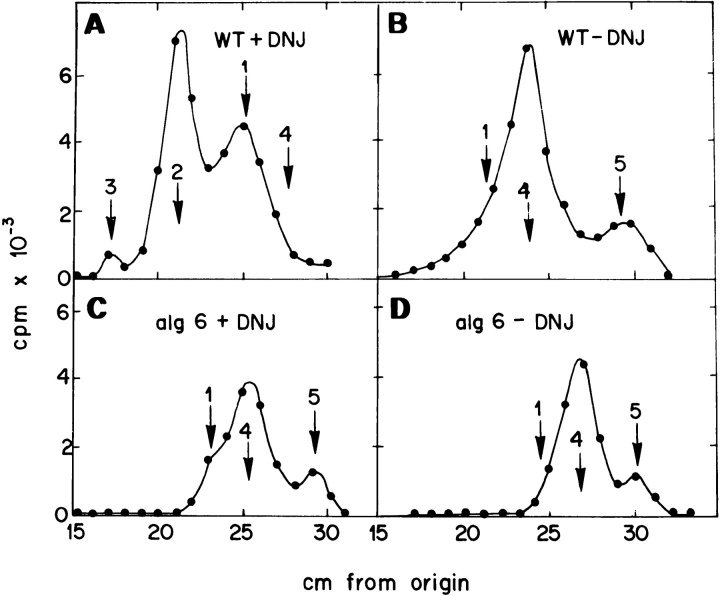
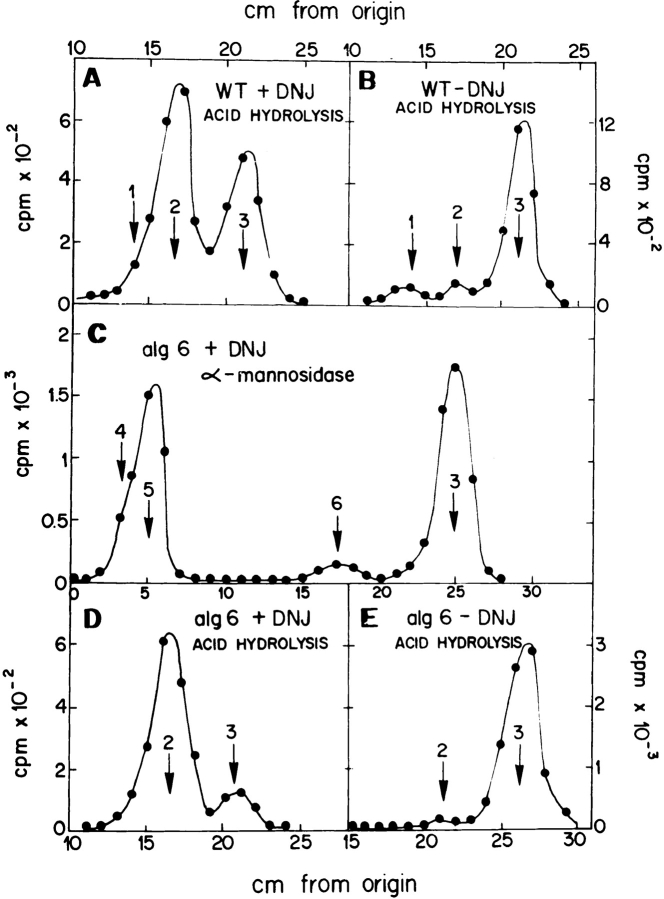
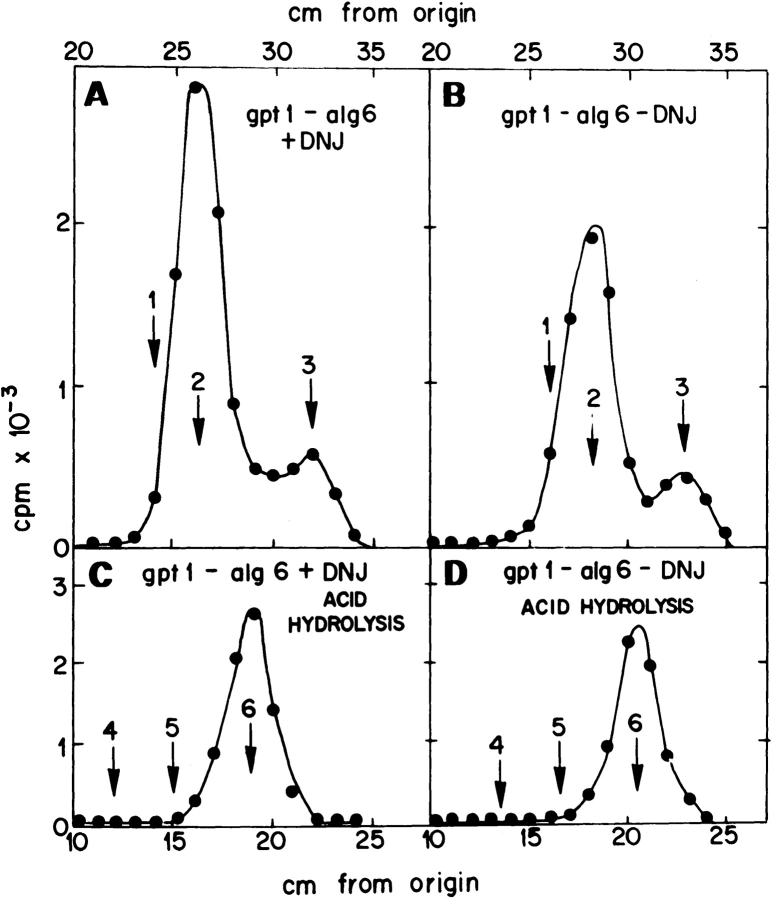
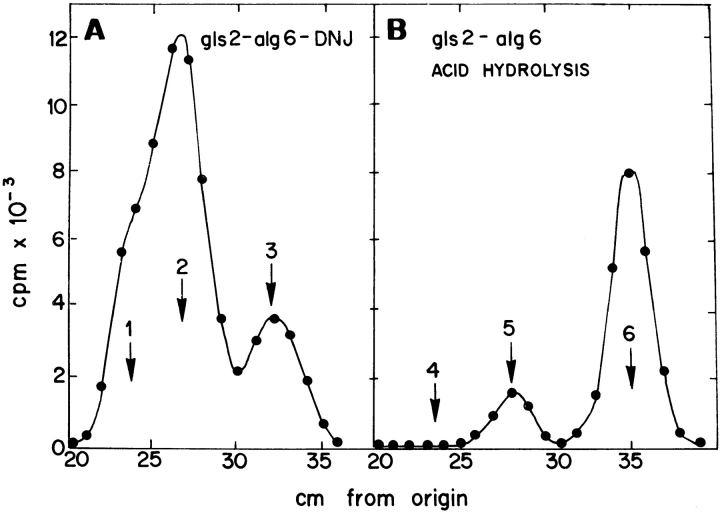
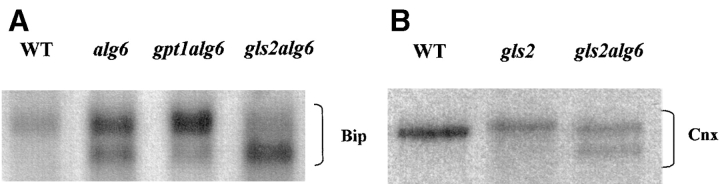
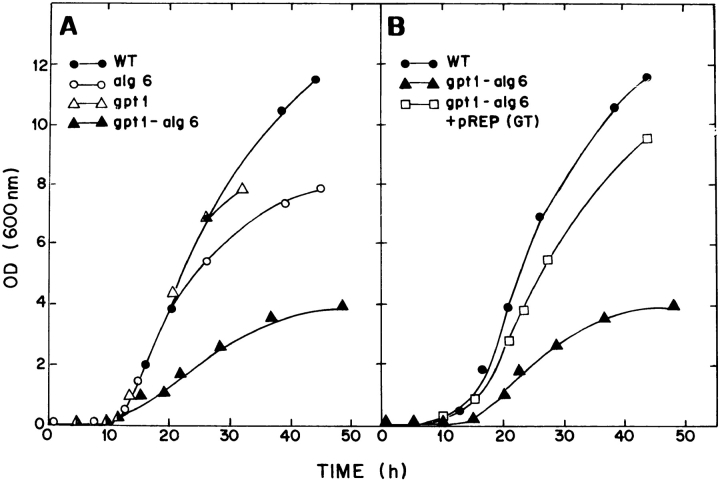
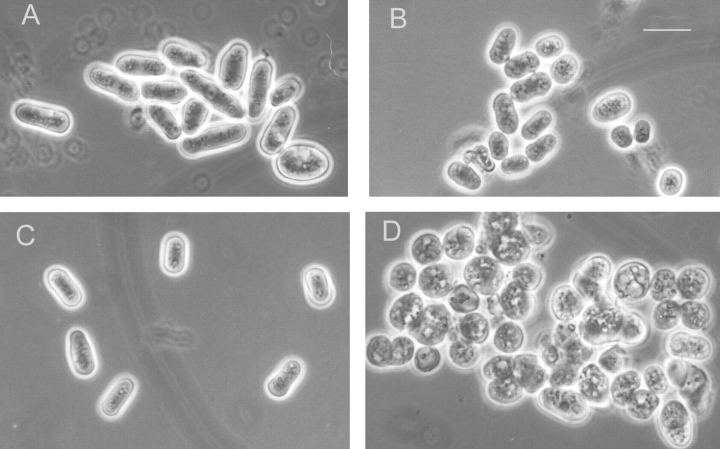
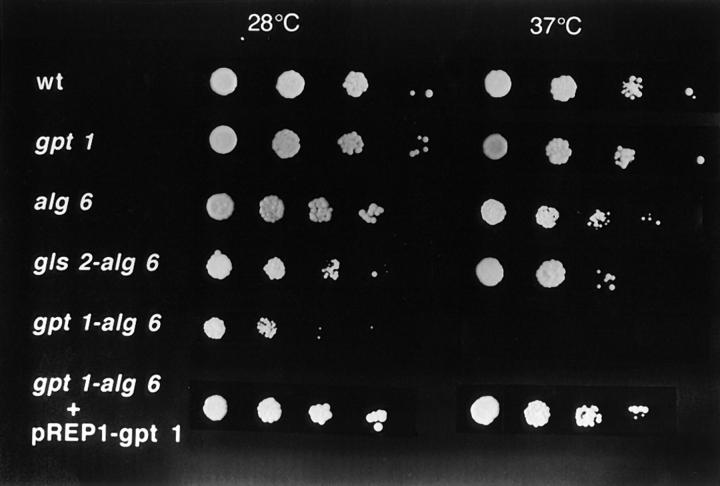
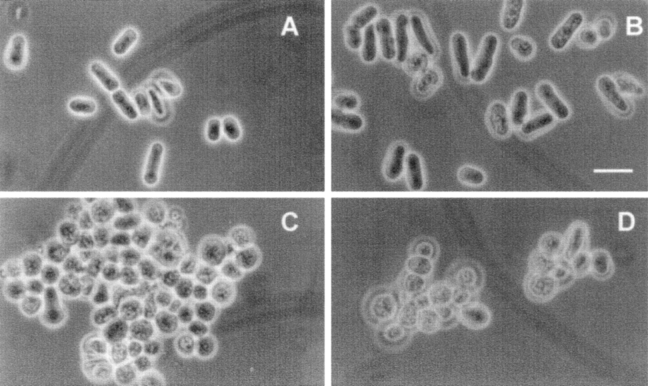
Interaction of monoglucosylated oligosaccharides with ER lectins (calnexin and/or calreticulin) facilitates glycoprotein folding but this interaction is not essential for cell viability under normal conditions. We obtained two distinct single Schizosaccharomyces pombe mutants deficient in either one of the two pathways leading to the formation of monoglucosylated oligosaccharides. The alg6 mutant does not glucosy- late lipid-linked oligosaccharides and transfers Man9GlcNAc2 to nascent polypeptide chains and the gpt1 mutant lacks UDP-Glc:glycoprotein glucosyltransferase (GT). Both single mutants grew normally at 28 degreesC. On the other hand, gpt1/alg6 double-mutant cells grew very slowly and with a rounded morphology at 28 degreesC and did not grow at 37 degreesC. The wild-type phenotype was restored by transfection of the double mutant with a GT-encoding expression vector or by addition of 1 M sorbitol to the medium, indicating that the double mutant is affected in cell wall formation. It is suggested that facilitation of glycoprotein folding mediated by the interaction of monoglucosylated oligosaccharides with calnexin is essential for cell viability under conditions of extreme ER stress such as underglycosylation of proteins caused by the alg6 mutation and high temperature. In contrast, gls2/alg6 double-mutant cells that transfer Man9GlcNAc2 and that are unable to remove the glucose units added by GT as they lack glucosidase II (GII), grew at 37 degreesC and had, when grown at 28 degreesC, a phenotype of growth and morphology almost identical to that of wild-type cells. These results indicate that facilitation of glycoprotein folding mediated by the interaction of calnexin and monoglucosylated oligosaccharides does not necessarily require cycles of reglucosylation-deglucosylation catalyzed by GT and GII.
单糖基化寡糖与内质网凝集素(钙连蛋白和/或钙网蛋白)的相互作用促进糖蛋白折叠,但在正常条件下这种相互作用对于细胞活力并非必不可少。我们获得了两种不同的粟酒裂殖酵母单突变体,它们分别在导致单糖基化寡糖形成的两条途径中的一条存在缺陷。alg6突变体不会将脂质连接的寡糖进行糖基化,而是将Man9GlcNAc2转移到新生多肽链上,而gpt1突变体缺乏UDP-葡萄糖:糖蛋白葡萄糖基转移酶(GT)。两种单突变体在28℃时均能正常生长。另一方面,gpt1/alg6双突变体细胞在28℃时生长非常缓慢且形态呈圆形,并在37℃时无法生长。通过用编码GT的表达载体转染双突变体或向培养基中添加1 M山梨醇可恢复野生型表型,这表明双突变体在细胞壁形成方面受到影响。有人提出,在诸如alg6突变导致的蛋白质低糖基化和高温等极端内质网应激条件下,由单糖基化寡糖与钙连蛋白的相互作用介导的糖蛋白折叠促进对于细胞活力至关重要。相比之下,能够转移Man9GlcNAc2且由于缺乏葡糖苷酶II(GII)而无法去除GT添加的葡萄糖单元的gls2/alg6双突变体细胞在37℃时能够生长,并且在28℃生长时具有与野生型细胞几乎相同的生长和形态表型。这些结果表明,由钙连蛋白和单糖基化寡糖的相互作用介导的糖蛋白折叠促进不一定需要GT和GII催化的再糖基化 - 去糖基化循环。