Jenkins Y, McEntee M, Weis K, Greene W C
Gladstone Institute of Virology and Immunology, University of California, San Francisco, California 94141-9100, USA.
J Cell Biol. 1998 Nov 16;143(4):875-85. doi: 10.1083/jcb.143.4.875.
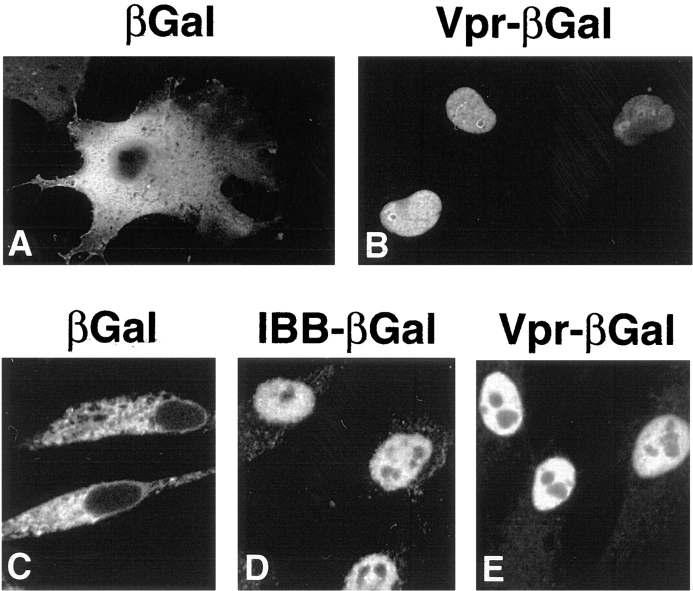
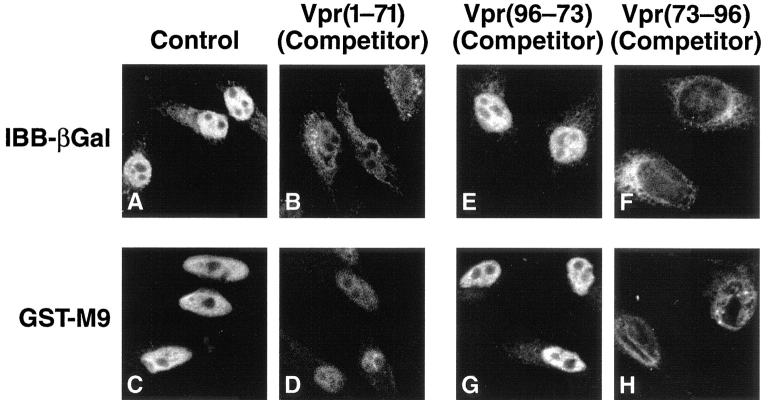
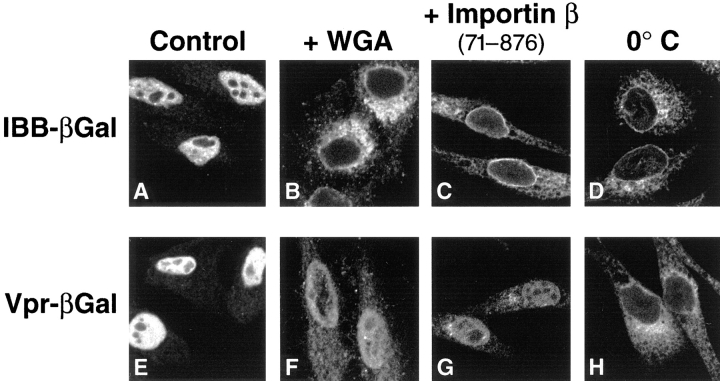
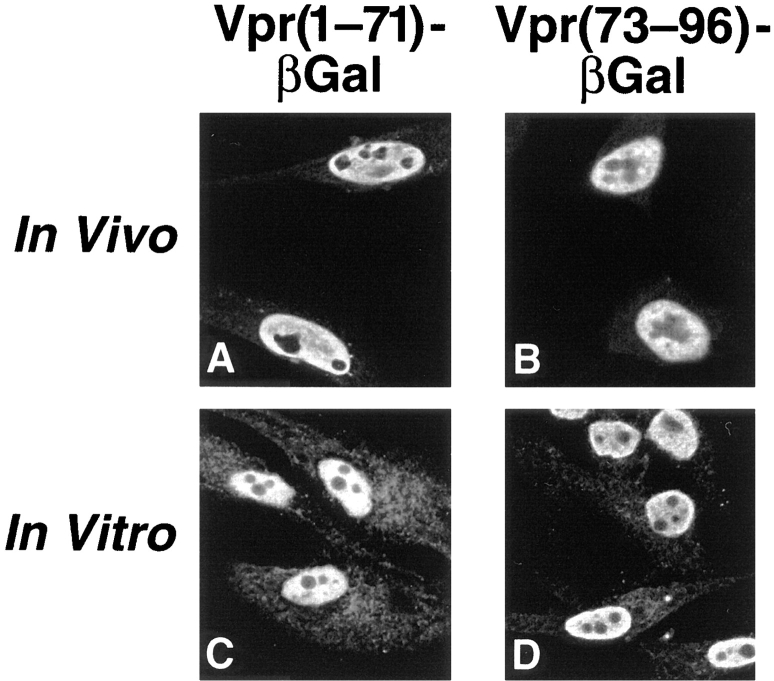
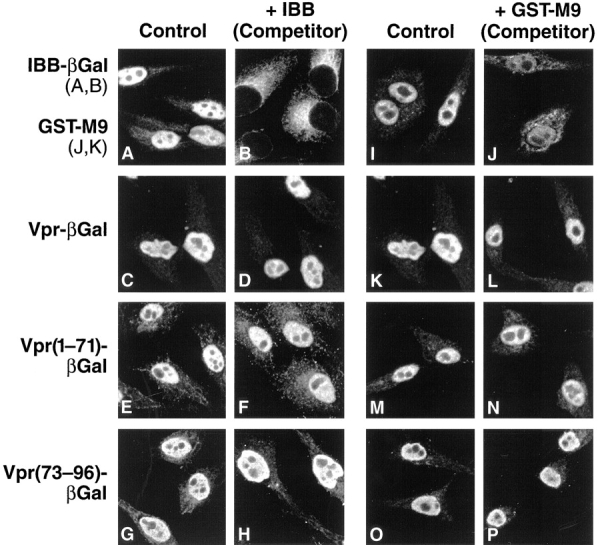
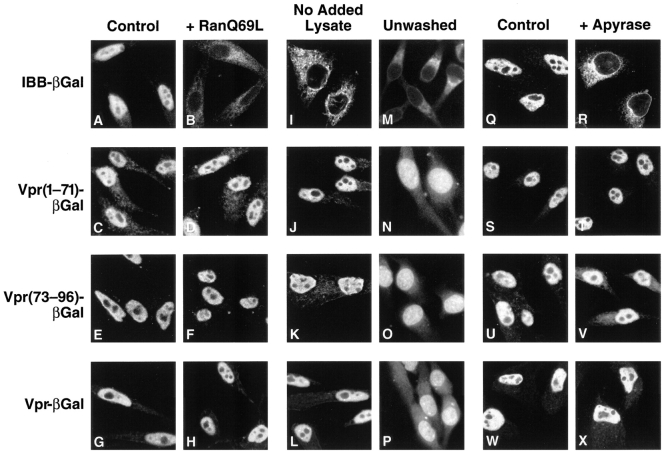
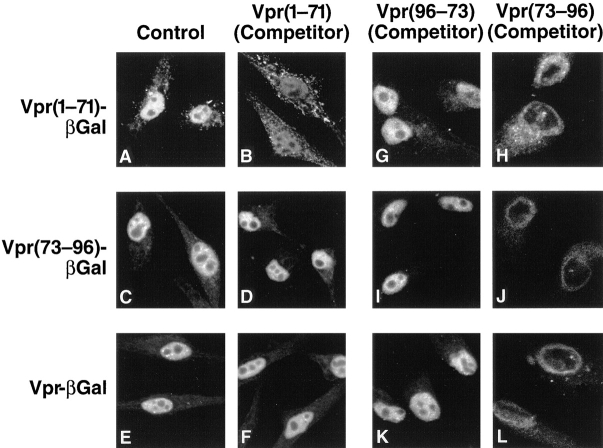
While the Vpr protein of HIV-1 has been implicated in import of the viral preintegration complex across the nuclear pore complex (NPC) of nondividing cellular hosts, the mechanism by which Vpr enters the nucleus remains unknown. We now demonstrate that Vpr contains two discrete nuclear targeting signals that use two different import pathways, both of which are distinct from the classical nuclear localization signal (NLS)- and the M9-dependent pathways. Vpr import does not appear to require Ran-mediated GTP hydrolysis and persists under conditions of low energy. Competition experiments further suggest that Vpr directly engages the NPC at two discrete sites. These sites appear to form distal components of a common import pathway used by NLS- and M9-containing proteins. Together, our data suggest that Vpr bypasses many of the soluble receptors involved in import of cellular cargoes. Rather, this viral protein appears to directly access the NPC, a property that may help to ensure the capacity of HIV to replicate in nondividing cellular hosts.
虽然HIV-1的Vpr蛋白与病毒前整合复合物穿过非分裂细胞宿主的核孔复合物(NPC)有关,但Vpr进入细胞核的机制仍然未知。我们现在证明,Vpr包含两个不同的核靶向信号,它们使用两种不同的导入途径,这两种途径都不同于经典的核定位信号(NLS)和M9依赖途径。Vpr的导入似乎不需要Ran介导的GTP水解,并且在低能量条件下仍然持续。竞争实验进一步表明,Vpr在两个不同的位点直接与NPC结合。这些位点似乎形成了含NLS和M9的蛋白质所使用的共同导入途径的远端成分。总之,我们的数据表明,Vpr绕过了许多参与细胞货物导入的可溶性受体。相反,这种病毒蛋白似乎直接进入NPC,这一特性可能有助于确保HIV在非分裂细胞宿主中复制的能力。