Obermann W M, Sondermann H, Russo A A, Pavletich N P, Hartl F U
Department of Cellular Biochemistry, Max-Planck-Institut für Biochemie, D-82152 Martinsried, Germany.
J Cell Biol. 1998 Nov 16;143(4):901-10. doi: 10.1083/jcb.143.4.901.
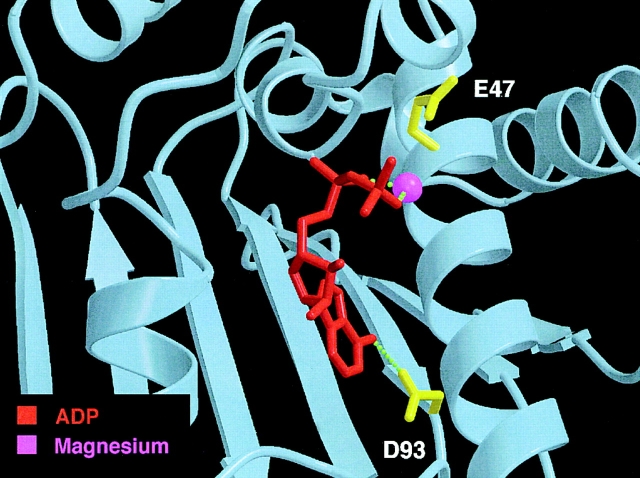
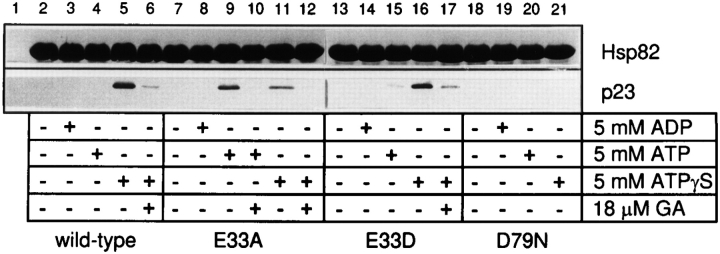
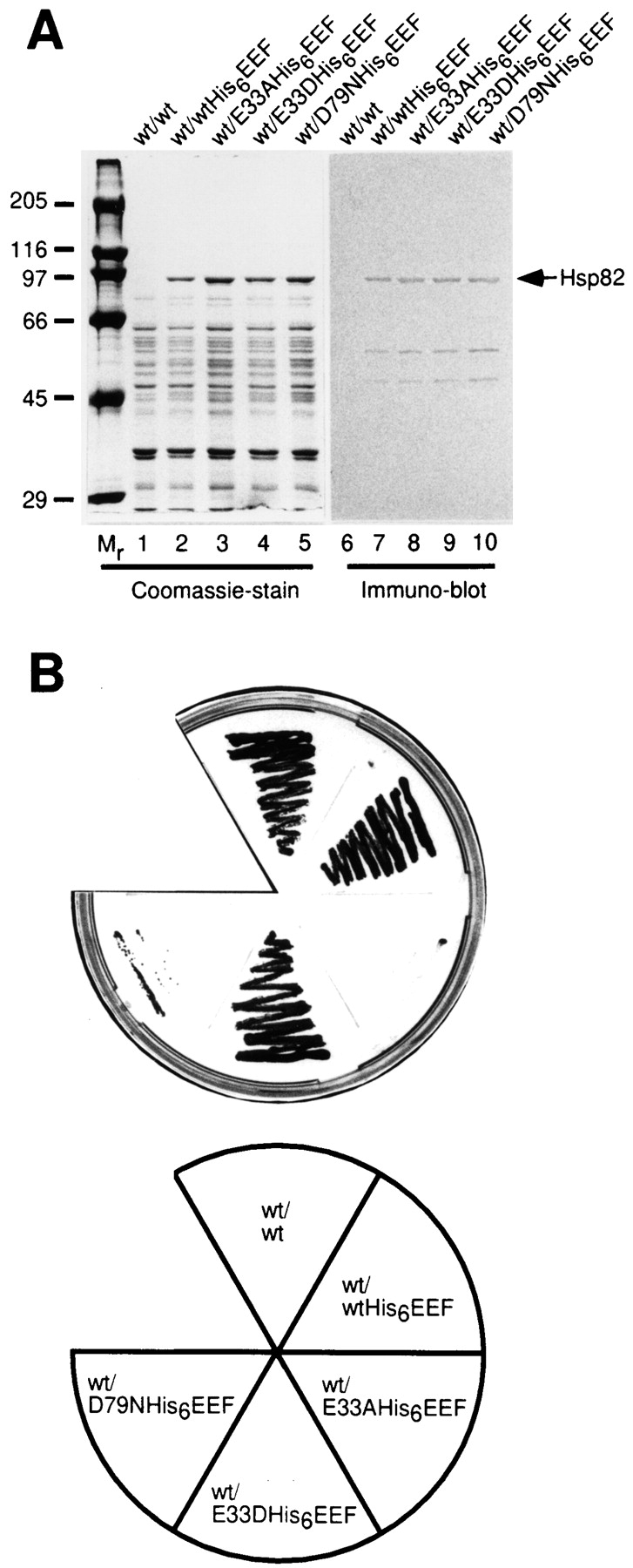
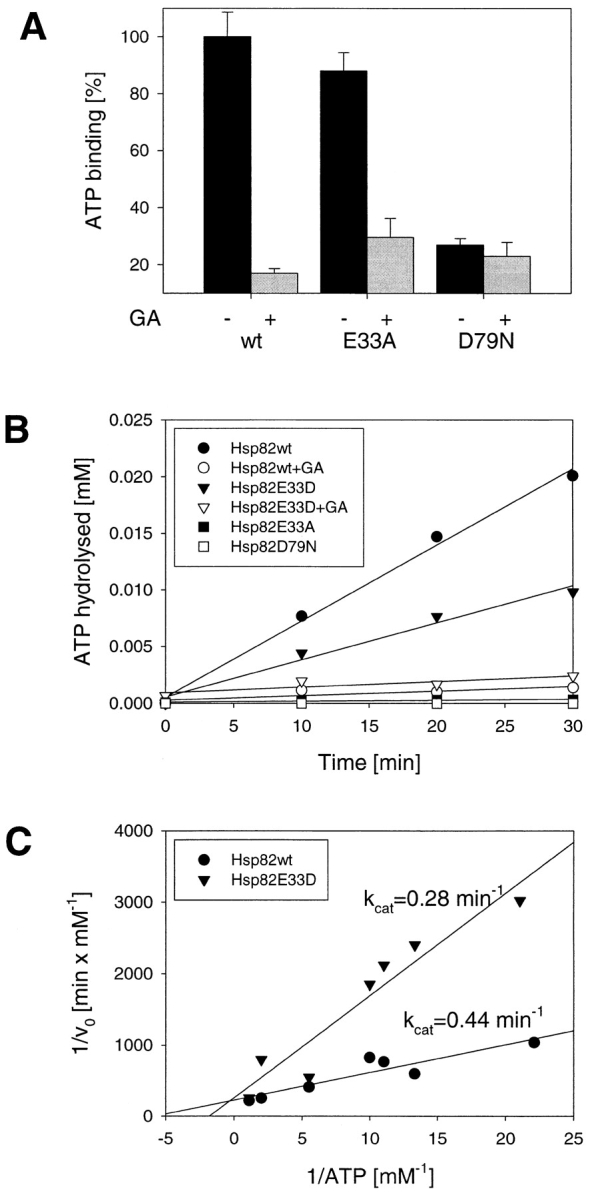
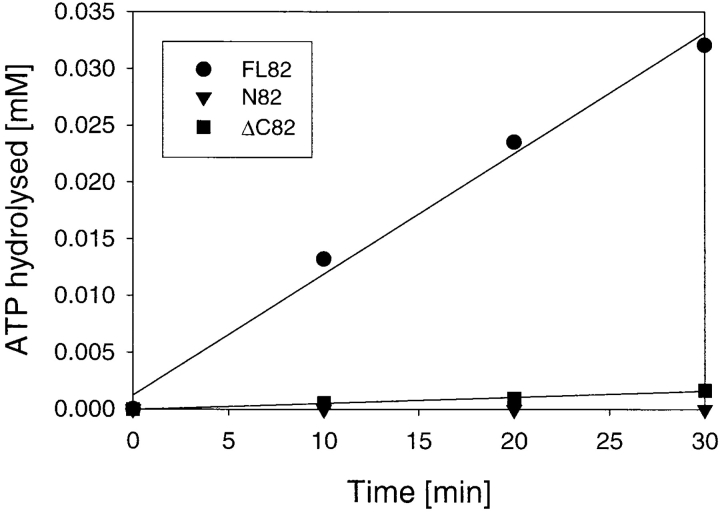
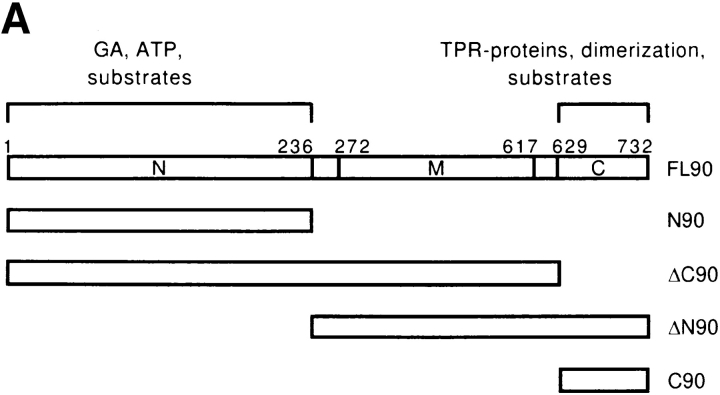
Heat shock protein 90 (Hsp90), an abundant molecular chaperone in the eukaryotic cytosol, is involved in the folding of a set of cell regulatory proteins and in the re-folding of stress-denatured polypeptides. The basic mechanism of action of Hsp90 is not yet understood. In particular, it has been debated whether Hsp90 function is ATP dependent. A recent crystal structure of the NH2-terminal domain of yeast Hsp90 established the presence of a conserved nucleotide binding site that is identical with the binding site of geldanamycin, a specific inhibitor of Hsp90. The functional significance of nucleotide binding by Hsp90 has remained unclear. Here we present evidence for a slow but clearly detectable ATPase activity in purified Hsp90. Based on a new crystal structure of the NH2-terminal domain of human Hsp90 with bound ADP-Mg and on the structural homology of this domain with the ATPase domain of Escherichia coli DNA gyrase, the residues of Hsp90 critical in ATP binding (D93) and ATP hydrolysis (E47) were identified. The corresponding mutations were made in the yeast Hsp90 homologue, Hsp82, and tested for their ability to functionally replace wild-type Hsp82. Our results show that both ATP binding and hydrolysis are required for Hsp82 function in vivo. The mutant Hsp90 proteins tested are defective in the binding and ATP hydrolysis-dependent cycling of the co-chaperone p23, which is thought to regulate the binding and release of substrate polypeptide from Hsp90. Remarkably, the complete Hsp90 protein is required for ATPase activity and for the interaction with p23, suggesting an intricate allosteric communication between the domains of the Hsp90 dimer. Our results establish Hsp90 as an ATP-dependent chaperone.
热休克蛋白90(Hsp90)是真核细胞胞质溶胶中一种丰富的分子伴侣,参与一组细胞调节蛋白的折叠以及应激变性多肽的重新折叠。Hsp90的基本作用机制尚不清楚。特别是,Hsp90的功能是否依赖于ATP一直存在争议。最近酵母Hsp90氨基末端结构域的晶体结构确定了一个保守的核苷酸结合位点的存在,该位点与Hsp90的特异性抑制剂格尔德霉素的结合位点相同。Hsp90结合核苷酸的功能意义仍不清楚。在这里,我们提供了纯化的Hsp90中存在缓慢但清晰可检测到的ATP酶活性的证据。基于人Hsp90氨基末端结构域与结合的ADP-Mg的新晶体结构以及该结构域与大肠杆菌DNA回旋酶ATP酶结构域的结构同源性,确定了Hsp90中对ATP结合(D93)和ATP水解(E47)至关重要的残基。在酵母Hsp90同源物Hsp82中进行了相应的突变,并测试了它们在功能上替代野生型Hsp82的能力。我们的结果表明,ATP结合和水解对于Hsp82在体内的功能都是必需的。所测试的突变型Hsp90蛋白在共伴侣p23的结合和ATP水解依赖性循环方面存在缺陷,p23被认为可调节底物多肽与Hsp90的结合和释放。值得注意的是,完整的Hsp90蛋白对于ATP酶活性和与p23的相互作用是必需的,这表明Hsp90二聚体结构域之间存在复杂的变构通讯。我们的结果确定Hsp90是一种依赖ATP的分子伴侣。