Yang X, Knapp D J, Criswell H E, Breese G R
Department of Psychiatry, School of Medicine, University of North Carolina at Chapel Hill, 27599, USA.
Alcohol Clin Exp Res. 1998 Nov;22(8):1655-61.
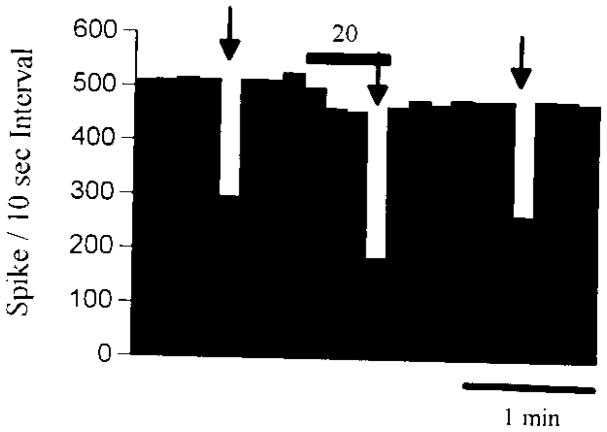
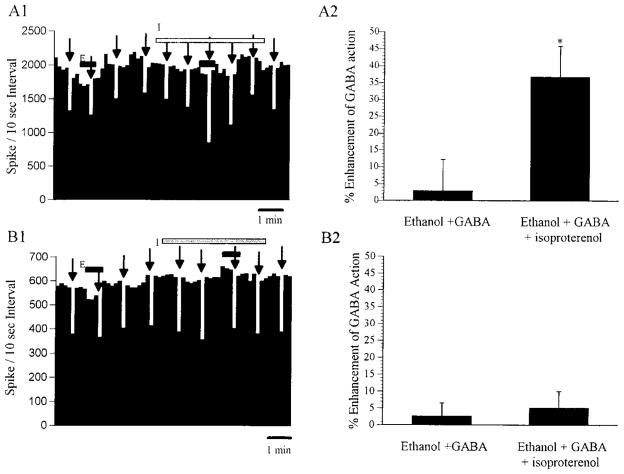
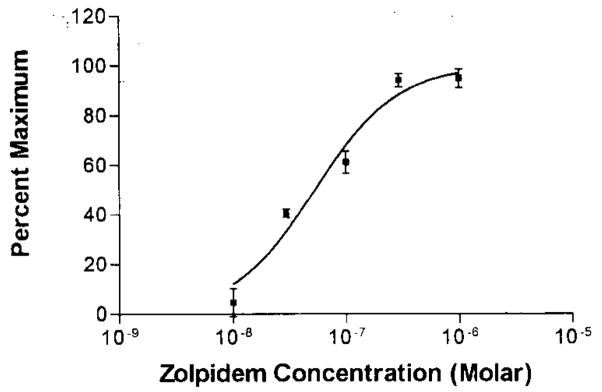
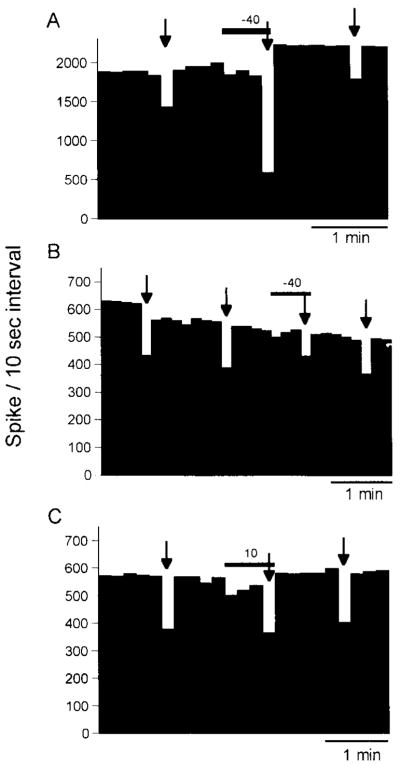
The observation that cerebellar Purkinje cells contain type-I benzodiazepine-sensitive GABA(A) receptors is consistent with findings in the present work that the majority of Purkinje neurons are sensitive to enhancement of GABA by the type-1 benzodiazepine agonist, zolpidem. Previous work has demonstrated a relation between zolpidem and ethanol enhancement of GABA responses in several brain regions, but had not tested Purkinje neurons. Therefore, given that a majority of Purkinje neurons were found to be sensitive to zolpidem, ethanol would have been expected to enhance GABA responses from this cell type. However, in agreement with earlier electrophysiological studies, ethanol enhanced GABA inhibitory responses from only a small proportion of these cerebellar Purkinje neurons. Rather than enhancement of GABA, local application of ethanol either inhibited or did not affect responses to GABA from a majority of cerebellar-Purkinje neurons. Nonetheless, as previously reported, a portion of the Purkinje neurons initially insensitive to ethanol enhancement of GABA became sensitive to this action of ethanol with co-application of the beta-adrenergic agonist, isoproterenol. Thus, these results collectively implicate a beta-adrenergic input dependency for ethanol enhancement of GABA from some, but not all, cerebellar Purkinje neurons sensitive to zolpidem. Because a beta-adrenergic input did not allow ethanol enhancement of GABA from all Purkinje neurons, future studies should explore the possibility that other auxiliary neural inputs to zolpidem-sensitive cerebellar Purkinje neurons may be required for ethanol enhancement of GABA responsiveness when a beta-adrenergic input does not have this action. Likewise, knowing that the action of zolpidem can predict ethanol enhancement of GABA in other brain regions, the present findings suggest that a future determination be made concerning whether zolpidem-sensitive neurons in these other regions of brain require a beta-adrenergic or an alternative neural input for ethanol enhancement of GABA responses.
小脑浦肯野细胞含有I型苯二氮䓬敏感的GABA(A)受体这一观察结果,与本研究中的发现一致,即大多数浦肯野神经元对I型苯二氮䓬激动剂唑吡坦增强GABA的作用敏感。先前的研究已经证明唑吡坦与乙醇在几个脑区增强GABA反应之间存在关联,但尚未对浦肯野神经元进行测试。因此,鉴于发现大多数浦肯野神经元对唑吡坦敏感,预计乙醇会增强这种细胞类型的GABA反应。然而,与早期的电生理研究一致,乙醇仅增强了这些小脑浦肯野神经元中一小部分的GABA抑制反应。局部应用乙醇非但没有增强GABA,反而抑制或不影响大多数小脑浦肯野神经元对GABA的反应。尽管如此,如先前报道的那样,一部分最初对乙醇增强GABA不敏感的浦肯野神经元在与β-肾上腺素能激动剂异丙肾上腺素共同应用时,对乙醇的这种作用变得敏感。因此,这些结果共同表明,乙醇增强GABA的作用对一些但不是所有对唑吡坦敏感的小脑浦肯野神经元而言,存在β-肾上腺素能输入依赖性。由于β-肾上腺素能输入并不能使乙醇增强所有浦肯野神经元的GABA反应,未来的研究应该探索当β-肾上腺素能输入没有这种作用时,对唑吡坦敏感的小脑浦肯野神经元可能需要其他辅助神经输入来实现乙醇增强GABA反应性的可能性。同样,鉴于唑吡坦的作用可以预测乙醇在其他脑区增强GABA的作用,目前的研究结果表明,未来需要确定这些脑区中对唑吡坦敏感的神经元是否需要β-肾上腺素能或其他神经输入来实现乙醇增强GABA反应。