Roovers R C, Henderikx P, Helfrich W, van der Linden E, Reurs A, de Bruïne A P, Arends J W, de Leij L, Hoogenboom H R
Department of Pathology, Maastricht University, The Netherlands.
Br J Cancer. 1998 Dec;78(11):1407-16. doi: 10.1038/bjc.1998.700.
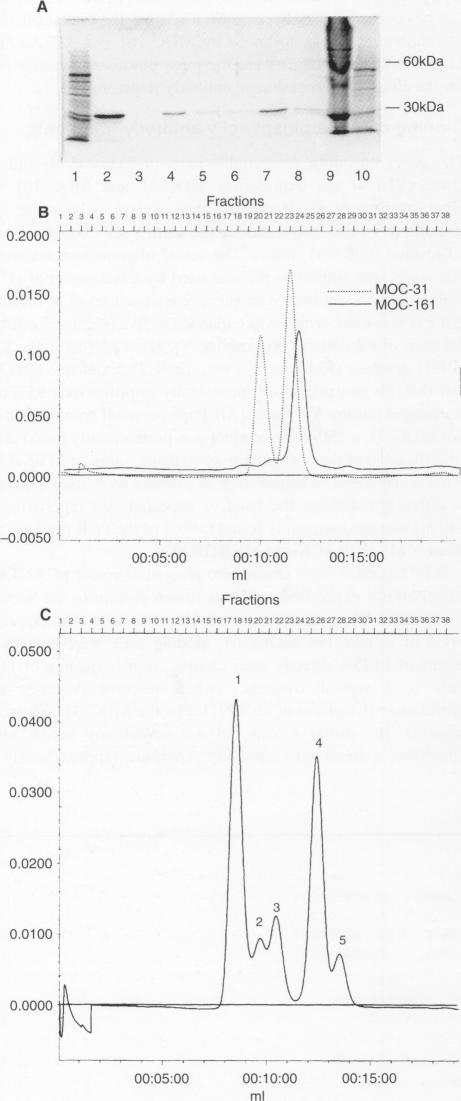
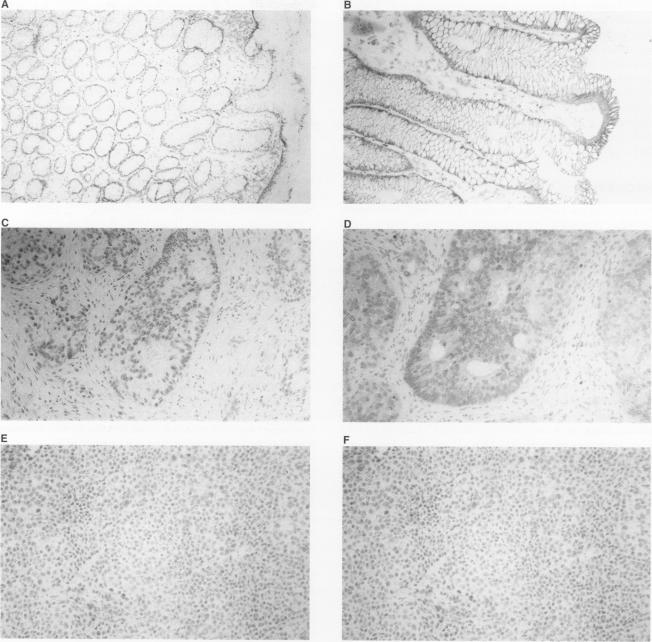
The tumour-associated antigen epithelial glycoprotein-2 (EGP-2) is a promising target for detection and treatment of a variety of human carcinomas. Antibodies to this antigen have been successfully used in patients for imaging of small-cell lung cancer and for adjuvant treatment of minimal residual disease of colon cancer. We describe here the isolation and complete characterization of high-affinity single-chain variable fragments (scFv) to the EGP-2 antigen. First, the binding kinetics of four murine whole antibodies directed to EGP-2 (17-1A, 323/A3, MOC-31 and MOC-161) were determined using surface plasmon resonance (SPR). The MOC-31 antibody has the lowest apparent off-rate, followed by MOC-161 and 323/A3. The V-genes of the two MOC hybridomas were cloned as scFv in a phage display vector and antigen-binding phage were selected by panning on recombinant antigen. The scFvs compete with the original hybridoma antibodies for binding to antigen and specifically bind to human carcinomas in immunohistochemistry. MOC-31 scFv has an off-rate which is better than those of the bivalent 17-1A and 323/A3 whole antibodies, providing it with an essential characteristic for tumour retention in vivo. The availability of these high-affinity anti-EGP-2 antibody fragments and of their encoding V-genes creates a variety of possibilities for their future use as tumour-targeting vehicles.
肿瘤相关抗原上皮糖蛋白-2(EGP-2)是检测和治疗多种人类癌症的一个有前景的靶点。针对该抗原的抗体已成功用于患者的小细胞肺癌成像以及结肠癌微小残留病的辅助治疗。我们在此描述了针对EGP-2抗原的高亲和力单链可变片段(scFv)的分离及完整特性分析。首先,使用表面等离子体共振(SPR)测定了四种针对EGP-2的鼠源全抗体(17-1A、323/A3、MOC-31和MOC-161)的结合动力学。MOC-31抗体的表观解离速率最低,其次是MOC-161和323/A3。将两个MOC杂交瘤的V基因克隆到噬菌体展示载体中作为scFv,并通过在重组抗原上淘选来选择抗原结合噬菌体。这些scFv与原始杂交瘤抗体竞争结合抗原,并在免疫组织化学中特异性结合人类癌症。MOC-31 scFv的解离速率优于二价的17-1A和323/A3全抗体,使其具有在体内肿瘤滞留的重要特性。这些高亲和力抗EGP-2抗体片段及其编码V基因的可用性为它们未来用作肿瘤靶向载体创造了多种可能性。