Murray H W, Nathan C F
Department of Medicine, Division of Hematology-Oncology, Cornell University Medical College, New York 10021, USA.
J Exp Med. 1999 Feb 15;189(4):741-6. doi: 10.1084/jem.189.4.741.
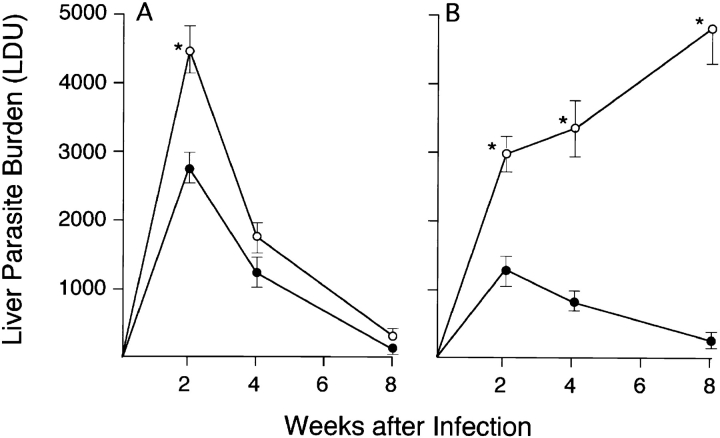
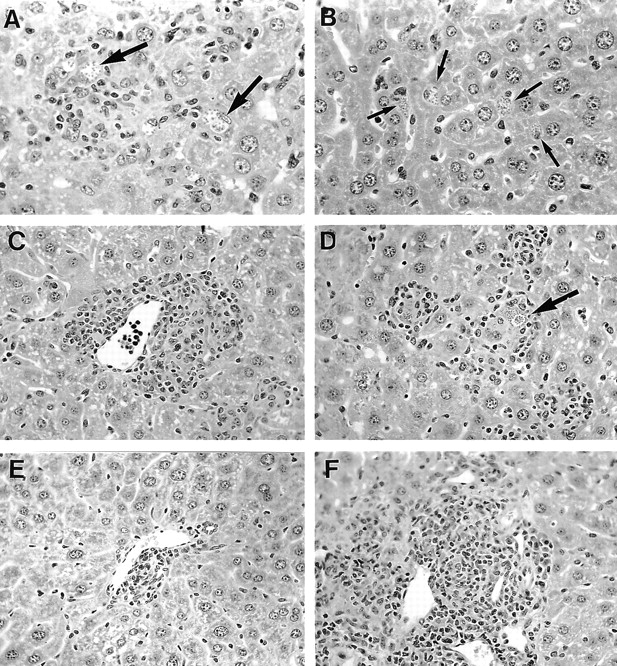
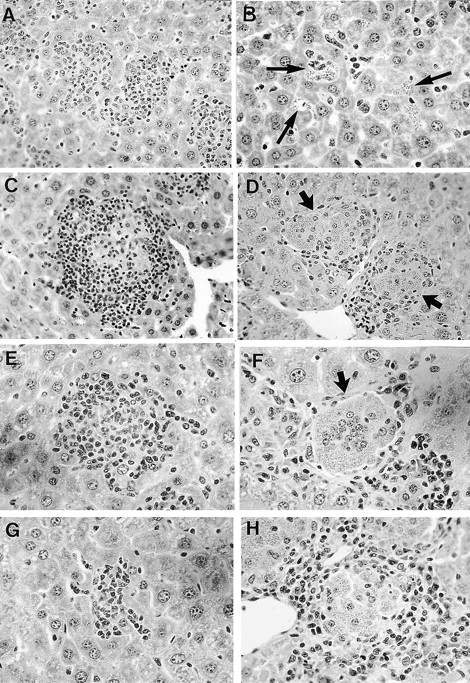
To determine the relative contributions of respiratory burst-derived reactive oxygen intermediates (ROI) versus reactive nitrogen intermediates (RNI) to macrophage-mediated intracellular host defense, mice genetically deficient in these mechanisms were challenged with Leishmania donovani, a protozoan that selectively parasitizes visceral tissue macrophages. During the early stage of liver infection at wk 2, both respiratory burst-deficient gp91(phox)-/- (X-linked chronic granulomatous disease [X-CGD]) mice and inducible nitric oxide synthase (iNOS) knockout (KO) mice displayed comparably increased susceptibility. Thereafter, infection was unrestrained in mice lacking iNOS but was fully controlled in X-CGD mice. Mononuclear cell influx into infected liver foci in X-CGD and iNOS KO mice was also overtly impaired at wk 2. However, granuloma assembly in parasitized tissue eventually developed in both hosts but with divergent effects: mature granulomas were functionally active (leishmanicidal) in X-CGD mice but inert in iNOS-deficient animals. These results suggest that (a) ROI and RNI probably act together in the early stage of intracellular infection to regulate both tissue recruitment of mononuclear inflammatory cells and the initial extent of microbial replication, (b) RNI alone are necessary and sufficient for eventual control of visceral infection, and (c) although mature granulomas have traditionally been associated with control of such infections, these structures fail to limit intracellular parasite replication in the absence of iNOS.
为了确定呼吸爆发衍生的活性氧中间体(ROI)与活性氮中间体(RNI)对巨噬细胞介导的细胞内宿主防御的相对贡献,用杜氏利什曼原虫(一种选择性寄生于内脏组织巨噬细胞的原生动物)攻击在这些机制上存在基因缺陷的小鼠。在感染后第2周肝脏感染的早期阶段,呼吸爆发缺陷的gp91(phox)-/-(X连锁慢性肉芽肿病[X-CGD])小鼠和诱导型一氧化氮合酶(iNOS)基因敲除(KO)小鼠均表现出易感性明显增加。此后,在缺乏iNOS的小鼠中感染不受控制,但在X-CGD小鼠中感染得到完全控制。在第2周时,X-CGD和iNOS KO小鼠中单核细胞向感染肝脏病灶的流入也明显受损。然而,两个宿主中被寄生组织中的肉芽肿最终都形成了,但产生了不同的影响:在X-CGD小鼠中成熟肉芽肿具有功能活性(杀利什曼原虫),而在iNOS缺陷动物中则无活性。这些结果表明:(a)ROI和RNI可能在细胞内感染的早期共同作用,以调节单核炎性细胞的组织募集和微生物复制的初始程度;(b)仅RNI对于最终控制内脏感染是必要且充分的;(c)尽管传统上成熟肉芽肿与控制此类感染有关,但在缺乏iNOS的情况下,这些结构无法限制细胞内寄生虫的复制。