Valmori D, Gileadi U, Servis C, Dunbar P R, Cerottini J C, Romero P, Cerundolo V, Lévy F
Ludwig Institute for Cancer Research, Lausanne Branch, University of Lausanne, CH-1066 Epalinges, Switzerland.
J Exp Med. 1999 Mar 15;189(6):895-906. doi: 10.1084/jem.189.6.895.
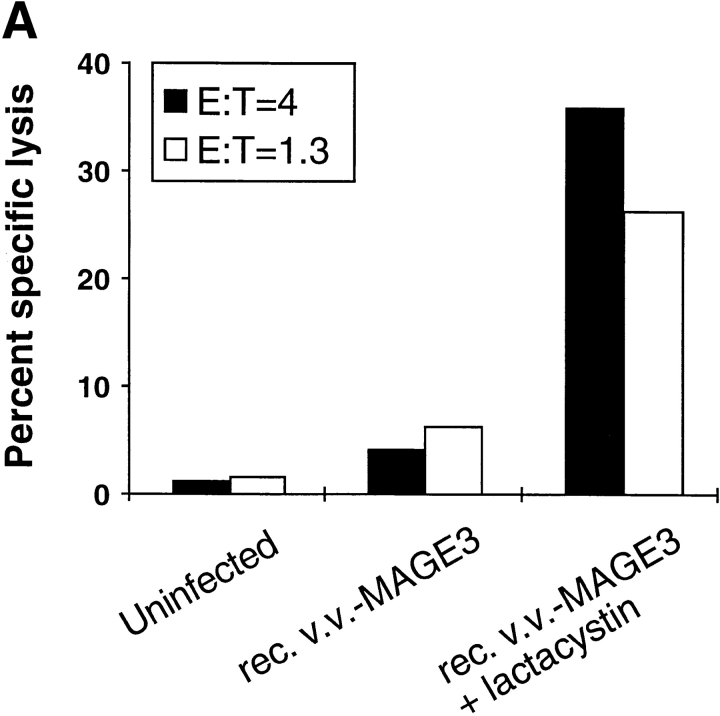
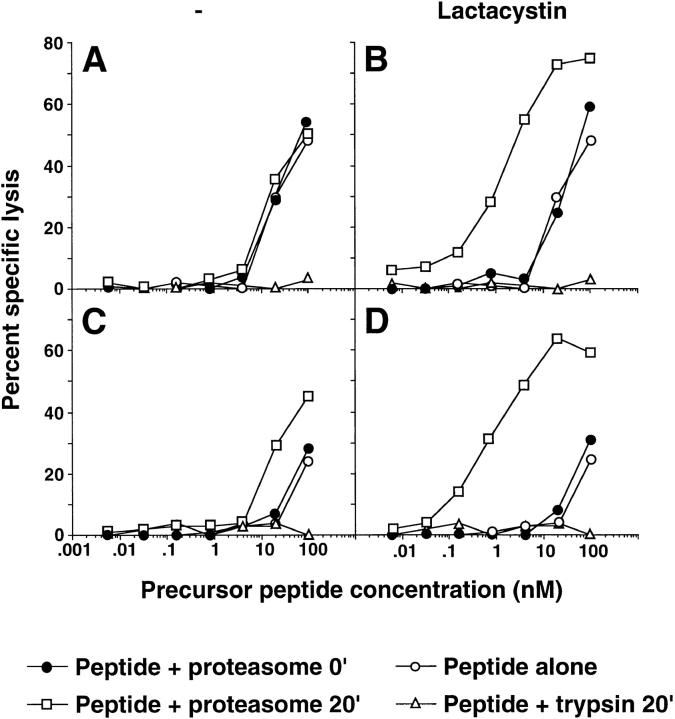
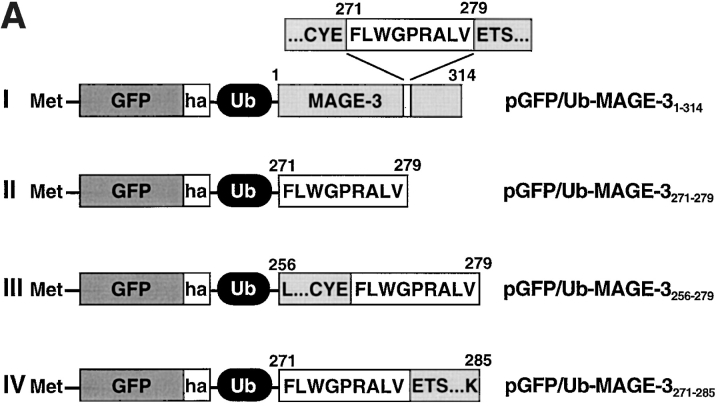
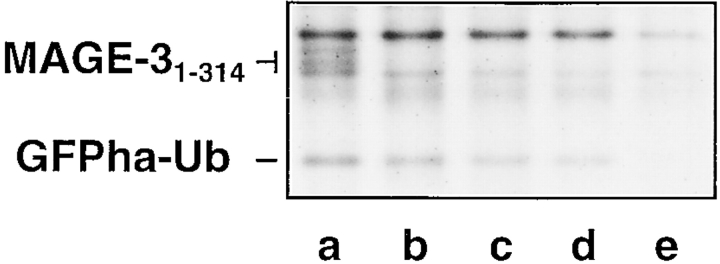
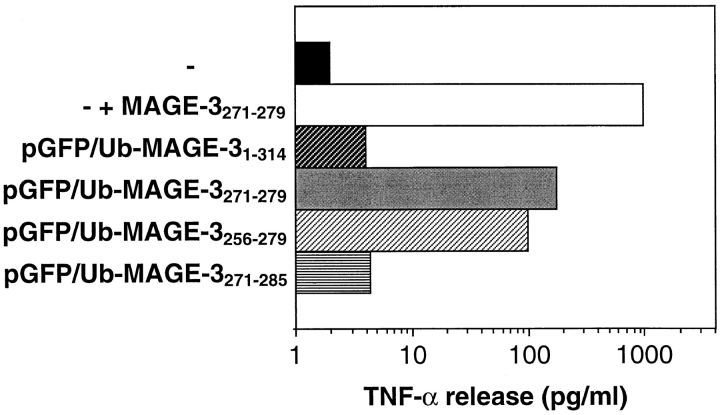
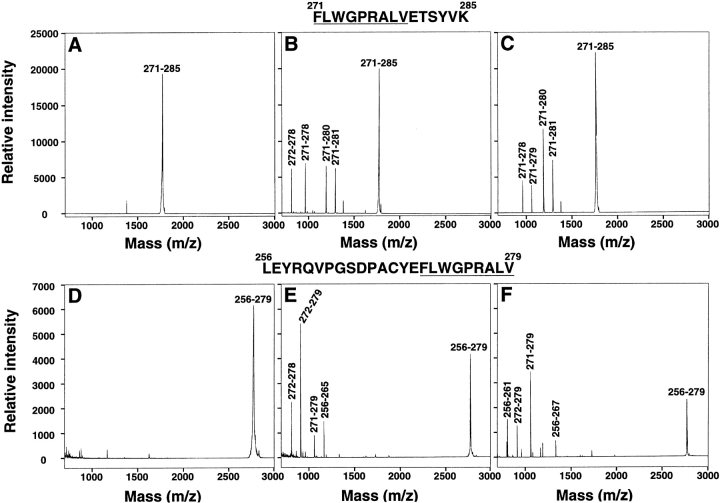
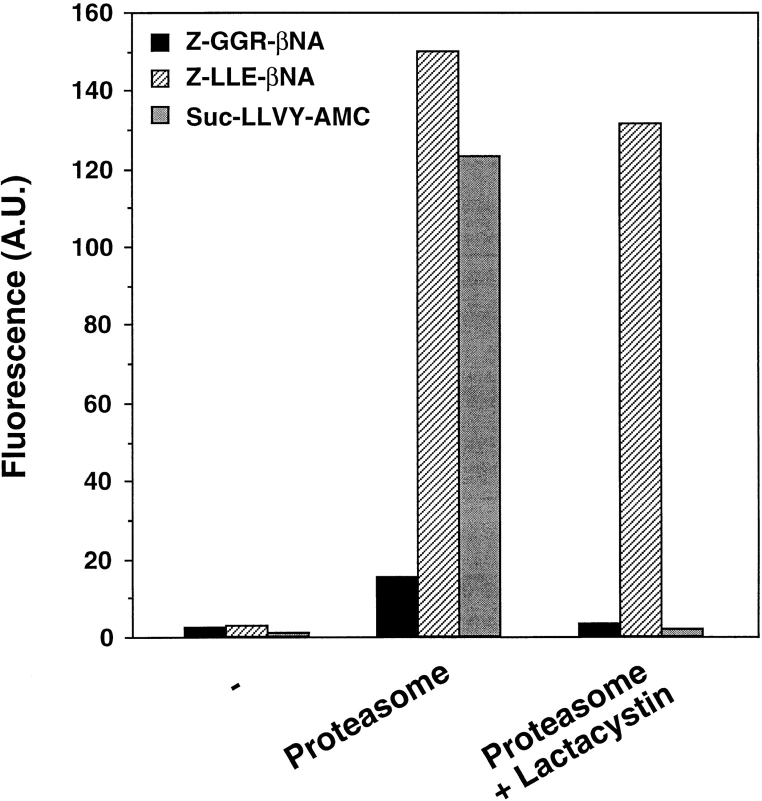
We have analyzed the presentation of human histocompatability leukocyte antigen-A*0201-associated tumor peptide antigen MAGE-3271-279 by melanoma cells. We show that specific cytotoxic T lymphocyte (CTL)-recognizing cells transfected with a minigene encoding the preprocessed fragment MAGE-3271-279 failed to recognize cells expressing the full length MAGE-3 protein. Digestion of synthetic peptides extended at the NH2 or COOH terminus of MAGE-3271-279 with purified human proteasome revealed that the generation of the COOH terminus of the antigenic peptide was impaired. Surprisingly, addition of lactacystin to purified proteasome, though partially inhibitory, resulted in the generation of the antigenic peptide. Furthermore, treatment of melanoma cells expressing the MAGE-3 protein with lactacystin resulted in efficient lysis by MAGE-3271-279-specific CTL. We therefore postulate that the generation of antigenic peptides by the proteasome in cells can be modulated by the selective inhibition of certain of its enzymaticactivities.
我们分析了黑色素瘤细胞对人组织相容性白细胞抗原-A*0201相关肿瘤肽抗原MAGE-3271-279的呈递情况。我们发现,用编码预处理片段MAGE-3271-279的小基因转染的特异性细胞毒性T淋巴细胞(CTL)识别细胞无法识别表达全长MAGE-3蛋白的细胞。用纯化的人蛋白酶体消化在MAGE-3271-279的NH2或COOH末端延伸的合成肽,结果显示抗原肽COOH末端的生成受到损害。令人惊讶的是,向纯化的蛋白酶体中添加乳胞素,尽管有部分抑制作用,但仍导致抗原肽的生成。此外,用乳胞素处理表达MAGE-3蛋白的黑色素瘤细胞,会导致MAGE-3271-279特异性CTL对其进行有效裂解。因此,我们推测蛋白酶体在细胞中对抗原肽的生成可通过对其某些酶活性的选择性抑制来调节。